
Types of Tilak: Understanding the Sacred Marks on Your Forehead
Each Mark Tells a Story of Devotion

Kushal K
08 Nov 2026 • 6min
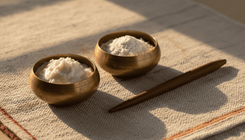
The tilak, or sacred mark worn on the forehead, is one of the most visible expressions of devotion in Hindu practice. But there are many types of tilak, each one shaped by the deity worshipped and the tradition followed. Understanding these different marks helps you recognise the spiritual path of the person wearing them, and if you follow a particular sampradaya yourself, it shows where your devotion is rooted.



Vaishnava Tilak: The U-Shaped Mark
The Vaishnava tilak, called the urdhva pundra in its most recognisable form, is applied as two vertical lines that curve upward and inward, meeting at a point between the eyebrows. This shape is meant to echo the footprint of Vishnu. Many Vaishnavas apply it in white sandalwood paste, sometimes with a gold or red line drawn between the two white bands. The mark covers the forehead from the bridge of the nose toward the hairline.
The width and exact form of the urdhva pundra can vary. Some practitioners make it narrower, others wider. The colour varies too: some use only white, others add the ash-coloured gopal chandan, or a red vermillion line in the centre. In some temples and regions, the design may be slightly modified, but the two-line upward curve remains the identifying feature.
Devotees who wear this mark do so as a daily reminder of their commitment to Vishnu and the principle of dharma he represents. It is applied fresh each day, usually after bathing and before worship. Some wear it only on special occasions or when visiting the temple, while others consider it a daily spiritual practice.
Shaiva Tripundra: The Three Horizontal Lines
The tripundra consists of three horizontal lines of white ash, drawn across the forehead. The name itself means "three marks", and these lines are central to Shaiva practice. The ash is usually made from vibhuti, sacred ash that has been ritually prepared. Some Shaivas apply a red or vermillion dot between or above the three lines.
The three lines are said to represent the three fundamental aspects of existence: creation, preservation and dissolution. They also connect to the three gunas (qualities that shape all matter and mind): sattva, rajas and tamas. By wearing the tripundra, a Shaiva practitioner honours both the cycle of existence and the presence of Shiva in all things.
The ash itself holds meaning. Unlike the sandalwood paste used in the urdhva pundra, ash comes from fire—and fire is sacred to Shiva. Some Shaivas prepare their own ash from sacred herbs or cowdung. The application of vibhuti is often accompanied by a mantra or prayer, turning the act into a moment of worship rather than simple grooming.
Gaudiya Vaishnava Variations
Within the broader Vaishnava tradition, Gaudiya Vaishnavas (those rooted in the teaching lineage of Sri Chaitanya) often wear a distinctive tilak. The two vertical lines may be drawn closer together and slightly more dramatically curved than in other Vaishnava traditions. Some Gaudiya practitioners add a dot or small mark of red sandalwood or kumkum at the base where the two lines meet.
This variation reflects the particular emphasis of Gaudiya practice, which centres on Krishna bhakti, the devotional love of Krishna. The mark becomes a statement of that specific spiritual focus. In temples and communities following this path, you will see this form of tilak consistently, and it serves as a visible link between the practitioner and their guru paramapara, the lineage of teachers.
Regional and Sectarian Differences
Tilak design is not fixed across India. In some regions, the application is broader and more decorative. In others, it is minimal and austere. The Smarta tradition, which honours all major deities rather than focusing on one, may apply a simpler mark or vary it according to the deity honoured on a particular day. Followers of different gurus within the same sampradaya may also apply their tilak slightly differently, reflecting their guru's guidance.
Some practitioners blend traditions: a person might honour both Vishnu and Shiva by combining elements of both marks. Others, particularly in families where different traditions are followed, may apply the mark according to the tradition of the household they have chosen. These variations are all valid expressions of individual and family devotion.
Why Tilak Matters in Practice
Applying tilak is not merely ornamental. For many practitioners, it serves as an anchor to spiritual intention each time they look in the mirror or catch their reflection. The daily act of applying and wearing the mark keeps consciousness turned toward the divine. It is also a public declaration, allowing others to know something of your spiritual commitment and sampradaya at a glance.
There are practical considerations too. Some people wear tilak only during puja, others throughout the day. Some work environments make visible religious marks difficult, and many practitioners adapt by wearing their tilak only when circumstances allow. The important element is not the external mark alone, but the sincere intention behind it—the turning of the heart toward the deity and the discipline of spiritual practice.
Common questions
What is the difference between tilak and bindi?
Tilak is a mark of sectarian devotion, identifying which deity or tradition the wearer follows. A bindi can be worn by anyone as fashion or social custom and does not necessarily indicate spiritual affiliation. A bindi is usually a single dot, while tilak typically has a specific religious form and is applied with ritual intention.
Can you wear tilak if you don't belong to a specific sampradaya?
Yes. Many people wear tilak out of general devotion or cultural respect rather than formal initiation into a tradition. If you wish to begin wearing tilak, it is respectful to learn the correct form from a guru, temple teacher or community elder, and to understand what the mark means in the tradition you are honouring.
How often should you reapply tilak during the day?
Tilak is traditionally applied once each day after bathing, usually before morning puja. If you bathe again or if the mark wears away, you may reapply it. Some practitioners apply a fresh tilak before evening worship as well. The timing depends on your personal practice and how often you choose to renew your spiritual intention.

Related Articles


