
Types of Tilak: Understanding the Marks Worn for Puja and Devotion
Sacred marks that connect you to your path

Abhilash Ramakrishna
08 Nov 2026 • 7min
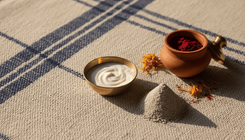
A tilak is a mark worn on the forehead to show spiritual faith and identity. The word comes from Sanskrit and describes the coloured paste or powder applied between the eyebrows and across the forehead in specific patterns. Different types of tilak tell you something about the wearer's tradition, their chosen deity, and the lineage they follow. Whether you have seen the vertical marks of a Vaishnava devotee, the horizontal lines of a Shaiva, or the round dot of a woman after marriage, each has its own meaning and method.
The tilak has always been part of Hindu puja and daily practice. You apply it after bathing and before prayer, making it a bridge between your daily life and your spiritual intention. In temple worship, the priest marks your forehead with tilak as prasad—a blessed gift—at the end of the puja. At home, you might apply it yourself each morning as part of your sadhana. The mark is not decoration. It is a statement of which lineage you belong to, and a reminder to yourself of what you have chosen to honour.



The Vaishnava Tilak
Devotees of Vishnu and his avatars Krishna and Rama wear the Vaishnava tilak, which takes the form of two vertical lines running up the forehead from the bridge of the nose, with a vertical line between them. Often these lines curve slightly outward, like a leaf or the hull of a boat. The mark is usually made with white clay paste called gopichandan, which comes from the soil near Krishna's sacred places in Mathura and Vrindavan. Some devotees use a white mineral paste instead.
The two vertical lines represent the feet of Vishnu. By wearing them, a Vaishnava carries the presence of their chosen deity on their body throughout the day. The practice connects the wearer to the Vaishnava sampradaya, or lineage—traditions like the Sri Vaishnava, Ramanandi, or Gaudia Vaishnava schools, each with its own history and teachings. Within these traditions, the exact width, curve and material of the tilak may vary. A Sri Vaishnava's gopichandan might be prepared differently from a Gaudia Vaishnava's, and the lines might be drawn with slightly different proportions.
The Vaishnava tilak is worn daily by committed devotees, reapplied after bathing and before worship. Women and men wear it equally. If you visit a Krishna temple, you will often see the priest apply this tilak to worshippers' foreheads as they leave, marking them with the blessing of their chosen path.
The Shaiva Tripundra
Shaiva devotees, those who follow Shiva, wear the tripundra—three horizontal lines across the forehead, usually made with sacred ash called vibhuti. The name tripundra means three marks. The ash is made from burnt cow dung, wood, or other purified materials, and devotees prepare it or receive it from their guru or temple. The three lines represent different aspects of Shiva's power and the three stages of life: creation, preservation and dissolution.
Among Shaivas, the meaning deepens within different schools. In the Advaita Vedanta tradition founded by Adi Shankara, the three lines also represent the three gunas—sattva, rajas and tamas, the three qualities that make up all of nature. In Shaiva Siddhanta and other schools, they may signify the trinity of Brahma, Vishnu and Shiva, or the three paths of knowledge, action and devotion.
The vibhuti itself carries meaning. Ash is what remains after fire has consumed everything else, symbolising the destruction of ego and attachment. By wearing it, a Shaiva reminds themselves that all material forms are temporary, and that Shiva is the eternal reality beneath all change. The tripundra is worn daily by initiated Shaivas, applied after bathing and meditation. Some Shaivas also wear a small circle of ash on the tip of the nose or a dot on the chin, in addition to the three lines.
Other Tilak Marks and Traditions
Beyond the Vaishnava and Shaiva marks, other traditions wear tilak in their own forms. Followers of Shakti and the Divine Mother may wear a red bindi or dot of kumkum, a red powder made from turmeric and other materials. This mark represents the third eye of wisdom and is especially common among women, though men in certain traditions wear it too. The bindi sits at the centre of the forehead where the two eyebrows meet, and it can be worn alone or as part of a larger tilak design.
Smartas, who worship all the major deities without choosing one as supreme, may wear a tilak that combines elements—sometimes a vertical line with a dot, or even a tilak that shifts with the day of the week or the deity being honoured. Regional traditions also shape the tilak. In South India, a Vaishnava's gopichandan might be wider or drawn with different precision than in North India. In Bengal, where the Gaudia Vaishnava tradition is strong, the tilak lines are often slender and precisely drawn.
Some communities have their own distinctive marks. Certain sampradayas draw small crescents or add extra lines. A few traditions mark the upper arms, chest or other parts of the body alongside the forehead. The tilak is flexible within each tradition because its purpose is always the same: to declare your spiritual identity and keep your intention visible on your body.
When and How to Wear Tilak
Most devotees apply tilak after their morning bath and before prayer. If you bathe again during the day—for instance, after physical work—you may reapply it. The tilak remains on your forehead throughout the day, visible to others and constant in your own awareness. It is common to remove it gently with water before bathing, rather than scrubbing it off.
In temple worship, the priest or the deity's keeper applies tilak as part of the final blessing at the end of puja. This tilak carries the energy of the ritual and the temple's lineage. You receive it on your forehead, often with a small flower or a grain of rice placed on top. This is not something you apply to yourself, but something given to you. Some temples mark worshippers with vibhuti, others with gopichandan, and some with kumkum, depending on which deity is worshipped there and which tradition the temple follows.
If you are learning to apply tilak yourself, you will need to choose materials suited to your tradition and practice. A Vaishnava beginning daily puja will need gopichandan or another clay paste. A Shaiva will need vibhuti. It takes a little practice to draw the lines evenly, but the imperfection is part of the sincerity of the gesture. What matters is the intention behind it: the willingness to mark yourself as one who is turning toward the divine each day.
The Tilak as a Living Link
The tilak you wear connects you backward through history to countless devotees who have worn the same mark before you, and forward to those who will wear it after you. It links you to your guru, your temple, and your chosen path. Whether your tilak is drawn with the precision of long practice or freshly learned, whether it is Vaishnava, Shaiva, Shakti-oriented or something else entirely, it serves the same purpose: it makes visible the invisible commitment that lives in your heart.
Common questions
What is the difference between gopichandan and vibhuti?
Gopichandan is a white clay paste made from the soil of sacred places like Mathura and Vrindavan, used mainly by Vaishnava devotees. Vibhuti is ash made from burnt cow dung or wood, used primarily by Shaivas. The two come from different materials and represent different philosophical traditions.
Can women wear tilak?
Yes, women wear all types of tilak equally with men. Women in Vaishnava, Shaiva and other traditions apply tilak daily as part of their spiritual practice. In addition, married women in many communities wear a red bindi or kumkum, which is also a form of tilak.
Do I have to wear the same tilak every day?
If you follow a specific tradition, you typically wear that tradition's tilak consistently. However, if you attend a temple of a different lineage, you may receive their tilak as prasad without contradiction. Many people wear their own daily tilak and accept temple tilak as a blessing regardless of which type it is.

Related Articles


