
Types of Aarti Lamps: Ghee Wicks, Camphor and the Multi-Tiered Deepa
Light in Service, Fire in Form

Aditya Pandey
19 Nov 2026 • 6min
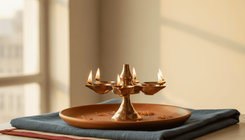
The aarti lamp is the vessel that holds light during worship. Each type of aarti lamp carries a different quality of flame, a different weight in your hands, a different meaning in ritual. Understanding the types of aarti lamps helps you choose the one that fits the deity, the occasion, the season and the scale of your puja.



The Single-Wick Diya
The simplest aarti lamp is the single-wick diya, a small earthen or metal cup that holds ghee or oil and a wick of twisted cotton. This lamp is quiet in its presence. It gives a steady, yielding flame that is easy to control. For morning puja at home, for offerings to household deities, for personal devotion, the single-wick diya is enough. It teaches you to work with fire carefully and with attention. When you wave it in circles before the deity, the flame moves with you, intimate and immediate. The earthen diya, especially one made fresh, carries the element of earth itself. The metal diya—brass, copper or silver—lasts longer and holds heat gently. Many families choose the metal lamp for daily use and the earthen lamp for special occasions or for returning to the earth after worship.
The Pancha Pradeep: Five Lamps in One
The pancha pradeep, or five-flamed lamp, is designed to hold five wicks in a single vessel. This lamp is used when the scale of worship grows: in temple aarti, in group puja, in festivals. The five flames represent the five elements—earth, water, fire, air and space—or the five senses, depending on the tradition and deity being honoured. When lit, the pancha pradeep creates a radiant, commanding presence. Its flame is brighter than a single diya and demands more skill to wave steadily. The lamp itself is usually made of brass or bronze and sits on a stem or stand, raising the flame higher so it can be seen from a distance. The five wicks must be kept of equal length so the light spreads evenly and no one element dominates the offering. In major temple aarti and in group worship during festivals, the pancha pradeep is the standard choice.
The Kumbh Aarti Lamp
The kumbh aarti lamp is a specific form used in certain temple rituals and in the aarti performed at major pilgrimage sites, most notably the Kumbh Mela. The lamp is shaped like a water pot or urn, often with multiple tiers of flames rising from it. Some versions hold seven, nine or even more wicks arranged in circles or spirals. The kumbh aarti lamp creates a dramatic effect: when all wicks are lit, the flame rises in stages, creating layers of light that seem to climb toward the heavens. This lamp is used when the aarti itself is meant to be a major ritual spectacle, marking a significant occasion or drawing a large gathering. The kumbh aarti requires coordination if multiple people are waving lamps together, as the weight and the number of flames demand a steady hand and clear intention.
Ghee Wicks and Oil Wicks: The Fuel of Flame
The type of fuel changes both the quality and the meaning of the flame. Ghee wicks, twisted cotton dipped in clarified butter, burn with a cleaner, brighter light. Ghee is considered pure and auspicious in worship; its smoke carries the offering upward. Ghee wicks produce less smoke than oil and leave no residue on the lamp. They are the preferred choice for temple aarti, for rituals honouring deities of the highest rank, and for occasions when purity is emphasized. Oil wicks, typically made of cotton twisted and dipped in sesame oil or coconut oil, burn with a softer, warmer flame. Oil is also auspicious and is often used in daily home puja. Oil wicks are more economical and burn longer than ghee wicks. The choice between ghee and oil depends on the resources available, the occasion, and regional custom. In many homes, oil is used for everyday puja and ghee for festivals or special observances.
The Camphor Lamp
Some aarti lamps are designed specifically for camphor (karpur), a substance that burns without a wick. Camphor is placed in a small metal cup at the top of the lamp and ignited. As it burns, camphor produces a bright white flame with a distinctive fragrance and releases its entire substance into smoke and flame—it does not leave ash. In Hindu ritual, this complete transformation is significant; camphor represents the complete offering of the self. Camphor lamps are used for auspicious occasions, for rituals of great solemnity, and often in the aarti at the close of worship. The camphor lamp is usually waved only briefly, as the flame is intense and does not require the sustained movement of a ghee or oil lamp. The smell of camphor is distinctive and carries its own spiritual weight across the space of worship.
Choosing the Right Lamp for Your Practice
The type of aarti lamp you use depends on several factors: the deity you are worshipping, the occasion, the scale of the puja, and the resources available to you. A household shrine might use a single-wick diya every day with oil, and bring out the pancha pradeep or a brass lamp for festivals. A temple might use multiple pancha pradeeps for major aartis and a single diya for smaller observances. The size and weight of the lamp matter: a lamp that is too large or too heavy to hold steadily becomes a distraction rather than an offering. The material also carries meaning—earthen for humility and impermanence, metal for durability and value, silver or gold for occasions of highest honour. There is no single correct lamp that applies everywhere. What matters is that you choose with intention, that the lamp you select can be held and waved with steadiness and presence, and that the flame it carries is an honest expression of the worship you are offering. Over time, as your practice deepens, you will find that the lamp itself becomes a familiar thing in your hands, and the act of waving it becomes meditation.
Common questions
What does pancha pradeep mean in aarti?
Pancha pradeep means five lamps, representing the five elements or five senses in Hindu cosmology. In aarti, a pancha pradeep holds five wicks in a single vessel and is used in temple worship and group puja to create a brighter, more luminous offering than a single diya.
What is the difference between ghee and oil wicks for aarti?
Ghee wicks burn brighter and cleaner with less smoke and no residue, making them preferred for temple aarti and major rituals. Oil wicks burn softer and warmer, last longer, and are more economical, making them common for daily home puja. Both are auspicious; the choice depends on occasion, tradition and resources.
Why is camphor used in aarti instead of a wick?
Camphor burns completely without a wick or ash, transforming entirely into flame and smoke. This complete transformation symbolizes the complete offering of the self to the deity. Camphor lamps are used for auspicious occasions and at the close of worship, and the flame is waved only briefly because it burns intensely.

Related Articles


