
Tulsi Vrindavan: The Sacred Plant Stand in the Courtyard
Where devotion grows in earth and clay

Kushal K
20 Nov 2026 • 8min
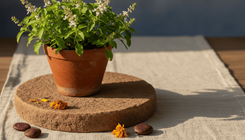
A tulsi vrindavan is a raised platform or pot stand built in the courtyard or home where the tulsi plant—basil sacred to Krishna—is grown and worshipped. It is the place where daily ritual, plant care and spiritual practice meet. Many Hindu households maintain one, making it the physical centre of their home puja.



What a Tulsi Vrindavan Is
The word vrindavan refers to the sacred forest where Krishna played, but in the home it names the dedicated space made for the tulsi plant. A tulsi vrindavan can be a simple raised clay or stone platform, sometimes with steps leading up to it, or a decorated pot stand. Some are built as small domed structures with openings to let air and light reach the plant. Others are concrete platforms or elaborate brick constructions. The shape and size depend on space, resources and regional practice, but the function stays the same: it elevates the plant and marks it as worthy of special attention.
The tulsi sits in a pot placed on top of the vrindavan. The pot is usually terracotta, which is preferred because it breathes and stays cool in heat. Some people use a low circular platform; others build a higher stand with small walls around it. The key is that the tulsi sits visibly at the heart of the home's prayer space, not tucked away but central.
Why the Tulsi Plant Matters
Tulsi is no ordinary plant in Hindu practice. It is called Vrinda, and it is said to be an earthly form of the divine. The plant is associated with Lakshmi, goddess of abundance and care, and with Krishna, the Lord who once played in vrindavan forest. To grow and honour tulsi is to invite both protection and prosperity into the home.
The plant also has practical value. Its leaves are used in traditional medicine and cooking. During ritual, the leaves are offered and then eaten or worn as a blessing. In many households, tulsi leaves are made into tea or added to food for their healing properties. The connection between the sacred and the useful is not accidental: in the tradition, what is holy often serves the body as well as the spirit.
Daily worship at the tulsi vrindavan keeps the plant visible in household practice. When a family gathers each morning or evening to pray, they approach the tulsi, touch it with respect, water it, and sometimes speak mantras or prayers near it. This makes the vrindavan a point where household ritual happens, not just where a plant is stored.
Building and Maintaining a Tulsi Vrindavan
A tulsi vrindavan does not have to be elaborate or expensive. The simplest version is a pot of tulsi placed on a small raised platform or even on a low stool in the courtyard or prayer room. What matters is intention: the family has set apart a space for this plant and for the worship that attends it.
If you want to build a more formal structure, the platform is typically raised about one to two feet above ground level. This height keeps the plant safe from animals, dirt and flooding during rain. Steps can lead up to it, and some people keep a small lamp stand or shelf nearby for ritual objects. The platform might have a low boundary wall or protective railing, especially where children are present.
Terracotta pots are preferred over plastic or glazed ones because they allow soil to breathe and prevent waterlogging. The pot should have drainage holes. In regions with heavy rain, some people add a covering or small roof over the top to protect the plant, while still allowing air and light in. In very cold climates, the plant may be moved indoors during winter.
Watering the tulsi is a daily practice and part of worship. Many people water it first thing in the morning, often with water kept aside overnight. The water is sometimes mixed with a little urad flour or sesame powder as an offering. This is not mere plant care; it is a small ritual that keeps the worship alive. The earth should stay moist but not waterlogged. In the monsoon, drainage matters especially.
When and How to Worship at the Tulsi Vrindavan
Many people worship at the tulsi vrindavan in the early morning and evening, especially during prayer time. A simple worship might involve touching the plant respectfully, watering it, circumambulating it, and speaking a short prayer or mantra. Some people place a small lamp or offering of flowers near it. In many households, the tulsi vrindavan is the family's daily shrine.
Tulsi worship does not require many items. A small lamp, a prayer or chant, and the daily watering are enough. Some people add flowers, incense, or offer water and food. The rhythm of the practice—morning and evening, week after week—is what holds the meaning. Over time, tending the tulsi becomes meditation in itself.
There is no single way to worship at the tulsi vrindavan; practice varies by region and family tradition. Some households sing specific hymns; others keep silence. Some offer flowers daily; others mark special days with more elaborate ritual. What matters is consistency and respect. A neglected plant, left without water or attention, loses its power as a spiritual anchor.
Regional and Seasonal Variations
In many parts of India, the tulsi vrindavan sits in the inner courtyard, surrounded by living space. In houses without a courtyard, it may be placed on a balcony or in the prayer room. In apartments and cities where space is tight, many families keep a small tulsi vrindavan on a windowsill or shelf.
The way tulsi is grown varies too. In the South, Rama tulsi is common; in the North, Krishna tulsi is preferred. Some families grow both. The plant needs warmth and light, so placement changes with climate. In very cold regions, the plant is often grown indoors or kept inside during winter months.
Tulsi blooms produce seeds. Some families collect these seeds and plant new tulsi as the old one ages or dies. This practice of renewal—planting the seeds of the old vrindavan into new soil—is part of the cycle of care and devotion. An old tulsi plant is treated with ceremony if it needs to be removed; it is not simply discarded, but composted or given to the earth with thanks.
The Vrindavan as Home and Heart
A tulsi vrindavan marks the spiritual centre of a home. It is where the family gathers for daily prayer, where children learn to tend a living thing with respect, and where the rhythm of worship becomes part of daily rhythm. The plant itself grows stronger when cared for with attention and love; the people who tend it grow steadier in their practice.
The vrindavan is humble—just a plant, a pot, and a platform—yet it holds meaning that far exceeds its size. It is a way of saying that the sacred is not distant or foreign, but rooted in the home, growing in earth, and worthy of daily care.
Building a Simple Tulsi Vrindavan
- Choose your location Select a spot in the courtyard, prayer room, balcony or windowsill that receives good sunlight and air. The space should be visible and accessible for daily worship and care.
- Create a raised platform Build or place a raised stand about one to two feet high using clay, stone, concrete or wood. A simple option is a brick or concrete block topped with a wooden board. Ensure it has good drainage.
- Select a pot Use a terracotta pot with drainage holes. Fill it with well-draining soil mixed with compost. Terracotta is preferred because it breathes better than plastic or glazed pots.
- Plant the tulsi Place a young tulsi plant or seed in the prepared pot. Water it gently. Choose Krishna tulsi or Rama tulsi depending on your preference or regional tradition.
- Begin daily worship Water the plant each morning, ideally during prayer time. As the plant grows, touch it with respect, offer a prayer or mantra, and tend to it regularly. The consistency of your care becomes part of your spiritual practice.
Common questions
How often should I water the tulsi plant?
Water the tulsi daily, usually in the early morning, keeping the soil moist but not waterlogged. Many people water it before or during prayer time. In the monsoon season, reduce watering and ensure good drainage to prevent root rot.
Can I keep a tulsi vrindavan in an apartment or without a courtyard?
Yes. Many urban homes keep a tulsi vrindavan on a balcony, windowsill or in the prayer room. The plant needs good light and air, so place it where it receives several hours of sunlight daily. A north-facing window is less ideal than east or west-facing.
What should I do if my tulsi plant dies?
If the plant dies, you can compost it or return it to the earth with thanks. Many families then plant new tulsi from seeds gathered from the old plant, continuing the cycle of renewal. Starting fresh is seen as part of the ongoing practice of devotion.

Related Articles


