
Thrissur Pooram: Kerala's Great Temple Festival
Ancient Splendour, Elephants, and Sacred Fire
Sunil Chaurasia
11 Nov 2026 • 7min
Thrissur Pooram is Kerala's largest temple festival, drawing hundreds of thousands of visitors each year to witness a celebration of faith, artistry and pageantry unlike any other in India. Held at the Vadakkumnathan temple in Thrissur, the festival spans two days and is known for its ornate elephant processions, the explosive percussion of traditional music, and a night-long ritual fire that illuminates the temple grounds. If you have ever wondered what ancient Hindu festivity looks like when fully alive, Thrissur Pooram shows you.



The Festival's Origins and Meaning
The word "pooram" comes from the Malayalam word meaning "gathering" or "assembly", and Thrissur Pooram brings together devotees, temple performers, and pilgrims in an atmosphere that feels both deeply sacred and openly celebratory. The festival was instituted in the 18th century by Maharaja Rama Varma of Cochin, who wanted to consolidate the worship practices of multiple temples in Thrissur into a single grand event at the Vadakkumnathan temple. What began as an effort to unify local devotion has grown into one of the most anticipated festivals in the Hindu calendar, celebrated during the month of Medam in the Malayalam calendar, which typically falls in March or April.
The festival honours Shiva, the principal deity of the Vadakkumnathan temple, and the ritual structure follows Kerala's unique Shaivite temple traditions. The pooram itself refers to the day when the Malayalam moon enters a certain position in the zodiac, making the timing astrologically significant according to the Panchang, the Hindu calendar system.
The Elephant Processions
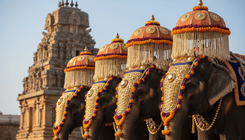
The most iconic element of Thrissur Pooram is the mahout-led elephant processions that wind through the temple streets. Over thirty decorated elephants participate, many adorned with golden caparisons (ceremonial covers), flower garlands, and elaborate headdresses. These elephants represent a link to India's ancient royal courts and sacred traditions, where elephants were symbols of power and blessing.
The processions are ordered by a specific choreography that reflects the festival's ritual purpose. The elephants are led by mahouts and accompanied by traditional music ensembles playing the chenda drum, the chengila trumpet, and other percussion instruments unique to Kerala's temple culture. The sight of these animals moving in slow, synchronized rhythm, their bodies adorned in gold and flowers against the backdrop of the temple's architecture, has become the defining image of the festival.
What many visitors do not know is that the elephants themselves are treated with great care during the festival. The mahouts and temple officials ensure the animals are comfortable and the processions are paced to prevent any distress. The festival reflects an understanding of the elephant not simply as a decorative element but as a sentient participant in a sacred act.
The Music and Rituals
Thrissur Pooram is a festival of sound as much as sight. The traditional music played during the pooram is called Panchavadyam, an ensemble of five percussion instruments: the timila, the mridangam, the idakka, the chengila, and the ilathalam. These musicians, trained in the rigid classical traditions of Kerala's temple music, perform intricate rhythmic patterns that can continue for hours without pause.
The music is not merely entertainment; it is ritual sound that is understood to create and maintain sacred space. The rhythm of the drums literally sets the pace of the processions and structures the devotee's experience of the festival. Watching musicians perform Panchavadyam, you will notice their extraordinary focus and the way their bodies move in exact sync with the complex metres they are playing.
One of the most distinctive rituals of Thrissur Pooram is the Theepoli, or night-long vigil of firelight. After sunset on the pooram night, thousands of oil lamps and lights illuminate the temple grounds and the area around it. This creates an otherworldly atmosphere where the temple seems to glow from within. The Theepoli is both a practical illumination for the continued worship and a symbolic representation of light dispelling darkness, a core concept in Hindu philosophy.
The Festival's Regional and Cultural Significance
Thrissur Pooram represents the particular genius of Kerala's temple culture, which blends Shaivite ritual with a form of celebration that is open and participatory in a way many North Indian festivals are not. The festival reflects Kerala's history as a centre of ancient maritime trade, Ayurveda, and philosophical learning, and it draws pilgrims not only from across India but from Keralite diaspora communities around the world.
The festival also provides livelihood and cultural continuity for performers, musicians, mahouts, and other specialists whose skills have been passed down through families for generations. The elephant camps, which maintain the animals year-round, depend on the income and cultural validation the festival provides. In this way, Thrissur Pooram is not just a religious event but a keeper of living traditions that might otherwise fade.
For visitors unfamiliar with Hindu ritual, the pooram can seem chaotic or overwhelming—the crowds are immense, the noise is constant, and the visual information is dense. But this quality of abundance and energy is intentional. Hindu festivals, unlike some other religious observances, often embrace sensory fullness as a way of engaging the whole person in devotion. The festival invites you to participate not as a passive observer but as part of something genuinely collective.
Planning Your Visit
If you choose to attend Thrissur Pooram, begin your planning several months in advance. Accommodation in Thrissur fills quickly, and the town becomes extremely crowded during the pooram dates. Consider staying in a neighbouring town and arriving early to secure a viewing spot, as the best vantage points are claimed hours before the processions begin.
The festival is free to view from public areas, though you may also gain access to reserved seating and temple spaces through advance booking or through temple authorities. Wear comfortable shoes and light clothing, bring water, and expect to spend several hours standing or sitting in crowds. The festival runs continuously from early morning through the night, so you can choose to attend specific hours rather than the entire event.
Most importantly, approach the festival with a spirit of openness and respect. This is not a cultural performance staged for tourists, but a live religious celebration where thousands of devotees have come to worship. Observe the customs and courtesies of the space, keep noise and photography mindful of the ritual context, and remember that your presence in this space is a privilege.
Common questions
When is Thrissur Pooram celebrated each year?
Thrissur Pooram falls on the pooram day in the Malayalam month of Medam, which typically corresponds to March or April in the Gregorian calendar. The exact date varies each year because it follows the lunar calendar and Malayalam zodiac, so check the festival's official website for the specific dates each year.
How many elephants participate in the Thrissur Pooram procession?
Over thirty elephants participate in the festival processions, each decorated with golden caparisons, flower garlands, and elaborate headdresses. These elephants come from temple camps across Kerala and are led by mahouts trained in traditional handling methods.
Can I attend Thrissur Pooram as a non-Hindu visitor?
Yes, Thrissur Pooram welcomes visitors of all backgrounds. The public areas are free to access, and visitors of any faith can watch the processions and participate in the general atmosphere of celebration. Show respect for the religious context, observe local customs, and be mindful of photography in ritual spaces.

Related Articles


