
The Twelve Jyotirlingas: Shiva's Luminous Shrines Explained
Sacred Fire, Scattered Across India

Aditya Pandey
21 Nov 2026 • 5min
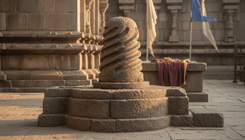
The twelve jyotirlingas are the most sacred shrines dedicated to Shiva across India. Each one represents a manifestation of Shiva as a column of divine light, and pilgrimage to these sites is among the most important spiritual journeys in the Hindu tradition. To understand them is to understand how Shiva is worshipped and revered across the subcontinent.



Somnath in Gujarat
Somnath stands on the coast of Gujarat, where it has been rebuilt many times after destruction. The name means "protector of the moon"—Soma, the moon deity, is said to have worshipped here to seek relief from a curse. The temple that stands today is a modern reconstruction, completed in 1951, though the site itself is ancient. Somnath represents the westernmost of the twelve jyotirlingas.
Mallikarjuna in Andhra Pradesh
Mallikarjuna sits on the Shrishailam hills in Andhra Pradesh, near the river Krishna. Here Shiva and Parvati are both worshipped; the name itself joins Mallik (Parvati) and Arjuna (Shiva). The temple is believed to be one of the oldest continuously worshipped shrines among the twelve. It draws pilgrims from across southern India throughout the year.
Mahakaleshwar in Madhya Pradesh
Mahakaleshwar is located in Ujjain, one of India's holiest cities and home to the Kumbh Mela every twelve years. This jyotirlinga is unique among the twelve: it is the only one said to face south, symbolising Shiva's role as Mahakala, the master of time and death. The name itself—Mahakala-ishwar—means "lord of great time". The temple stands on the banks of the Kshipra river.
Omkareshwar in Madhya Pradesh
Omkareshwar rises on an island in the Narmada river, also in Madhya Pradesh. The shrine takes its name from the sacred sound Om, which Shiva embodies here. The island itself is shaped like the Om symbol when seen from above. Devotees cross the river to reach the temple, making the river crossing itself a part of the pilgrimage.
Kedarnath in Uttarakhand
Kedarnath lies high in the Himalayas, in the state of Uttarakhand. It is among the most demanding of the twelve jyotirlingas to reach, accessible only during the warmer months when mountain passes open. The peak itself is named after a deer, and legend holds that Shiva appeared here in that form to hide from the Pandavas. The temple sits at an altitude of over 3500 metres.
Bhimashankar in Maharashtra
Bhimashankar is nestled in the Western Ghats of Maharashtra, surrounded by dense forest and mountain streams. The name honours both Bhima, the second Pandava brother, and Shankara, another name for Shiva. The site is often visited as part of pilgrimages through the states of Maharashtra and Karnataka.
Kashi Vishwanath in Uttar Pradesh
Kashi Vishwanath stands in Varanasi (also called Kashi), one of Hinduism's most sacred cities. Varanasi itself is considered the city of Shiva, and this jyotirlinga is the heart of that devotion. The temple lies on the banks of the Ganges river, in the old city. Kashi Vishwanath is one of the most visited of the twelve jyotirlingas.
Trimbakeshwar in Maharashtra
Trimbakeshwar is located near Nashik in Maharashtra, on the banks of the Godavari river. The name refers to the three peaks (trin-bak, three peaks) that surround the shrine. This shrine is associated with the source of the Godavari, one of India's holiest rivers. The temple is another major pilgrimage site, especially during the Kumbh Mela held in Nashik.
Vaidyanath in Jharkhand
Vaidyanath stands in Jharkhand, in the eastern part of India. The name means "lord of healing" (vaidya-nath), and Shiva is revered here as the divine physician. This jyotirlinga is one of the twelve that lies furthest from the western coast. It draws pilgrims particularly during the month of Shravan, when Shiva worship intensifies across India.
Nageshwar in Gujarat
Nageshwar is situated in Gujarat, near the Arabian Sea. The name means "lord of serpents" (nag-ishwar), and serpent symbolism features prominently in Shiva worship. This jyotirlinga is one of the smallest and least visited of the twelve, yet it retains its sacred significance. It represents Shiva's compassion towards all beings, even the most feared.
Rameshwar in Tamil Nadu
Rameshwar is located on the island of Rameswaram, near the southern tip of India. The name joins Rama (the deity) and Ishwar (Shiva). This shrine is connected by a long causeway to the mainland and is a major pilgrimage destination in Tamil Nadu. It is one of the jyotirlingas most linked to regional legend and local tradition.
Grishneshwar in Maharashtra
Grishneshwar (also spelled Ghrishneshwar or Ghrneshwar) is the twelfth and final jyotirlinga, located near Aurangabad in Maharashtra. The name is derived from Grishma, which refers to the sun or summer heat, and Ishwar, meaning Shiva. This jyotirlinga is the most recently established among the twelve in terms of temple construction, though the site itself is ancient. It sits near the Godavari river and the historical Ellora Caves.
Common questions
Can I visit all twelve jyotirlingas in one trip?
Visiting all twelve jyotirlingas as a single journey is possible but demanding, taking several weeks and covering vast distances across India. Many devotees undertake the pilgrimage over several years or decades. Some complete the journey in dedicated pilgrimage circuits, visiting nearby shrines together.
What is the best time of year to visit the jyotirlingas?
Most jyotirlingas can be visited year-round, but Kedarnath in the Himalayas is accessible only from May to October when mountain passes are open. Many devotees prefer visiting during Shravan (July to August), when Shiva worship is especially intense. Winter is ideal for visiting the southern shrines.
Why is Mahakaleshwar the only jyotirlinga facing south?
Mahakaleshwar faces south because Shiva as Mahakala represents time and death, domains associated with the south direction in Hindu tradition. The south is also the direction of the ancestors and the realm of Yama, the god of death, so this orientation reflects Shiva's role as the eternal lord beyond death.

Related Articles


