The Story Behind Naraka Chaturdashi: Why This Victory Over Evil Matters
Krishna's triumph over darkness, celebrated as Choti Diwali

Kushal K
16 Oct 2026 • 6min
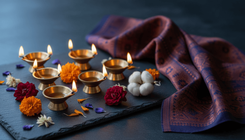
Naraka Chaturdashi (also called Chhoti Diwali) celebrates a victory that comes just before Diwali itself. On this day, Lord Krishna freed the world from the tyranny of a demon king named Narakasura, rescuing 16,000 women—princesses and daughters of gods and sages—whom the demon had held captive. The story of Naraka Chaturdashi reminds us that oppression does not last; light triumphs when someone acts with courage. This is why many families mark this day as part of their Diwali celebrations, and why it holds such meaning across India.



The Demon Narakasura and His Kingdom
Narakasura was a powerful asura (demon), the son of Bhudevi, the earth goddess, and Lord Vishnu in his Varaha (boar) avatar. He ruled the kingdom of Pragjyotisha from his fortified capital, Pragjyotishapura, in present-day Assam. He was not merely mischievous; he had grown arrogant and cruel, conquering kingdoms around him and harassing the gods and sages. His reputation was so fearsome that few dared to oppose him. But Narakasura's greed did not stop there. He stole the divine earrings of Aditi, the mother of the gods, and abused his power to confine 16,000 women—princesses and daughters of gods and sages—in his palace, holding them hostage as part of his domination over the worlds. Indra, king of the gods, and the celestial beings he had wronged grew desperate. They turned to Krishna as their only hope, the one who had proven before that he could defeat demons bent on destruction.
Krishna's Battle and Victory
According to the accounts in the Bhagavata Purana, Krishna made his way to Narakasura's fortress on his mount Garuda, accompanied by his consort Satyabhama. The battle between Krishna and Narakasura was intense and prolonged. Narakasura fought with all the power his long reign had granted him, but Krishna's skill and divine strength proved stronger, and he slew Narakasura with his Sudarshana Chakra. In a widely told popular version, especially in South India, it is Satyabhama—an incarnation of Bhudevi—who kills Narakasura, fulfilling the condition of his boon that only his own mother could end his life. With the demon's death, his captives were freed. Fearing that society would not accept them after their long captivity, the 16,000 women did not return to their families; instead, Krishna accepted them as his wives to restore their dignity and honour. This moment of liberation became the reason Naraka Chaturdashi is celebrated as a day of victory over evil and bondage.
The Deeper Meaning of Naraka Chaturdashi
The Naraka Chaturdashi story carries meaning beyond a simple clash between good and evil. In spiritual terms, Narakasura represents ignorance, attachment and the suffering that comes from living under illusion—his very name echoes Naraka, the realm of suffering. Narakasura's palace, where the women were held, symbolises the state of consciousness that keeps us trapped in limitation. When Krishna defeats Narakasura, he is also defeating the darker tendencies within ourselves: greed, arrogance and the cruelty that arises when we think we are separate from others. The 16,000 captives represent aspects of consciousness or dharma (righteousness) that can be awakened and freed when ignorance is overcome.
Different traditions and texts emphasise different facets of this story. In South India, particularly Tamil Nadu, the morning of Naraka Chaturdashi is celebrated as Deepavali itself, with particular fervour, and the focus is on the triumph over Narakasura bringing relief and restoration to the oppressed. In North India, the day is woven into Diwali celebrations more seamlessly as Chhoti Diwali, with the emphasis on cleansing and new beginnings. Yet across all these regional and sectarian differences, the core message is the same: what seems permanent and powerful can be transformed when courage and dharma prevail.
How Naraka Chaturdashi Is Observed
Families observe Naraka Chaturdashi by taking an oil bath before sunrise, symbolising a washing away of past darkness and negativity. Many apply tikka or tilak and wear fresh clothes. The day is marked with prayers and sometimes a small puja dedicated to Krishna's victory. In many homes, lights are lit and sweets are shared, much as they are on Diwali itself, which usually falls the very next day. Some families exchange gifts or clean their homes thoroughly, interpreting the spiritual cleansing as a practical commitment to new order. In temples, special worship is offered to Krishna, often accompanied by bhajans and devotional singing.
The rituals vary by region and family tradition. In some places, the emphasis falls on remembrance and gratitude for freedom from tyranny. In others, the day is kept as a period of quiet reflection before the larger Diwali celebrations begin. What unites these observances is the understanding that Naraka Chaturdashi marks a threshold: a moment when darkness was overcome so that light could follow.
Naraka Chaturdashi and Diwali
Naraka Chaturdashi does not stand alone. It is the second day of the five-day Diwali festival, following Dhanteras, and sets the tone for the main celebration that follows. Diwali as a whole marks the victory of light over darkness, righteousness over unrighteousness. Naraka Chaturdashi places that victory in a story of specific liberation and courage. When you light a diya on Diwali night, usually the very next day, you are continuing the work that Krishna began when he freed the captives. Each light becomes a reminder that bondage can end, that even a powerful oppressor can be overcome, and that freedom is always possible.
This layering of meaning is one reason the Diwali festival is so rich and enduring. It is not simply a moment of joy; it is a narrative of struggle, courage and the triumph of dharma. Naraka Chaturdashi carries that narrative forward into the brighter days that follow.
Common questions
When is Naraka Chaturdashi celebrated each year?
Naraka Chaturdashi is observed on Chaturdashi, the fourteenth day of the waning fortnight (Krishna Paksha), in the Hindu month of Ashwin according to the amanta calendar, or Kartik according to the purnimanta calendar. The exact date changes every year according to the lunar calendar, usually falling in October or November. It typically comes the day before Lakshmi Puja, which is celebrated on Amavasya (the new moon), though in some years both are observed on the same day depending on tithi timings.
What should I do to observe Naraka Chaturdashi at home?
Begin the day with an oil bath before sunrise to symbolise cleansing. Wear fresh clothes and apply tilak. You can light a diya, offer prayers to Krishna, and prepare or share sweets with family and friends. Many people also clean their homes as part of the observance, treating it as both a spiritual and practical renewal.
Is Naraka Chaturdashi the same as Diwali?
In most of India, no: Naraka Chaturdashi is the second day of the five-day Diwali festival, usually falling the day before the main Diwali night of Lakshmi Puja. While Lakshmi Puja is celebrated on the new moon, Naraka Chaturdashi specifically honours the victory over Narakasura. In Tamil Nadu and much of South India, however, Naraka Chaturdashi is celebrated as Deepavali itself. Together, they form a narrative where freedom and liberation lead into the broader light of Diwali.

Related Articles