The Story Behind Naraka Chaturdashi and Why It Is Celebrated
When Light Triumphs Over Darkness

Aditya Pandey
16 Oct 2026 • 6min
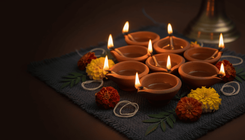
Naraka Chaturdashi marks the day the demon Narakasura, a powerful asura who had terrorised the heavens and the earth, was slain—by Lord Krishna, or in the widely told popular version, by Krishna's consort Satyabhama. This victory is central to the Diwali festival and is observed on Chaturdashi, the fourteenth day of the waning fortnight (Krishna Paksha), the day before the new moon of Diwali. This falls in the month of Ashwin in the amanta calendar followed in South and West India, and in Kartik in the purnimanta calendar followed in North India. Known in North India as Chhoti Diwali, the day is observed across the country, and in Tamil Nadu and much of South India it is celebrated as Deepavali itself.
The story of Narakasura appears in several ancient texts, including the Bhagavata Purana, and has regional variations that reveal different facets of the narrative. Understanding why this day matters helps us see how Diwali itself is about much more than lights and sweets.



The Demon Narakasura and His Tyranny
Narakasura was the son of Bhudevi, the earth goddess, and Lord Vishnu in his Varaha (boar) avatar, born after Varaha raised the earth from the cosmic ocean. He grew into a powerful asura and, according to popular tradition, received a boon that he could be killed only by his own mother. Emboldened by this protection, he conquered the three worlds and imprisoned 16,000 women in his palace. He also stole the earrings of Aditi, the mother of the devas, and hoarded them in his fortress.
His cruelty extended beyond conquest. Narakasura harassed the gods and sages, seized what did not belong to him, and acted without any regard for dharma. At last Indra, king of the devas, went to Lord Krishna and appealed for help, as no one in the heavens seemed strong enough to end his reign.
Krishna's Victory Over Narakasura
Krishna, recognising the threat Narakasura posed to dharma, resolved to defeat him. Mounted on Garuda and accompanied by his consort Satyabhama, he flew to Pragjyotishapura, Narakasura's capital in present-day Assam, and challenged the demon to combat.
The battle itself was fierce. According to the Bhagavata Purana, Krishna overcame Narakasura's defences and armies and finally slew him with his Sudarshana Chakra. In the widely told popular version, especially in South India, Krishna is struck down or feigns being wounded during the battle, and Satyabhama—an incarnation of Bhudevi—takes up the bow and kills Narakasura herself, fulfilling the condition of his boon that only his mother could end his life. As he died, Narakasura recognised the divine nature of those before him and asked that the day of his death be celebrated with lights and joy rather than mourning. In death, Narakasura was redeemed through this recognition of the divine.
After the victory, Krishna freed the 16,000 women and, to restore their dignity in society, accepted them as his wives. Krishna and Satyabhama then travelled to Indra's heaven to return the earrings to Aditi. The heavens rejoiced, and the devas celebrated this triumph of good over evil before Krishna returned to Dwarka.
How the Victory Is Remembered in Ritual
The day of Naraka Chaturdashi is marked by several customs that honour this victory. In many households, people wake before dawn and take an abhyanga snan—a ritual bath preceded by an oil massage and the application of ubtan (a herbal paste)—symbolising the purification that comes with the defeat of evil. Some regions perform abhisheka, a ritual bathing of Krishna's idol, to commemorate the occasion.
Lighting lamps is central to the celebration. While Lakshmi Puja on the new moon night is the main night of lamps in much of North India, Naraka Chaturdashi is the main day of Deepavali in Tamil Nadu and among many South Indian communities. Many families also light a lamp for Yama, the god of death, on this day. The lamps represent the light of consciousness and victory dispersing darkness and ignorance.
In some families, the day is marked by preparing specific foods and offerings to Krishna. The spirit is one of gratitude for the protection dharma receives through divine intervention. Many people also clean and decorate their homes on this day, treating it as a new beginning and a symbol of removing inner darkness.
Regional Differences in Celebration
The prominence of Naraka Chaturdashi varies significantly across India. In Tamil Nadu, the morning of Naraka Chaturdashi is Deepavali itself, celebrated with the pre-dawn oil bath, new clothes, sweets and firecrackers, and Karnataka and other southern states also mark it with considerable fanfare. Many temples in the South hold special pujas and distribute prasad to mark the day.
In North India, the day is known as Chhoti Diwali or Roop Chaudas, and is observed on the day before the main Diwali night with lamps, cleaning and preparations for Lakshmi Puja. In Gujarat, it is observed as Kali Chaudas, a day associated with the worship of Goddess Kali and protection from negative forces. In Bengal, it is Bhoot Chaturdashi, when families light fourteen lamps and eat a dish of fourteen leafy greens to ward off evil spirits.
In Maharashtra, people take the pre-dawn abhyanga snan with utane (ubtan) and then crush a bitter karit fruit under their feet, symbolising the killing of Narakasura, before sharing Diwali faral (festive snacks) with family and friends. These regional variations show how the same story is honoured through different customs suited to local traditions.
The Spiritual Meaning Beyond the Story
Naraka Chaturdashi carries a meaning that extends beyond the story itself. Narakasura represents the inner demons each person faces: anger, greed, attachment, and the inability to see one's own true nature. Narakasura's recognition of the divine at the moment of death symbolises the possibility of realisation even at the final moment.
The victory itself teaches that dharma will ultimately triumph, though the battle may be fierce. Krishna's willingness to enter Narakasura's fortress and face him directly shows that divine intervention is not distant or abstract, but engaged and present, and Satyabhama's role reminds us of the strength of the divine feminine. The emancipation of the 16,000 women represents the freeing of consciousness from bondage.
For practitioners, Naraka Chaturdashi is a reminder to examine their own actions and motivations. It is a day to check whether we are living in alignment with dharma, or whether we have allowed our own inner demons to take root. The lighting of lamps becomes a personal act: kindling the inner light of wisdom and right action.
Common questions
Is Naraka Chaturdashi celebrated on a specific date each year?
No, the date changes yearly because it follows the lunar calendar. It falls on Chaturdashi, the fourteenth day of the waning fortnight, in the month of Ashwin (amanta calendar) or Kartik (purnimanta calendar). This typically occurs in October or November, usually the day before Lakshmi Puja, though in some years both are observed on the same day depending on tithi timings.
What is the difference between Naraka Chaturdashi and Diwali?
Naraka Chaturdashi is the second day of the five-day Diwali festival, after Dhanteras, and celebrates the victory over Narakasura. Lakshmi Puja, usually celebrated the following day on the new moon night, honours the goddess of wealth and prosperity. Many people light lamps on both days, though Naraka Chaturdashi receives more prominence in South India, where it is celebrated as Deepavali itself.
Can you perform puja at home on Naraka Chaturdashi?
Yes, many households perform simple rituals like taking the pre-dawn oil bath, lighting lamps, offering flowers and incense to Krishna, and preparing special foods. You can follow your family's tradition or simply light lamps before dawn as a way to mark the victory of light over darkness.

Related Articles