
The Sixteen Offerings of Shodashopachara Puja Steps Explained
Master each upachara to deepen your worship.

Abhilash Ramakrishna
07 Nov 2026 • 8min
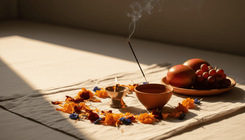
Shodashopachara puja is a structured form of worship that offers sixteen distinct forms of respect and service to a deity. The word upachara means simply "an act of service", and each of the sixteen shodashopachara puja steps is one complete offering of reverence and care. Following these steps in order creates a systematic path through worship, building both your focus and your connection to the deity. You can perform shodashopachara puja at home or in a temple, with a small altar or a fuller shrine.
The practice appears across many Hindu traditions and schools of worship, though the exact offerings and their order may vary slightly depending on your sampradaya or regional custom. What matters is understanding what each step does and why you perform it then, so that your worship becomes conscious and present rather than hurried or rote.



The First Six Upacharas: Preparation and Presence
The first upachara is asana—establishing a seat or stable space. You begin by preparing a clean, dedicated place for your worship, whether that is a corner of your home, a mat, or a shrine. This is not mere tidiness; it is your statement of intent and your creation of sacred space. The tradition holds that a deity is more fully present where you have invited them in deliberately.
The second upachara is svagatam, or welcoming the deity. You invite the deity to accept your worship and to be present. You might do this with words, a gesture, or simply the clarity of your attention. If you work with a murthi (an image or idol), you are welcoming the presence within it.
The third upachara is padya—offering water for the feet. This is a gesture of care and humility; you wash the deity's feet as you would a revered guest. If you use a murthi, you may sprinkle water near the base, or use a small dish. If you worship without an image, the offering is made to the space you have prepared.
The fourth upachara is arghya—an offering of water mixed with flowers, rice, or sandalwood. This is a more ceremonial gift than padya, performed with both hands and given with intention. It represents your gratitude and your wish to purify both yourself and the space.
The fifth upachara is achmaniya—water offered for rinsing the mouth or hands. This continues the theme of cleansing and care, preparing the deity to receive the inner offerings that follow.
The sixth upachara is snana, or bathing. You offer water perfumed with flower extracts, or simply cool water, as if bathing the deity. This can be poured ritually over a murthi, or offered to the space of worship. In some traditions this is a simple sprinkling; in others, particularly in temple worship, it may be an elaborate process with multiple waters.
The Middle Upacharas: Adornment and Nourishment
The seventh upachara is vastra, or clothing. You offer cloth, or simply acknowledge the deity's presence by arranging flowers, garlands or a cloth near the murthi or altar. This is an act of respect and protection.
The eighth upachara is gandha—sandalwood paste, scents and oils. You apply or offer these with the intention of pleasing the senses and purifying the space. Sandalwood has been used in Hindu worship for thousands of years as both a fragrance and a cooling substance.
The ninth upachara is pushpa—flowers. Flowers are among the most universal offerings. You place them at the deity's feet, or scatter them, choosing blooms that suit the season and the deity's nature. Lotus is auspicious in most traditions; other regional flowers carry their own significance. Do not use synthetic flowers.
The tenth upachara is dhupa—incense. Burning incense carries the offering upward and purifies the air. Different scents suit different deities and times of day. Many people light dhupa at dawn as the most sacred time for worship.
The eleventh upachara is dipa—a lamp or light. This is often the most vital moment in worship. Lighting a ghee lamp or oil lamp represents the removal of darkness and the presence of consciousness. In many homes, the dipa burns throughout the puja and sometimes for some time after.
The twelfth upachara is naivedya—food offered to the deity. This might be fresh fruit, sweets, rice, milk, or whatever you have prepared or chosen. The naivedya is later eaten as prasad, blessed food that carries the deity's grace to those who eat it.
The Final Upacharas: Surrender and Completion
The thirteenth upachara is tambulam—betel leaf with areca nut, or other stimulating substances. In South Indian traditions especially, this offering represents vitality and continuation. In some forms of worship it may be replaced with water or other offerings according to local practice.
The fourteenth upachara is pranama—prostration and salutation. You bow to the deity, either from a standing position or by touching your forehead to the ground. This gesture expresses complete surrender and your recognition that you are in the presence of something greater than yourself. Pranama can be performed with hands pressed together, or with a full eight-point prostration where eight parts of the body touch the ground.
The fifteenth upachara is parikrama—circumambulation. You walk clockwise around the deity or altar, keeping your right side toward the center. This journey around the deity's presence affirms your relationship to them and your wish to return again and again. You may circumambulate slowly, with focused attention, or swiftly as part of a rhythm of movement in worship.
The sixteenth and final upachara is visarjana—release and closure. You formally complete the worship, inviting the deity to depart (or, in another understanding, acknowledging that they remain always, while you release your concentrated attention). This might be expressed with a final mantra, a final gesture, or a period of silence. The completion is as important as the beginning; it marks the boundary between structured worship and daily life.
Adapting Shodashopachara for Your Practice
You do not need elaborate materials or a grand space to perform these sixteen offerings. Many practitioners perform shodashopachara puja with nothing more than water, flowers from a potted plant, and a small lamp. The principles—respect, care, presence, and surrender—are what matter.
Some people practice all sixteen in a single session of one hour or more. Others focus on just a few, particularly the central offerings of light, flowers, and food. Regional and sampradaya differences are substantial. In Kashmir Shaivism, the ordering and emphasis differ from what is found in Shri Vidya or Gaudiya Vaishnavism. Rather than seeing this as confusion, understand it as richness: the tradition has developed many ways to honor the sacred.
What matters is that you understand what each upachara represents and approach it with intent. Begin where you are. Choose offerings you can source and prepare without strain. Over time, your practice will deepen and may expand. The structure of shodashopachara puja holds and supports that growth.
Perform Shodashopachara Puja
- Prepare your space Clean the area where you will worship and arrange a mat, small table or altar. Light a lamp to mark the beginning of your dedicated time.
- Welcome and prepare the deity Invite the deity to accept your worship. Offer water for the feet (padya), then arghya, and if possible, perform a ritual washing or sprinkling of water (snana).
- Adorn and nourish Offer cloth or flowers (vastra and pushpa), apply sandalwood paste or scent (gandha), light incense (dhupa), and ensure your lamp is burning brightly (dipa). Then offer prepared food or fruit (naivedya).
- Offer betel or stimulating substances Place betel leaf with areca nut, or another regional offering suited to the deity, as tambulam. This marks the transition toward completion.
- Bow and circumambulate Perform pranama with a bow or full prostration, expressing your surrender. If space allows, walk clockwise around the deity or altar (parikrama).
- Complete the worship Close with visarjana: speak a final mantra or sit in silence to formally release your concentrated attention. Your worship is now complete, though the deity's presence remains.
Common questions
Can I do shodashopachara puja without an idol or murthi?
Yes. You perform the same sixteen offerings to the deity's presence in the space you have prepared with intention. Many practitioners worship without an image, offering flowers, water and light to the altar itself or to an empty space marked as sacred.
What if I don't have all the materials for every offering?
Start with what you have: water, flowers, and a light are sufficient. The essence is in your focused attention and respect, not in the abundance of materials. As your practice grows, you can add incense, scent and food when you are able.
Does the order of the sixteen offerings matter?
Yes. The sequence moves from outer preparations and purification through adornment and nourishment, to inner surrender and completion. Beginning with asana and ending with visarjana creates a coherent structure, though some regional traditions may reorder or emphasise certain offerings differently.

Related Articles


