
The Six Tastes in Ayurveda and Why They Matter at a Meal
Balance every plate, honour every taste

Sunil Chaurasia
08 Nov 2026 • 8min
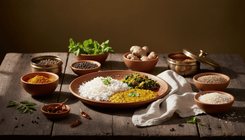
Ayurveda teaches that every food carries a taste, and every taste has a purpose in your body. The six tastes—known together as shadrasa—are sweet, sour, salty, pungent, bitter and astringent. Each one affects your digestion, your energy and the three doshas (the energetic forces that govern your constitution: vata, pitta and kapha). When you understand these tastes and include them at every meal, you support your body's natural balance rather than fighting against it.
The six tastes are not just pleasant flavours. In Ayurveda, they are carriers of different qualities—warm and cool, heavy and light, rough and oily—and eating them in harmony means eating in a way your individual body can process well. A meal without variety among the tastes leaves you craving more food even when your belly is full. A meal that holds all six tastes tends to satisfy you more deeply and support stronger digestion.



What Each Taste Does
Sweet taste comes from grains, oils, milk, ghee and root vegetables. It is heavy, cool and nourishing. Vata and pitta types tend to do well with sweet foods because they settle the nervous system and build tissue. But kapha can easily become sluggish with too much sweet, so balance matters.
Sour taste appears in yoghurt, lemon, tamarind, fermented foods and vinegar. It is warm and stimulating. It sharpens digestion and brings alive the appetite, but too much can inflame pitta. A squeeze of lemon or a small spoonful of yoghurt at a meal is often enough.
Salty taste from salt, seaweed and salty broths is warming and hydrating. It helps your body hold on to fluids and minerals. A light salt presence at each meal aids digestion, but excess salt drives up pitta and can make vata feel ungrounded.
Pungent taste comes from chillies, ginger, garlic, black pepper and mustard seeds. It is the hottest and driest of the six. It stokes the digestive fire (agni) and clears congestion. Too much can aggravate pitta and dry out vata.
Bitter taste lives in leafy greens, neem, fenugreek and turmeric. It is cool and dry. It clears toxins and excess heat, so pitta types often need it. But vata and kapha can feel more depleted by bitter, so they need it in smaller amounts.
Astringent taste comes from beans, lentils, unripe fruits and some leafy greens. It is dry and cooling. It firms tissues and reduces excess flow, but too much can constipate vata and make digestion sluggish in kapha.
How the Six Tastes Balance Your Doshas
Each dosha thrives when the tastes it needs are present and the tastes that aggravate it are kept light.
Vata types do well with more sweet, sour and salty tastes because these are warming and grounding. Pungent, bitter and astringent tastes are drying, so vata does best using them sparingly. A vata meal might centre on warm porridge with ghee (sweet), a pickle on the side (sour and salty), and a pinch of ginger (pungent). The bitter and astringent come in small amounts.
Pitta types benefit from sweet, bitter and astringent tastes, which cool and calm the heat. Too much sour, salty or pungent pushes pitta into inflammation and anger. A pitta meal often includes cooling grains like basmati rice, plenty of green vegetables (bitter and astringent), a small amount of lemon (sour used carefully), and fresh herbs.
Kapha types do well with pungent, bitter and astringent tastes, which warm and lighten. Sweet, sour and salty tastes are heavier, so kapha uses them more sparingly to avoid sluggishness. A kapha meal might feature mung beans (astringent), ginger and garlic (pungent), and leafy greens (bitter), with very little ghee or salt.
Building a Balanced Plate
The practical way to eat the six tastes is not to analyse every ingredient, but to look at your plate and check that you see variety.
Start with a grain or legume as your base. Add a cooked vegetable and a raw vegetable or salad for contrast. Include a small amount of healthy fat—ghee, sesame oil or coconut oil—which carries the sweet taste and aids absorption. Finish with a small condiment: a squeeze of lemon or lime (sour), a sprinkle of salt, a grind of pepper, a dab of pickle or fresh ginger, or a handful of fresh herbs.
This approach works whether you are cooking a single meal or planning a week. You do not need to force all six tastes into every dish; rather, let them distribute across your meal. If breakfast is warm rice with ghee and milk (sweet), add a pinch of salt and a light sprinkle of pepper. If lunch is a vegetable curry, let the turmeric and ginger (pungent and bitter) play a central role and finish with lemon. Dinner might bring the astringent beans or legumes.
The seasons and your current state also guide the balance. During a cold, damp winter, vata and kapha both need warming pungent tastes more, so ginger, garlic and black pepper become more prominent. In hot summer, pitta needs cooling bitter and astringent tastes, so you reach for more greens and fewer spices. When you feel unwell or overstimulated, adjust the tastes toward what your constitution needs rather than what you crave.
Common Mistakes in Balancing Tastes
Many people make their meals one-dimensional without meaning to. A plate of rice, a plate of cooked vegetables and a plate of dal, eaten separately and without condiments, delivers mostly one or two tastes at a time. The body's digestion becomes confused because it is not getting the signal that the meal is complete.
Another mistake is treating the six tastes as rules to follow perfectly rather than principles to feel. Rigidity itself aggravates vata. The goal is not to count tastes like calories, but to develop a sense—over time and with practice—of what balance feels like on your tongue and in your digestion. A little experimentation teaches you more than any list can.
Some people also assume that if a taste is balancing for their dosha, they should use a lot of it. This misses the point. Even for vata, which needs sweet, a diet that is only sweet becomes cloying and hard to digest. The six tastes work together precisely because they are all present and none dominates. Harmony comes from balance, not excess.
Eating Seasonally and with Intention
The six tastes also shift their value with the season and the time of day. Early morning is often a good time for a warming meal with more pungent and salty tastes if you need stirring, or with sweeter tastes if you need calming. Midday digestion is strongest, so this is when a meal with all six tastes shines most. Evening is usually the time for lighter meals and less pungent heat, which might keep you awake.
In your own kitchen, taste becomes something you practice rather than something you study. Over weeks of noticing how a meal sits with you—whether you feel satisfied, whether your energy is steady or scattered, whether your digestion is kind to you—you begin to sense what balance looks like for you. This direct experience is Ayurveda not as an ancient system, but as a living, edible wisdom that meets you where you are.
Common questions
Can I eat all six tastes if I have a lot of pitta
Yes, but adjust the amounts. Include the tastes that balance pitta (sweet, bitter, astringent) as your main flavours, then use sour, salty and pungent sparingly or in very small quantities. A little ginger aids digestion without overheating you; a squeeze of lemon can brighten a meal without inflaming. The goal is balance within what suits your constitution, not rigid exclusion.
What if I'm eating for more than one dosha
Most people are a mix of two doshas or all three. Build your meal around the tastes that serve your primary constitution, then add small amounts of what the secondary dosha needs. For a vata-pitta person, warm grains and ghee (good for both) with gentle spices rather than fiery heat, and cooling herbs like coriander serve both types well.
Do I have to taste all six at every single meal
No. The principle is that all six should appear across your day and week. Breakfast might centre on sweet and salty; lunch might bring pungent and bitter; dinner might emphasize astringent. Spreading them across meals makes eating simpler and more natural than forcing them all into one plate.

Related Articles


