
The Significance of the Diwali Lantern in Indian Homes
Light as Symbol, Home as Sacred Space

Aditya Pandey
04 Nov 2026 • 7min
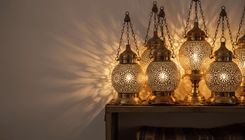
A Diwali lantern, or kandil, is far more than a decoration in an Indian home during the festival of lights. It carries meaning that reaches into the heart of why Diwali is celebrated at all: the triumph of light over darkness, knowledge over ignorance, and good over evil. When you hang a kandil in your doorway or window during Diwali, you are making a visible statement about what you believe and what you invite into your home.
The kandil sits at the intersection of the practical and the spiritual. On the surface, it lights up a room or veranda on a dark night. But in the tradition, the light of the kandil represents something inner—the illumination of the mind, the awakening of consciousness, the presence of the divine in everyday life. This is why the kandil is not simply hung anywhere. It appears in doorways, windows, and courtyards: the places where the boundary between outside and inside, between the world and the home, becomes visible.



The Kandil as a Symbol of Divine Presence
The kandil's light is understood to embody divine presence in your home. In Hindu philosophy, light (jyoti) is one of the purest symbols of the sacred. When you light a kandil during Diwali, you are participating in an act that connects to the deepest spiritual meanings of the festival. The flame itself becomes an offering: a small fire offered to the divine, and at the same time, an invitation for that divine presence to dwell in your space.
The placement of the kandil is intentional. A kandil hung above a doorway does not just illuminate the threshold; it sanctifies it. It creates a sense that the home is held within a sacred boundary. This is particularly true in regions where the kandil is hung in pairs on either side of an entrance, or where multiple kandils are arranged to frame the main door. Each light acts as a guardian, a marker that this is a place where the family gathers, where life unfolds, and where the sacred and the everyday meet.
The kandil also carries a message to those who see it from outside. During Diwali, a home lit with kandils signals welcome, peace, and auspiciousness to the neighbourhood. The collective glow of many kandils in many homes transforms the entire street or community. This visible commitment to light has a social dimension that mirrors the spiritual one: you are not merely illuminating your own space, but participating in a collective act of creation—making the world brighter, more visible, more safe.
The Kandil in Different Regions and Traditions
The form of the kandil varies across India, and these differences reflect local history, available materials, and aesthetic preferences. In North India, the kandil is often made of brass or copper, with intricate perforations that cast delicate patterns of light and shadow on the walls. In South India, kandils may take the form of oil lamps with more minimal decoration, or they may be integrated into rangoli designs on the ground. In some regions, the kandil is made of clay; in others, it may be crafted from coloured paper stretched over a bamboo or wire frame.
What matters is not the material or the shape, but the act of lighting it. Whether your kandil is an heirloom brass piece, a simple earthenware lamp, or a paper lantern purchased last week, the significance lies in the intention. The kandil is a tool for creating the atmosphere of Diwali in your home, and that atmosphere is what carries the spiritual weight of the festival.
Some families pass down specific kandils through generations, and these become repositories of memory and continuity. A grandfather's brass kandil, hung year after year, connects the present celebration to all the past celebrations, to all the members of the family who have lit it before. This continuity is itself a form of presence—a way of honouring the dead and acknowledging that the family exists across time.
The Kandil as Part of Home Ritual
During Diwali, the hanging and lighting of kandils is part of a larger ritual structure that shapes how the home prepares for and observes the festival. The cleaning of the house that precedes Diwali is understood as purification. The decoration with flowers, rangoli designs, and kandils follows, each element building on the others. The kandil is typically lit after sunset, and the act of lighting becomes a family moment—a time when children learn the significance of the festival not through explanation, but through participation.
Some families light their kandils and leave them burning through the evening, or light them again each night for the duration of the festival. The rhythm of lighting and extinguishing marks the passage of time during Diwali in a way that an electric switch does not. There is an intentionality in the action, a moment of pause and attention that digital convenience might erase.
The kandil is also connected to the broader practice of lamp-lighting in Indian spirituality. The diya, or oil lamp, is lit before prayer and during worship across many Hindu, Sikh, and Buddhist homes year-round. The Diwali kandil is a more elaborate version of this practice, suited to the grandeur of the festival. In this sense, the kandil is not a Diwali invention, but a manifestation of a much older custom: the use of fire and light as a medium for connecting the human world to the sacred.
Creating Meaning Through Your Kandil
What you do with your kandil during Diwali shapes what it means in your home. If you hang it thoughtfully, choosing a place where it will be seen and appreciated, you are treating it as a symbol. If you light it with attention—pausing for a moment before you strike the match or turn on the switch—you are converting it from an object into a ritual act. If you speak to your children or grandchildren about why you are hanging it, you are passing on meaning that might otherwise be lost.
The kandil also serves a practical purpose that has become less visible in homes with electric lighting. It brightens dark corners. It makes the home warmer and more visible. In doing so, it makes the home safer and more welcoming. These practical effects should not be separated from the symbolic ones. The kandil works because it does both: it illuminates the physical space, and through that illumination, it creates an atmosphere in which the symbolic meaning of light can be felt.
You do not need to own an ancient or expensive kandil for it to matter. What matters is that you choose to light it, and that you do so with an awareness of what the light represents. The kandil is a small thing, but in the way it draws people together around its glow, and in the way it connects your home to the larger festival and to the tradition itself, it is also quite large.
Common questions
What is the difference between a kandil and a diya?
A diya is a simple oil lamp lit daily in worship, usually made of clay with a single wick. A kandil is typically larger, more elaborately decorated, and hung as a Diwali decoration. Both use light as a symbol of the divine, but the kandil is specific to Diwali and placed in the home's visible spaces rather than at an altar.
Can I use an electric kandil instead of a real flame?
Many homes use electric kandils for safety or convenience, and they serve the practical purpose of lighting and decoration. However, the spiritual significance traditionally rests on the living flame—the element of fire itself. If you choose an electric version, the symbolic meaning depends on your own intention and understanding of what the light represents.
What if I don't have space to hang a kandil outside?
You can place a kandil in a window that faces outward, in an interior room, or even keep it as a small altar element inside your home. What matters is that you choose a place meaningful to you and light it with awareness. The kandil's significance comes from your participation in the ritual, not from following a fixed rule about placement.

Related Articles


