
The Significance of Holi: Why India Plays with Colours
Love, renewal, and the triumph of goodness

Abhilash Ramakrishna
18 Nov 2026 • 6min
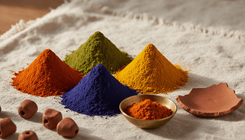
Holi is celebrated as the festival of colours, but the colours themselves are only the most visible part of its significance. This spring festival marks a deeper turn in the year: the victory of good over evil, the renewal of relationships, and the arrival of the season of growth. Holi honours Krishna and Radha, celebrates the burning of the demoness Holika, and invites people to shed old grievances and begin again. Understanding why Holi matters means understanding what the festival is asking you to remember.



The Story of Holika and Prahlad
The name Holi comes from Holika, a demoness from Hindu scripture. According to the Bhagavata Purana, Holika was the sister of Hiranyakashyap, a demon king who had grown so powerful that he believed himself beyond harm. His own son, Prahlad, refused to worship him and instead devoted himself to Vishnu. Enraged, Hiranyakashyap commanded his sister Holika to sit in a fire with the boy in her lap, hoping the flames would kill him.
But Prahlad's faith protected him. The fire burned Holika to ash while Prahlad walked out unharmed. This moment—the burning away of evil and the safety of the devoted—became the central image of Holi. On the night before the colour festival, people gather to light bonfires, called Holika Dahan, remembering this story and the principle it teaches: that righteousness ultimately prevails, and that faith offers protection even in the darkest circumstances.
Krishna and Radha: The Festival of Divine Play
Holi is also inseparable from the childhood of Krishna. According to the traditions of devotion that center on Krishna, particularly in regions like Mathura and Vrindavan where he is said to have lived, Holi celebrates his playful nature and his love for Radha and the gopis, the cowherd girls. The story goes that Krishna, mischievous and dark-skinned, once complained to his mother Yashoda that Radha and the other gopis were so beautiful while he was so dark. Yashoda joked that he could colour them any colour he liked.
Krishna took this to heart. He and his friends went out and playfully threw coloured powders on the gopis, transforming the festival into the riot of colours that Holi is today. This aspect of Holi celebrates divine play, the lightheartedness of devotion, and the ability to see the sacred in joy and mischief. In devotional practice, this playfulness—called lila—is understood as central to how the divine relates to creation. The colours represent the many moods and forms of love.
Renewal and the New Year
Holi arrives at the turn of the season, as winter releases its grip and spring arrives. In the Panchanga, the traditional Hindu calendar, the new year itself often begins around the time of Holi, marking a symbolic fresh start. The festival is a moment of reset: old grudges are forgiven, debts are settled, relationships are mended. People visit friends and family, exchange sweets, and begin again together.
This timing is not accidental. Spring is the season of growth and new growth. Seeds that were dormant through winter begin to sprout. The fields are ready for new planting. Holi asks people to align themselves with this natural impulse toward renewal. The custom of lighting bonfires—Holika Dahan—carries this meaning too: the old burns away, clearing space for the new.
Colours as a Symbol of Equality and Joy
The throwing of coloured powders, called gulal, is not random play. The colours have been used in Indian tradition to symbolize different things: saffron for courage and sacrifice, green for vitality and growth, blue for infinity and the divine. But on Holi, the significance is simpler and more universal. When everyone is covered in colours, the boundaries of caste, class and social status blur. A king and a servant become indistinguishable in the chaos of colour. This is the festival's invitation to equality: to meet each other not as ranks but as participants in a shared human joy.
The colours also represent the many forms of experience: pleasure and pain, light and shadow, creation and dissolution. Holi's message is to embrace the full spectrum of life, not to wish away the difficult parts but to see them as part of a larger whole. The festival does not pretend life is all sweetness; it acknowledges both the fire and the colours, both the destruction and the play.
Holi Across India and Beyond
Holi is observed across India, but the way people celebrate it varies. In South India, the festival is often called Mathirai or Holika, and the emphasis tends to be more on the Holika Dahan and the victory of good over evil. In North India, particularly in Mathura and Vrindavan, the Krishna connection brings an exuberant energy of music, dance and playfulness. In Bengal, Holi is celebrated as Dol Jatra, with swings and songs. In Maharashtra, people sing special songs and share a mix of dried fruits and grains called chikhalwali.
Holi has also spread beyond India. Wherever Indian communities have settled—in Nepal, Mauritius, Fiji, South Africa, the Caribbean, and in Indian diaspora communities around the world—Holi is celebrated with colours, music and sweets. The festival's core message of renewal, goodness and joy translates across cultures, which is part of why it has taken root so widely.
What Holi Asks of You
The significance of Holi, at its heart, is an invitation. It asks you to remember that good does ultimately matter, that faith can carry you through fear, and that relationships matter more than grudges. It asks you to notice the arriving spring and to let yourself begin again. It asks you to see the sacred in joy and play, and to find equality in shared celebration. The colours are the language of that invitation: impermanent, joyful, and touching everyone the same.
Common questions
What is the date of Holi?
Holi is observed on the full moon day (Purnima) in the month of Phalgun, according to the lunar calendar. This falls in late February or March in the Gregorian calendar, but the exact date shifts each year. Check the Panchanga or your local temple calendar for the precise date in your area.
Can I celebrate Holi if I am not Hindu?
Holi is rooted in Hindu tradition, but its themes of renewal, forgiveness and joy resonate widely. Many people of other faiths participate in the colour-throwing and festive meals as a way of celebrating together with friends and family. If you wish to take part respectfully, you are welcome to.
What is the difference between Holika Dahan and Holi?
Holika Dahan is the bonfire lit on the eve of Holi, commemorating the burning of the demoness Holika. The festival of Holi itself—the day of colours, music and celebration—falls the day after. Together they make up the two-day observance.

Related Articles


