The Significance of Govardhan Parikrama on Diwali
Walking the sacred mountain in devotion and joy

Kushal K
04 Nov 2026 • 6min
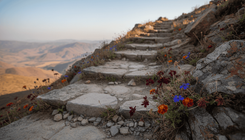
Govardhan parikrama—a circumambulation of the sacred Govardhan mountain in Mathura, Uttar Pradesh—is one of the central devotional practices performed during Diwali, particularly in the days following the main festival. The parikrama celebrates Krishna's legendary act of lifting the Govardhan mountain to shelter the people and animals of Vrij from torrential rain. By walking this circle, devotees honour that moment of divine protection and express their own faith and surrender.
The practice is rooted in the story of Krishna as a child. When the people of Vrij prepared sacrifices to the god Indra, the young Krishna persuaded them instead to worship the Govardhan mountain that sustained their cattle and land. Indra, angered by this shift in devotion, sent a terrible storm to flood Vrij in revenge. Krishna then lifted the entire mountain on his little finger and held it aloft for seven days and nights, sheltering all the cattle herders, their families and their animals beneath it. The people remained safe within the protective arch of stone.



What Govardhan Parikrama Means Today
The parikrama transforms this ancient story into a lived practice. When a devotee walks the circumference of the mountain, they are not simply remembering the tale; they are entering into it. Each step becomes an act of surrender and gratitude, a physical way of saying that Krishna's protection is real and present. The mountain itself becomes a teacher: it stands as a symbol of dharma, of what is right and true, offering shelter to anyone who trusts it.
The parikrama also carries a quieter meaning. In walking the circle, the devotee's own separateness dissolves slightly. You walk with thousands of others—sometimes tens of thousands during Diwali—yet each person's path is their own. The boundary of the mountain contains everyone equally. This is not doctrine but an experience many pilgrims report: a sense of being held, of being part of something larger than oneself.
When and How It Is Performed
The Govardhan parikrama is traditionally completed in a single day, typically on Govardhan Puja, which falls on the day after the main Diwali night. Some devotees also perform it on other days during the Diwali season. The full circumference is about 21 kilometres, though the exact distance varies depending on which route pilgrims follow and which sacred sites along the way they choose to visit. Most walkers take between 10 and 14 hours to complete it.
The walk is usually done barefoot or in simple footwear, and most pilgrims set out early in the morning to finish before dark. Along the way, there are small temples and shrines marking spots associated with Krishna's life: the place where Krishna held the mountain, where the Yadavas sheltered, where Krishna pastured his cows. Devotees stop at these to pray, sometimes making small offerings of flowers or food.
The parikrama is not arduous in the technical sense, but it is physically demanding. The path is often rocky, and 21 kilometres on foot takes real endurance. This physical effort is understood as part of the offering. Many pilgrims fast while doing the parikrama, eating only after they complete the circle. Others break the fast with simple food or milk at one of the temples along the way.
Regional Practice and Access
The Govardhan parikrama is most widely performed by devotees in and around Mathura and the surrounding region of Uttar Pradesh. However, the practice has spread wherever Krishna worship is strong. In temples outside India, some communities organise shorter symbolic circumambulations. In Mathura itself, the parikrama has become an event drawing hundreds of thousands of pilgrims during the Diwali season, making it one of the largest recurring pilgrimages in India.
Over recent decades, organised arrangements have made the walk more accessible. The path is now better marked, and there are rest points and water stations along the way. However, the experience remains fundamentally simple and demanding. It is a practice that invites the devotee to move slowly, to notice the landscape, to walk alongside strangers united by the same purpose.
Inner Dimensions of the Walk
For many devotees, the parikrama becomes a meditation. The repetitive motion, the rhythm of footfall, the sight of the mountain always present at the boundary of your awareness—these create a state in which the thinking mind quiets. Some devotees chant mantras as they walk, or sing bhajans, devotional songs. Others simply walk in silence. The walk is spacious enough to hold all these approaches.
The mountain itself is understood as Krishna in stone form, a manifestation of his grace. To circle it is to acknowledge that divinity is not distant but present in the physical world, in landscape and earth. This grounds devotion in something real and touchable. For pilgrims struggling with hardship, loss or doubt, the parikrama can become a way of releasing those burdens, of walking through them literally with every step.
Carrying the Practice Forward
If you are drawn to perform a Govardhan parikrama, the best time is during Diwali season. If you cannot travel to Mathura, you can perform a smaller parikrama around a sacred space near you—a temple, a tree, a garden—with the same intention of honouring Krishna's protective power and your own faith. Even a brief walk undertaken with this awareness carries the essence of the practice.
The core of the parikrama is not the distance travelled but the heart brought to it. Each step is a conversation between the devotee and the divine, a way of saying: I trust, I am grateful, I am held. This is why pilgrims have walked the circle of Govardhan for centuries, and why they continue to do so at Diwali.
Common questions
How many people do the Govardhan parikrama at Diwali?
The exact numbers vary year to year, but during the Diwali season the parikrama draws hundreds of thousands of pilgrims, making it one of the largest recurring pilgrimages in India. The scale of participation has grown substantially over recent decades.
Do I have to walk the entire 21 kilometres to complete the parikrama?
The traditional practice is to complete the full circumambulation, which is about 21 kilometres. However, some devotees perform symbolic shorter versions at temples outside Mathura, completing the parikrama around a smaller sacred space with the same devotional intention. What matters is that your walk is undertaken with genuine faith.
Can I do the Govardhan parikrama outside of Diwali season?
Yes, the parikrama can be performed at other times of year. However, it is most widely practised and most vibrant during the Diwali season, particularly on Govardhan Puja. Visiting outside the festival period can offer a quieter, more intimate experience.

Related Articles