
The Origin of Chyawanprash: How Sage Chyavana's Elixir Became Ayurveda's Gift
Ancient remedy, timeless vitality

Abhilash Ramakrishna
14 Nov 2026 • 7min
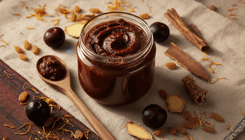
Chyawanprash is a thick herbal jam made from dozens of plants, designed to rebuild strength and immunity. Its origin lies in the story of Sage Chyavana, a figure so revered in Ayurvedic tradition that his name became inseparable from the formula itself. Understanding where chyawanprash comes from—both as myth and as medicine—tells you why this preparation has endured for over two thousand years.



The Story of Sage Chyavana
The most celebrated account of chyawanprash's origin appears in the Charaka Samhita, one of Ayurveda's oldest and most authoritative texts. According to this account, Sage Chyavana was an elderly, frail scholar who had spent decades absorbed in meditation and study. His body had grown weak with age, his complexion had dulled, and he had lost his vitality. He came to the Ashwin twins—divine physicians in Hindu mythology—and asked them to restore him.
The Ashwin twins are credited with great skill in rejuvenation and longevity. Rather than offering a quick remedy, they formulated a special preparation using plants carefully selected and combined according to the principles of Ayurveda. They gave this formula to Chyavana, who consumed it regularly. The sage was restored: his strength returned, his skin glowed, his mind became sharp again, and he lived for many more years with renewed vigour.
This story does more than inspire. It establishes chyawanprash as a formula grounded in both mythology and the medical reasoning of Ayurveda. The Ashwin twins are not presented as performing magic, but as physicians applying knowledge and skill to restore what time had taken away. The preparation that restored Chyavana came to be known by his name: chyawanprash.
How Chyawanprash Is Classified in Ayurveda
In Ayurvedic medicine, chyawanprash belongs to a category called rasayanas—preparations designed to nourish all the body's tissues and rejuvenate vitality. The term rasayana means "path of essence" or "that which tastes like juice". Rasayanas are not medicines that treat a specific disease; instead, they support longevity, immunity, and the body's natural resilience.
Chyawanprash is particularly classified as a rasayana for vata and pitta. If you understand Ayurveda's framework of three constitutional energies—vata, pitta and kapha—this tells you something important about its application. Vata, the principle of movement and dry qualities, tends to accumulate with age, causing frailty and degeneration. Pitta, the principle of metabolism and transformation, can become depleted through overwork or illness. Chyawanprash addresses both by providing nourishment and grounding.
The formulation of chyawanprash also reflects Ayurveda's commitment to balance. While it is warming and strengthening, it does not create the heaviness or excess heat that might aggravate someone with an already dominant pitta constitution. This balance is why the same preparation can benefit many different body types, though someone with particular constitutional needs might be advised to take it in a specific way or combine it with other guidance.
The Ingredients and the Ashtavarga
A traditional chyawanprash contains between 30 and 50 plant materials, depending on the formulation. Some of the most recognisable are ashwagandha, shatavari, brahmi, and dried fruits like amalaki and dates. The formula varies slightly between different Ayurvedic schools and manufacturers, but all versions include three key groups: the ashtavarga, medicinal herbs, and nourishing bases.
The ashtavarga is a group of eight plants particularly prized in Ayurveda for their rejuvenating and nourishing properties. These eight are considered rare and precious—so precious that in some regions they are now endangered and legally protected. While Ayurvedic schools do not always agree on which plants form the ashtavarga, the group typically includes plants like shatavargunam (pseudarthria viscida), jeevaka, and other small climbing plants found in forests. Not every modern preparation includes the true ashtavarga; many substitute more readily available plants or omit this group entirely due to scarcity and cost.
The other ingredients serve specific functions. Warming spices like ginger, cinnamon, and cardamom help with digestion and circulation. Cooling herbs like brahmi and shatavari prevent excessive heat. Amalaki, the Indian gooseberry, is exceptionally high in vitamin C and forms the backbone of many formulations. Honey, ghee, or sesame oil are added as bases to bind the mixture and aid absorption.
How Chyawanprash Entered Common Use
While the Charaka Samhita preserves the classical understanding of chyawanprash, the preparation became more widely known and used over centuries through the oral transmission of Ayurvedic knowledge from teacher to student, and from families within the tradition. By the medieval period, chyawanprash was recognized as a household remedy—something families would prepare at home during seasons of transition, such as autumn and early winter, when the body needed extra support.
The preparation remained largely confined to India and communities practising Ayurveda until the modern era. When Ayurveda moved into the commercial marketplace in the twentieth century, chyawanprash became one of the first Ayurvedic products to be mass-produced and bottled. This accessibility transformed it from a ritual preparation into a consumer product, though its purpose and the reasoning behind it remained unchanged.
Today, chyawanprash is manufactured by many companies, from small family practices that follow classical methods closely to large commercial firms that streamline production. While this means more people have access to it, the variation in quality and authenticity has also increased. Some versions prioritise shelf stability and commercial convenience over the classical balance of ingredients.
The Symbolic Meaning of Chyawanprash's Origin
The story of Sage Chyavana matters because it encodes something important about Ayurveda's understanding of aging and renewal. Chyavana was not a young man; he was elderly and depleted. The Ashwin twins did not transform him into someone different, but restored what he had naturally lost. This reflects Ayurveda's approach to rejuvenation: not fighting age, but supporting the body's own capacity to maintain function and vitality through the passage of time.
The fact that the remedy came from the Ashwin twins—deities associated with healing and renewal—also placed chyawanprash within a sacred framework. This was not merely a medicine, but a gift from the divine physicians themselves. For someone practising Ayurveda within a spiritual context, taking chyawanprash carried meaning beyond the chemical and nutritional: it was an alignment with forces of healing and renewal recognized across generations.
When you take chyawanprash today, you are drawing on a lineage that stretches back over two millennia, through countless adaptations and formulations, to this classical story and the medical principle it represents. Whether you approach it as a historical remedy, an Ayurvedic medicine, or a symbol of renewal, you are engaging with something that has been refined and valued for a very long time.
Common questions
Why is chyawanprash called by Sage Chyavana's name?
The preparation is named after Sage Chyavana because he was the one restored to health and vitality through this formula created by the Ashwin twins. In Ayurvedic tradition, the remedy became associated with the sage who benefited from it, preserving both his story and the medicine together.
Does all chyawanprash contain the true ashtavarga?
No. While the ashtavarga—eight rare forest plants—is part of classical formulations, many modern preparations substitute more available plants or omit it entirely because these eight plants are now scarce and often legally protected in certain regions. Check the ingredient list if you want the traditional version.
When should you take chyawanprash?
Chyawanprash is traditionally taken during autumn and early winter when the body needs extra support during seasonal transitions. A common practice is to take a spoonful in the morning with warm milk or water. It is generally suitable year-round for those seeking rejuvenation, though some Ayurvedic practitioners advise caution for those with dominant pitta constitutions during hot months.

Related Articles


