
The Nine Forms of Durga Worshipped in Navratri
Nine powers, one triumph over darkness

Abhilash Ramakrishna
08 Nov 2026 • 6min
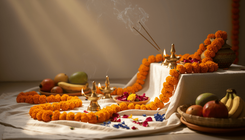
During Navratri, Hindus worship the nine forms of Durga—each a distinct manifestation of the divine mother, each embodying a different aspect of strength and wisdom. These nine days honour a journey from fierce protection to ultimate victory, reflecting how inner power unfolds through nine stages. Understanding each form deepens your own practice during this festival and connects you to a tradition that has shaped worship across India for centuries.



The Nine Forms and Their Meanings
The nine forms are Shailaputri, Brahmacharini, Chandraghanta, Koosmanda, Skandamata, Katyayani, Kalaratri, Mahagauri and Siddhidatri. Each name carries meaning and teaches a lesson. Shailaputri, the "daughter of the mountain", appears first, grounding us in nature and firmness. Brahmacharini embodies the ascetic path and disciplined devotion. Chandraghanta wears the moon as a bell in her forehead, symbolising gentleness held within strength. Koosmanda radiates cosmic energy and abundance. Skandamata protects through motherhood. Katyayani brings warrior courage. Kalaratri is the dark force that destroys ignorance. Mahagauri represents purity and peace after struggle. Siddhidatri, the final form, grants all spiritual gifts and completion.
This sequence is not random. It traces a spiritual arc: from rooting ourselves in earth and discipline, through creative radiance, protection of family, warrior resolve, the dissolution of ego's darkness, restoration to purity, and finally the attainment of all perfections. Meditating on each form in order during Navratri invites this unfolding into your own life.
How Navratri Traditions Honour the Nine Forms
Different regions express devotion to the nine forms in different ways. In North India, temples and homes set up altars displaying images or idols of each form, and devotees visit temples each day to worship the form of that day. In parts of South India, Golu (also called Bomma Kolu) displays dolls and figurines arranged in steps, often centring on the nine forms and other deities. In West India and beyond, Garba and Dandiya Raas are danced during Navratri, movements that spiral and turn like the cosmic energy the nine forms represent.
Fasting is another central practice. Many devotees fast on the nine days, eating fruit, milk and specific foods, or observing stricter abstention from grain and salt. The fast is understood not as punishment but as a way to make space for inner work during the festival. Some people fast fully on particular days, such as the seventh and eighth days when Katyayani and Kalaratri are worshipped. In many households, evening aarti (ritual of light and sound) welcomes each form, with singing and prayers that have been passed down through generations.
The Inner Significance of Each Form
Each of the nine forms addresses a different human challenge and quality. Shailaputri teaches stability and being rooted like a mountain. Brahmacharini shows the power of discipline and meditation. Chandraghanta demonstrates how to be both fierce and serene. Koosmanda illustrates the vastness of creation and your place within it. Skandamata speaks to the fierce love that protects what matters most. Katyayani awakens the warrior within—not for violence, but for facing truth. Kalaratri represents the necessary destruction of what no longer serves you; she is fearsome but not cruel. Mahagauri shows that struggle leads to clarity and lightness. Siddhidatri completes the cycle by granting the siddhis (spiritual powers) that come from walking this path with sincerity.
Practising with the nine forms is therefore a way to work with different dimensions of your own shakti (power). You are not worshipping someone distant; you are recognising and awakening these same qualities within yourself.
Regional and Sampradaya Variations
Navratri is celebrated across India, but the emphasis varies. In Bengal, the festival culminates in Durga Puja, which focuses especially on Durga's victory over the buffalo demon Mahishasura. In Tamil Nadu, Navratri includes Golu and often centres on Krishna; the nine forms appear but sit alongside other deities. In Gujarat, the festival is known for Garba and Dandiya, with less emphasis on the nine forms specifically, though they are still honoured. In Himachal Pradesh and parts of North India, Kullu Dussehra extends the celebration with processions and fairs.
These are not contradictions but expressions of how a tradition lives and breathes across different places. The nine forms of Durga are understood within each of these celebrations, even when the outer form of worship differs. If you are observing Navratri away from your own region's tradition, it is worth learning how your ancestors observed it—and also feeling free to adapt practices to where you are now.
How to Deepen Your Practice
If you are new to honouring the nine forms, you might start simply: on each of the nine days, learn the name and story of that day's form, and reflect on what it teaches. Set a small altar if you can, with a candle or lamp that burns for each form, changing flowers or offering fruit. If you fast during Navratri, use the days as a practice of attention: notice how hunger sharpens your senses and stills your mind. Many people chant the Durga Saptashati (a 700-verse hymn to Durga) during Navratri, or recite simpler prayers like the Devi Mahatmya or the Navadurga Stotram. These are not required, but they give shape to your devotion.
The practice works whether you follow it in a temple, at home, or simply in your mind and heart. What matters is sincerity and consistent attention across the nine days. By the end of Navratri, you will find that the nine forms have become less abstract and more like real presences in your consciousness—different facets of a single, inexhaustible strength.
Common questions
What is the correct order of the nine forms of Durga?
The traditional order is Shailaputri, Brahmacharini, Chandraghanta, Koosmanda, Skandamata, Katyayani, Kalaratri, Mahagauri and Siddhidatri, worshipped in sequence across the nine days of Navratri. Some households and regions follow variations, but this sequence is the most widely recognised.
Do I have to know all nine forms to celebrate Navratri?
No. Many people celebrate Navratri through fasting, family gatherings, attending temple, or dancing (Garba and Dandiya) without focusing on the individual forms. Learning about the nine forms deepens the practice, but sincere celebration in any form is valuable.
Can I worship the nine forms of Durga outside of Navratri?
Yes, though Navratri is the main season for this worship, many devotees honour the nine forms on a personal schedule or during other festivals. Some recite prayers to Durga daily throughout the year, particularly on Fridays or Tuesdays.

Related Articles


