The Lord who never sleeps - Tirupati Balaji
Lord Venkateswara of the Seven Hills

Shanti Arunkumar
10 Jan 2025 • 7min
India is a land of innumerable temples, churches, mosques, and other places where the Lord is worshipped. This article focuses on the most visited, most popular temple in contemporary times: The Tirupati Balaji temple. It is described by the Hindu scriptures as the earthly location where Lord Vishnu resides in the age of Kali.
The Tirupati Balaji temple or Sri Venkateshwara Swami temple is one of the most significant landmarks of Hindu mythology, holding a magnificent position in the Chittoor district of Andhra Pradesh.
It is an important Vaishnavite temple situated in the hill town of Tirumala, built by the Tamil King Tondaiman and later expanded and renovated under the Chola and Vijayanagara Empire.
Nestled atop the seven hills of Tirumala, the Tirupati Balaji temple is the epitome of unwavering faith and spirituality. The temple is one of the revered Swayambhu Varaha Kshetras where Lord Venkateswara (Vishnu) is believed to have self-manifested for the welfare of his devotees.
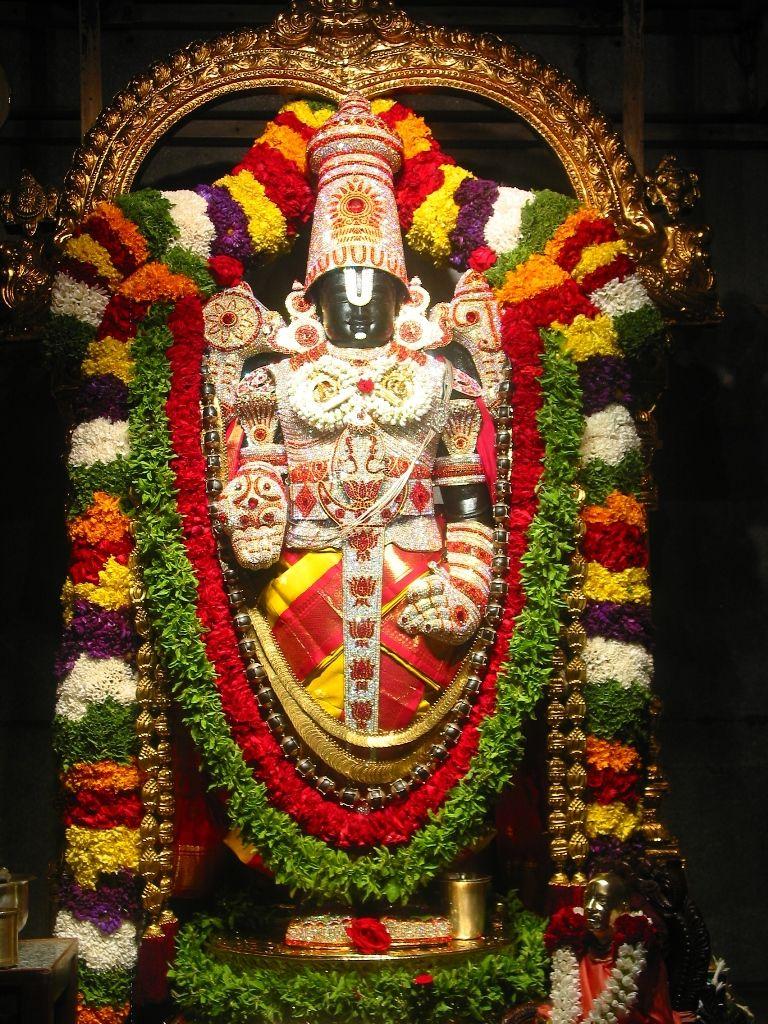
The majestic 8-foot tall idol of Lord Venkateswara inside the temple Sanctorum stands on the foundation of millions of devotees (which is an understatement) who visit Balaji every day. From unimaginable stories to present-day miracles, there’s an air of enigma that the Tirupati temple is known for.
The Temple is dedicated to Lord Venkateswara, an incarnation of Vishnu, who is believed to have appeared here to save mankind from the trials and troubles of Kali Yuga. The temple is situated at a height of 853 metres on Tirumala Hills which are part of Seshachalam Hills and is constructed in South Indian Tamil Architectural Style, with an impressive and arresting gopuram.
The first recorded endowment was made by Pallava queen Samavai in the year 966 CE. She donated many jewels and two parcels of land (one 10 acres and the other 13 acres) and ordered to use the revenues generated from that land to be used for the celebration of major festivals in the temple. The Pallava dynasty (9th century), the Chola dynasty (10th century), Reddi kingdom (12th and 13th centuries) and Vijayanagara pradhans (14th and 15th centuries) were committed devotees of Lord Venkateswara. The temple gained most of its current wealth and size under the Vijayanagara Empire, with the donation of diamonds and gold. In 1517, Vijayanagara Emperor Krishnadevaraya, on one of his many visits to the temple, donated gold and jewels, enabling the Ananda Nilayam (inner shrine) roofing to be gilded. After the decline of Vijayanagara Empire, leaders from states such as the Kingdom of Mysore and the Gadwal Samsthanam worshiped as pilgrims and gave ornaments and valuables to the temple.
Sri Ramanuja visited Tirupati thrice. On the first occasion, he spent a year with his uncle, Tirumalai Nambi, learning the esoteric meaning of Ramayana. His second visit was to settle a dispute that arose between the Saivites and Vaishnavites regarding the nature of the image set up in the Tirumala temple. During the last visit, which was at an advanced old age of 102 years, the Acharya installed the image of Govindaraja and laid the foundations of the present town of Tirupati. Ramanuja streamlined the rituals at Tirumala temple according to Vaikanasa Agama tradition and introduced the recitation of Naalayira Divya Prabandham. He also set up Tirupati Jeeyar Mutt in 1119 AD in consultation with Tirumalai Ananthalwan to institutionalize service to the Lord and supervise the temple rituals. The Jeeyars to this day ensure that the rituals ordained by Ramanuja are observed.
The temple is one of the wealthiest temples in the Indian terrain. It is believed that the wealth collected in the temple is a payment for the continuing debt that the Lord accrued for His marriage with Goddess Mahalakshmi, and having taken this staggering loan from his brother Govindaraja Perumal (whose sanctum sanctorum is also in the vicinity), the Lord continues to pay off the loan everyday.
In 1417 AD, Madhavadasa, a resident of Chandragiri, constructed Tirumamani Mandapam which is present in front of Bangaru Vakili of the Garbhagriha.In 1535 AD, Pedda Tirumalacharya renovated Temple Tank and Adivaraha shrine. With the advent of British during the early 19th century, the management of the temple passed to hands of East India Company, who accorded special status to temple and avoided interference in temple activities. Madras government passed Regulation seven of 1817, which passed the temple to Board of Revenue through collector of North Arcot District.In 1821, Bruce of England had drawn rules for the management of Temple which is referred to as Bruce's Code.In 1843 the East India Company transferred the Administration of Temple along with other Temples in Tirupati to Mahants of Hathiramji Muth, who acted as Vicaranakartas.
The Temple was under the rule of Mahants for six generations until 1933 when Tirumala Tirupati Devasthanams was formed as a result of the TTD Act in 1933. The Act of 1933 was superseded by Madras Hindu Religious and Charitable Endowment Act of 1951.Again in 1966, the temple was placed under direct control of the Andhra Pradesh State Endowments Department, with Andhra Pradesh Charitable and Hindu Religious Institutions and Endowments act. In 1979, act of 1966 was rolled back with new Tirumala Tirupati Devasthanams act, where temple administration was vested to a committee consisting of Executive officer, Chairman and two other members nominated by the Government of Andhra Pradesh.
Credit for the historical background of the content: Wikipedia
Images:Pinterest

Related Articles
Try a fuller and better experience on the
Dharmayana App