
The Kalash in Puja: Symbolism and Sacred Meaning
Life and abundance held in a vessel

Sunil Chaurasia
12 Nov 2026 • 7min
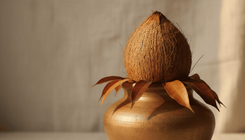
The kalash—a pot of clay or metal—stands at the heart of almost every Hindu ritual. Whether it holds water, rice, coins or sanctified earth, the kalash in puja represents far more than a container. It embodies the cosmos itself, fertility and prosperity, and the presence of the divine. When you see a kalash decorated with mango leaves and topped with a coconut at a puja or festival, you are looking at one of Sanatan Dharma's most powerful symbols of auspiciousness and completion.



What the Kalash Represents
The kalash is not merely an object but a living symbol in the language of Hindu ritual. Its round body is said to represent the universe and the womb—the space from which all creation emerges. The water held inside stands for life force itself, while the earth from which the pot is made grounds the ritual in the material world. Together, these elements make the kalash a microcosm: the whole of existence contained and blessed within a single vessel.
In many pujas, the kalash is one of the first things established, even before the deity's image is invoked. This placement reflects its foundational role. The kalash does not call down a specific god or goddess; instead, it sanctifies the space and prepares it to receive the divine. Some traditions say the kalash holds the presence of all deities, making it a threshold between the human and the sacred.
The word "purna kumbha"—the full pot—carries its own significance. Purna means complete or full; kumbha means pot. A kalash filled to the brim represents abundance that lacks nothing, prosperity without loss, and a life lived in fullness. Seeing a kalash in this state, especially with water that has been sanctified by mantras and ritual, is considered highly auspicious.
The Elements: Water, Rice, Coconut and Leaves
The contents and decoration of a kalash follow a precise logic. Water is poured first, and in some traditions it comes from a sacred river or has been ritually purified with mantras. Rice is added next—a grain that represents food, sustenance and the nourishment the divine provides. Flowers and sometimes turmeric are placed into the water, adding fragrance and colour that draw the divine presence into the ritual space.
Mango leaves are placed around the rim or sometimes woven into a chain that hangs from the kalash's mouth. Mango leaves are auspicious in most regions of India; they appear in wedding decorations, festival doorways and at the entrance to new homes. They represent growth and new beginnings. The coconut that crowns the kalash—usually a whole coconut, sometimes split in half and placed upright—represents the union of matter and spirit, and its hardness signifies strength and resilience.
These elements work together as a visual language. When a guest enters a home where a kalash has been prepared for a puja, they read this language immediately: this is a space of preparation, intention and reverence. The kalash announces that something sacred is about to unfold.
Kalash Sthapana: Ritual Establishment
Kalash sthapana, the formal establishment of the kalash, follows different customs in different traditions and regions. In many pujas, the kalash is placed on a square platform called a chaumukhi, which may be drawn with rice flour or marked with turmeric. Some families place it on a cloth, others on earth gathered from multiple auspicious sources.
The ritual of placement itself varies. In some practices, the kalash is positioned while mantras are chanted—often the Mrityunjaya mantra or another invocation suited to the puja's purpose. In others, the kalash may be established in silence, with intention focused through the practitioner's mind. The direction it faces may matter; in some sampradayas (traditions), the kalash faces east, the direction of sunrise and new beginnings.
Once in place, the kalash becomes a focal point for the ritual that follows. Offerings of flowers, incense, water and food are often made before it. In pujas that honour the Navratri festival or that invoke Durga, Lakshmi or Saraswati, the kalash sometimes receives worship alongside the deity. In some homes, a kalash established during Navratri remains in place throughout the nine days, becoming a growing focus of devotion.
Kalash Across Ceremonies and Festivals
The kalash appears in nearly every major ceremony in the Hindu calendar. At weddings, two kalashes may be placed to represent the bride and groom, or the union of two families. At naming ceremonies (Namkaran), the kalash holds the sacred water used to bless the newborn. During home pujas, a kalash marks the space where worship will take place. At festivals like Diwali and Holi, households establish kalashes as part of preparing the home for celebration.
In temple rituals, the kalash plays a central role. During abhisheka—the ritual bathing of a deity's image—water from a kalash is often poured over the murti (sacred form). In some annual temple festivals, elaborate kalashes are created and carried in procession, their size and decoration reflecting the abundance the community hopes to receive. Regional traditions give the kalash different emphasis. In Bengal, for instance, the kalash holds particular importance in Durga Puja; in South India, it appears prominently in Ganesha Chaturthi and in the rituals that mark the rice harvest.
The Kalash as a Teaching
Beyond ritual practice, the kalash teaches. Its shape—wide at the base, narrower at the top—suggests stability that comes from foundation and balance. The fact that it must be filled from above but emptied from below reminds practitioners that gifts come from beyond the self and must be given outward for the cycle to continue. The paradox that a fragile clay pot can hold and protect something precious—water, life, the divine—speaks to the strength that comes from humility and hollowness.
This is why the kalash survives not as mere tradition but as living practice. Whether you are preparing for a major festival or establishing a simple daily puja in your home, the kalash connects you to thousands of years of practice and to the cosmic order the ritual acknowledges. When you place flowers before it or pour water into it with intention, you are participating in the same language of symbols that has shaped Hindu worship since its beginning.
Common questions
Can you use any pot as a kalash for puja, or must it be clay?
Clay pots are traditional and preferred, but metal pots—especially brass, copper or silver—are widely used and equally valid. The material matters less than the intention and purity brought to the ritual. What matters is that the vessel be clean and new or thoroughly cleaned before use.
How long should a kalash remain in place after puja?
This depends on the puja's purpose. Kalashes established for daily worship may remain throughout the year. Those set up for a specific festival—like Navratri—typically stay in place for the festival's duration, then the water is poured out respectfully and the pot stored or composted. A kalash for a one-day puja is usually dismantled after the ritual concludes.
What should be done with the water from the kalash after the puja is complete?
In many traditions, the water is considered sanctified and is drunk by worshippers as prasad (blessed offering), or it is used to water plants in the home or garden. Some families pour it at the base of a tulsi plant or another sacred tree. The water should not be wasted or poured into drains, as it has been consecrated through ritual.

Related Articles


