
The History of Yoga in India: From the Vedas to Hatha Yoga
An ancient practice rooted in spiritual pursuit

Abhilash Ramakrishna
16 Nov 2026 • 6min
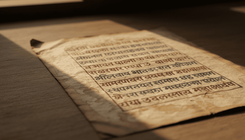
Yoga is not a modern wellness invention. The history of yoga in India stretches back thousands of years, evolving through different phases of spiritual practice, philosophical schools and practical techniques. Understanding where yoga came from helps us see what it really is: a disciplined path toward liberation, not just a way to touch your toes.



Yoga in the Vedic and Upanishadic Periods
The earliest references to yoga appear in the Vedas, the oldest texts of Sanatan Dharma. The word yoga itself comes from the Sanskrit root yuj, meaning to join or unite. In the Vedic texts, yoga refers to the union of the individual self with the universal consciousness, achieved through ritual practice and meditation.
The Upanishads, philosophical texts composed between the 15th and 5th centuries BCE, develop this understanding further. Here yoga becomes a formal practice aimed at realizing Brahman, the ultimate reality. The Katha Upanishad describes yoga as the steady control of the senses. The Shvetashvatara Upanishad outlines physical postures and breath control as methods to achieve this state. These early texts show yoga was not always physical exercise, but a comprehensive path combining philosophy, discipline and inner work.
The Yoga of the Bhagavad Gita
The Bhagavad Gita, part of the Mahabharata, presents yoga not as a single practice but as different paths suited to different people. Krishna teaches Arjuna that karma yoga, the yoga of action, is one valid path. Bhakti yoga, the yoga of devotion, is another. Jnana yoga, the yoga of knowledge, is a third. Each approach aims at the same goal: liberation through alignment with dharma and divine consciousness.
This diversity of yogic paths shows that yoga in ancient India was never one-size-fits-all. A warrior could practice yoga through disciplined action. A scholar could practice it through study. A devotee could practice it through worship. This flexibility has kept yoga alive through centuries of change.
The Yoga Sutras and Classical Yoga
Around the 4th century CE, the sage Patanjali compiled the Yoga Sutras, a foundational text that systematized yoga into eight limbs, or ashtanga. These are ethical disciplines, physical restraints, postures, breath control, sense withdrawal, concentration, meditation and absorption. This framework became known as Raja Yoga or classical yoga.
Patanjali's approach was rigorous and introspective. The goal was to quiet the fluctuations of the mind, a state he called chitta vritti nirodhah. Physical postures received little emphasis in his system. The Yoga Sutras mention asana only to say it should be steady and comfortable, a seat for meditation. The focus was mental training and spiritual realization, not physical flexibility.
The Rise of Hatha Yoga
By the 11th century, a shift began. New texts started exploring the body not as an obstacle to overcome but as a vehicle for spiritual practice. The Hatha Yoga Pradipika, written by the sage Svatmarama in the 15th century, became the defining text of this approach. Hatha yoga emphasized physical postures, breathing techniques and energy channels within the body.
The Hatha Yoga Pradipika describes dozens of asanas, giving each one specific benefits. It explains pranayama, the control of breath, as a way to control prana, the vital life force. It introduces the concept of nadis, energy pathways in the body, and chakras, energy centers. This system saw the body as a microcosm of the universe, and working with the body's subtle energies as a path to enlightenment.
Hatha yoga did not replace earlier forms. It expanded the tradition, offering another door into practice. A person unable to sit in abstract meditation could work with asanas and pranayama to prepare the body and mind. Different regions of India developed their own variations, each adapting Hatha yoga to local conditions and philosophies.
Regional and Philosophical Variations
The development of yoga was never uniform across India. In Kashmir, practitioners of Tantra integrated yoga with ritual and visualization. In South India, the bhakti movements brought devotional practices into yogic frameworks. In the Hatha yoga traditions of Bihar and Bengal, teachers emphasized the body's subtle anatomy. Each school contributed its own understanding while honoring the core goal of yoga: union with the divine.
Different sampradayas, or teaching lineages, also shaped how yoga evolved. Some emphasized renunciation and monasticism. Others, like the householder traditions, developed practices for people living in families and communities. This adaptability allowed yoga to remain relevant across changing centuries and social contexts.
Yoga in Modern Times
In the 19th and 20th centuries, yoga faced a critical moment. British colonial rulers often dismissed Indian practices as primitive or superstitious. Yet Indian spiritual leaders like Swami Vivekananda and Sri Aurobindo reframed yoga for modern audiences, emphasizing its philosophical depth and practical benefits. Later teachers like Krishnamacharya and his students B.K.S. Iyengar and K. Pattabhi Jois brought Hatha yoga to the West, where it took root as a physical practice.
This globalization changed yoga's appearance but not its essence. What arrived in Western studios was Hatha yoga, particularly its asana practice, separated from its philosophical and devotional context. This is neither good nor bad; it is what happened. Today, many people come to yoga for physical health and find themselves drawn deeper into its philosophical roots.
Understanding Yoga's Journey
The history of yoga in India shows us a tradition that has always evolved while staying rooted in its purpose. From the Vedas' focus on union with the divine, to the Upanishads' systematic exploration of consciousness, to the Yoga Sutras' mental discipline, to Hatha Yoga's embrace of the body, yoga has adapted to serve practitioners across different eras and temperaments.
When you practice yoga today, whether asana, pranayama or meditation, you are part of a lineage thousands of years old. The techniques may feel modern, but their aim remains what it always was: to quiet the mind, refine the body and align yourself with something greater than yourself.
Common questions
Which text is the oldest reference to yoga?
The Vedas contain the earliest references to yoga, though they use the term to mean union with consciousness rather than physical practice. Later texts like the Upanishads (15th-5th centuries BCE) develop yoga into a more formal discipline with specific techniques.
What does the Hatha Yoga Pradipika teach that earlier texts did not?
The Hatha Yoga Pradipika, written in the 15th century, emphasizes working with the physical body through asanas and pranayama to access spiritual states. Earlier classical texts like the Yoga Sutras saw the body mainly as something to transcend, treating asana only as a comfortable seat for meditation.
Why did yoga change so much from the Vedas to Hatha Yoga?
Yoga evolved to serve practitioners in different eras and with different temperaments. The Vedic focus was ritual and philosophy. The Upanishads added meditation. Patanjali systematized mental discipline. Hatha yoga opened a path for those who found physical and energetic work more accessible than pure meditation. Each development built on rather than replaced what came before.

Related Articles


