
The Ganga Descent Legend: How Bhagiratha Brought the River to Earth
From Heaven to Earth: A King's Devotion

Sunil Chaurasia
10 Nov 2026 • 7min
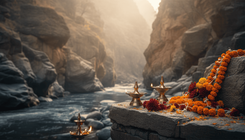
The legend of Bhagiratha and the ganga descent tells how a king brought the river from heaven to earth through generations of devotion. It is one of the oldest and most sacred stories in Hindu tradition, explaining both why the Ganga is worshipped and what devotion can accomplish. The story survives in the Mahabharata, the Ramayana, and several Puranas, and remains central to how people understand the river today.



The Story of King Bhagiratha
Bhagiratha was a king of the Solar Dynasty whose ancestors had been destroyed by a curse. According to the narrative, 60,000 princes—sons of the king Sagar—were burned to ash by the glance of a sage they had offended. Their spirits could not find peace until they were bathed in the waters of the Ganga. The problem was that the Ganga flowed only in heaven at that time, not on earth.
Bhagiratha took up the task of bringing the river down. He performed intense austerities, standing on one foot for thousands of years, practicing extreme penances in the Himalayas. The gods, moved by his devotion, granted him his wish. The Ganga agreed to descend to earth, but on one condition: the force of her fall from heaven would be so violent that she would split the earth and drown all living things unless someone could catch and break her descent.
Bhagiratha approached Shiva, the god of yogis and austerity. Shiva agreed to catch the falling river in his matted hair and slow her descent through the mountain valleys. When the Ganga fell, Shiva caught her in his locks and released her carefully, allowing her to flow as a river across the plains. In this way, Bhagiratha accomplished what no one else could do, and the Ganga came to earth through the Himalayas and into the plains where people lived.
The river carried the ashes of Sagar's sons to the ocean, and their spirits were finally at rest. In gratitude, Bhagiratha is remembered as having made the greatest sacrifice of devotion, and the Ganga became known as the river that washes away all sin and the deepest cause of suffering.
Why Bhagiratha's Story Matters
The ganga descent legend is not read as history alone. It teaches that single-minded devotion can move even the gods, and that the purpose of austerity is not to punish the body but to transform the will. Bhagiratha did not bring the Ganga through strength or power; he brought it through patience, faith and surrender.
The story also explains the Ganga's holiness. Because the river comes from heaven and because it arrived through such extraordinary means, it carries more than water. In this view, the Ganga is a living force that flows from the divine realm, and bathing in her waters connects you to that descent. This belief shapes how millions worship at the river each year.
Different sampraday (lineages and schools of practice) and regions within India have preserved slightly different versions of the tale. Some emphasis Bhagiratha's yogic power, others his role as a dutiful son of his dynasty, still others the role of other gods alongside Shiva. These variations do not contradict the core: a human being transformed the world through devoted practice.
The Ganga Descent in Worship and Festival
The ganga descent legend shapes festivals and daily worship in many parts of India. In Varanasi and other cities on the river, the annual festival of Ganga Dussehra is observed during the month of Jyestha (May-June), and some temples mark the occasion with special pujas. The ten-day festival commemorates the descent itself, with believers bathing in the river and offering prayers of gratitude.
Ganga Aarti, the ritual offering of lamps to the river, happens daily in temples and ghats (steps) along the water, and each ceremony calls to mind the descent. The flames rising to the sky echo the moment Shiva's hair caught the falling river. In the eyes of those who perform it, the aarti is not just a ceremony; it is an embodiment of the Ganga descent itself, re-enacted each evening.
Many pilgrims undertake arduous journeys to the source of the Ganga in the Himalayas, tracing Bhagiratha's path in reverse. They see the mountain rivers flowing down from the heights and understand them as traces of the divine descent. In some places, local practices and rituals have grown up around specific points where the river flows through a gorge or around a sacred stone, each associated with a part of the descent story.
The Spiritual Meaning of the Descent
At its deepest level, the ganga descent legend teaches that the divine does not remain aloof from the human world. Through the effort of one sincere practitioner, heaven can touch earth. The Ganga's descent is understood as a metaphor for how grace flows into ordinary life when devotion opens the way.
Bhagiratha's austerities also speak to the nature of spiritual practice. He did not achieve his goal quickly or easily. Instead, he persisted through difficulty and doubt, never wavering from his purpose. This image of patient, unshakeable resolve—tapasya—remains a model for anyone undertaking any spiritual discipline.
The role of Shiva is equally significant. He represents the yogic power that can transform and direct even the mightiest forces. His catching of the Ganga in his hair shows that the divine masculine principle does not dismiss worldly needs but transforms and channels them. In this way, the story bridges heaven and earth, the absolute and the relational, the ascetic and the familial.
Living the Lesson Today
For many people, the ganga descent legend is not an ancient story but a living truth. Pilgrims who bathe in the river and speak of washing away their karma are participating in the same reality that Bhagiratha set in motion. The river itself, in this understanding, is the descent continuing.
You do not need to live near the Ganga or visit it in person for the story to touch your practice. The legend teaches that sincere, patient devotion changes things. It shows that one person, through austerity and faith, can open a channel between the divine and the human world. That is a lesson that works in any life and any time.
Common questions
What is the actual source of the Ganga and where does the descent story take place?
The Ganga begins in the Himalayas at a place called Gangotri, in what is now the state of Uttarakhand. The descent story describes the river flowing down through the mountain valleys and across the northern plains. Pilgrims trace this path when they journey from the plains to the source in the high mountains.
Why does the story say Bhagiratha took thousands of years to do austerities?
The extreme duration emphasises the intensity and single-mindedness of his devotion. The number is not meant to be literal time but to convey that his practice was absolute and all-consuming. It teaches that genuine spiritual effort requires complete commitment, not a quick or casual effort.
Is the Ganga descent celebrated on a particular date each year?
Ganga Dussehra is observed in the month of Jyestha (May-June according to the lunar calendar), but the exact date shifts every year. Some regions also observe the descent during the month of Chaitra (March-April). The festival is fixed to lunar months rather than a single calendar date.

Related Articles


