
The Ganga Descent Legend: Bhagiratha and the Sacred River
How a king's devotion brought the river to earth

Aditya Pandey
09 Nov 2026 • 6min
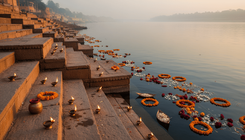
The descent of Ganga is one of the oldest stories in Hindu tradition, and it lives on in the prayers and rituals that honour the river each day. According to the legend, the Ganga was held in the heavens until King Bhagiratha performed tapas—disciplined spiritual practice—to bring her waters to earth so that his ancestors could find salvation. This story is more than myth. It has shaped how millions of people relate to the Ganga, and it remains the reason the river is worshipped as a living goddess today.



Why Bhagiratha Brought the Ganga
The story begins with a curse and a debt. Bhagiratha's ancestors—the sixty thousand sons of King Sagara—had died in anger, their bodies left on the earth without proper rites. According to the dharma of that time, the dead could not find peace unless their remains received the sacred waters of the Ganga and the proper rituals from their descendants. Bhagiratha, many generations later, understood that his entire lineage was trapped in this suffering because of what had happened.
Rather than turn away from this burden, Bhagiratha made a choice: he would do whatever was needed to bring the Ganga down from heaven so that her waters could wash over his ancestors' remains and free their souls. This was not a small task. The Ganga did not exist on earth—she dwelt in the celestial realms, held in the locks of Shiva himself. To convince her to come, or to convince Shiva to release her, would require devotion unlike anything attempted before.
Bhagiratha withdrew from his kingdom. He stood on one leg, fasted, and performed tapas for thousands of years, the story tells us. He lived only on air, his body wasting, his mind fixed on a single purpose. The intensity of his practice was so great that the gods themselves grew concerned at the disturbance his meditation was causing.
Shiva's Role and the River's Release
Shiva, moved by Bhagiratha's devotion, agreed to help. The problem was that the Ganga, falling from heaven, would be too powerful for the earth to bear. Her descent would wash away mountains and flood all the lands below. This is where Shiva's role became crucial: he caught the Ganga in his matted hair as she fell, breaking her fall into smaller streams that the earth could receive.
Different parts of the Ganga's descent are remembered in different places. The river did not flow in one single line but broke into many channels as Shiva directed her through his locks. Some waters flowed in one direction, some in another. The force of the river carved valleys and shaped the landscape as she made her way to the plains.
In the Mahabharata and the Ramayana, this story is told with variations. What remains consistent is the idea that the Ganga came to earth through an act of disciplined will—Bhagiratha's tapas—and through divine grace, represented by Shiva's compassion. Neither alone was enough. The king's devotion had to meet the god's willingness to help.
The Ganga as Goddess and Guide
Because of this legend, the Ganga is never thought of as merely water. She is Ganga Devi—a goddess with her own will, her own journey, her own purpose. When people say the Ganga is sacred, they mean this: she came to earth through grace and effort both, and she carries the blessing of that descent in every moment.
The story also teaches something about the relationship between discipline and surrender. Bhagiratha did not command the river to come. He made himself worthy of help through his practice, and then he received it. He could not have done it without Shiva, and Shiva would not have acted without Bhagiratha's profound devotion. This balance is central to how the Ganga is worshipped today.
The Ganga is thought to have many qualities. She purifies, she transforms, she flows where she is needed. But she is not an instrument that humans can simply use. She is honoured as a conscious being, a goddess who has her own nature and her own dignity. Offerings made to the Ganga acknowledge this: they are made with respect, not demand.
Worship and Ritual Along the Ganga
The descent story influences how the Ganga is worshipped at temples and ghats, the steps leading down to the river. When someone performs ganga aarti—the ritual of waving lamps—they are honouring both the sacred waters and the goddess who brought them. The lamps, the flowers, the water itself offered back to the river: all of this is a way of receiving what the river gives and returning gratitude for the descent that brought her here.
Many pilgrims come to the Ganga during festivals and on ordinary days to bathe in her waters or to perform rituals for the dead. In both cases, they are drawing on the original reason the river was brought to earth: to liberate the souls of the deceased and to connect the living with something eternal. The Ganga is a gateway, in this understanding, between the world of action and the world of spirit.
Different regions along the Ganga have their own stories about how the river descended in their place, and their own practices that honour that descent. What unites them all is the recognition that this is not simply a river, but a manifestation of grace that arrived through devotion. This is why people speak to the Ganga, make offerings to her, and trust her with their most important rituals. The descent of the Ganga was an act of compassion, and that compassion is renewed each day for those who approach her with respect.
A Living Story
The legend of Bhagiratha is not a story that ended in the past. It shapes practice and belief every day along the river's banks, in homes and temples, wherever the Ganga is remembered. When you make an offering at the Ganga, when you hear her name in prayer, that descent is present. The river carries forward the memory of a king's discipline and a god's grace, and these remain alive in how millions of people relate to her today.
Common questions
Why do people perform rituals for the dead at the Ganga?
According to the descent legend, the Ganga was brought to earth specifically to liberate the souls of the dead through her waters. Bathing or performing rituals for deceased ancestors at the Ganga is believed to free their souls from being trapped on earth without proper rites, as happened to Bhagiratha's ancestors before he brought the river down.
Is the descent story told the same way everywhere along the Ganga?
Different regions have their own variations of where and how the Ganga descended, reflecting local geography and history. However, the core idea remains the same: the river came through devotion and divine grace, and she is honoured as a goddess rather than as ordinary water.
What does ganga aarti honour during the ritual?
Ganga aarti honours both the sacred waters of the river and Ganga Devi herself as a conscious being and goddess. The lamps, flowers and offerings are a way of showing gratitude for the river's descent and her continued presence, recognising her as a source of purification and grace.

Related Articles


