
Thaipusam and the Kavadi: An Act of Devotion to Murugan
Bearing a sacred burden, the devotee becomes divine

Kushal K
11 Nov 2026 • 6min
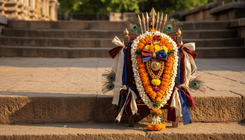
Thaipusam is a Hindu festival celebrated across Tamil-speaking regions, particularly in South India, Sri Lanka and Malaysia. It honours Murugan, the son of Shiva and Parvati, and commemorates his victory over the demon Surapadma. The festival falls in the month of Thai (January-February by the solar calendar), on the day when the star Pushya rises in the sky. For many devotees, the most visible expression of faith during Thaipusam is the carrying of the kavadi—a wooden or metal framework, often tall and ornately decorated, that represents both an offering and a form of spiritual discipline.



What the Kavadi Represents
The kavadi is not merely a ceremonial object. For the devotee who carries it, it serves as both an altar and a physical embodiment of surrender. The frame is typically decorated with flowers, peacock feathers, small spears, bells and colourful silks. Inside or attached to the kavadi are small shrines or effigies representing Murugan and other deities. Some versions include offerings of fruit or coconut. By carrying the kavadi, the devotee literally bears Murugan—their personal god—on their shoulders as they process to the temple.
The decoration varies by region and family tradition. In some places, the kavadi is more austere; in others, it is lavishly adorned. What matters is not the expense or elaboration, but the sincerity of the intention. A well-worn family kavadi can carry as much devotion as a newly made one.
The Spiritual Practice Behind the Kavadi
Carrying a kavadi is an act of tavam, or austerity and spiritual discipline. It is not an ordeal to be endured, but a direct conversation between the devotee and Murugan. Many people who carry the kavadi report a state of deep trance or spiritual absorption, in which they are no longer aware of physical pain or fatigue. This is understood as Murugan's grace—a sign that the deity has accepted the offering and merged with the devotee.
The practice is rooted in the belief that direct, bodily expression of devotion opens a path to the divine. Words and thoughts can waver, but the body does not lie. When you carry the weight on your shoulders, when your legs move in rhythm with drums and chants, when sweat runs down your face and you keep moving toward the temple—in that moment, your body speaks what your mind may struggle to express. This physical language is central to the festival's meaning.
Variations in Practice Across Regions
In Tamil Nadu, carrying the kavadi during Thaipusam processions is widespread, with particular prominence in temples dedicated to Murugan such as Arupadai Veedu, the six abodes of Murugan. In Sri Lanka, the Nallur Kandaswamy Temple in Jaffna and the Kathiresan Temple in Colombo host major Thaipusam celebrations where many devotees carry kavadi. In Malaysia, the Batu Caves temple near Kuala Lumpur draws hundreds of thousands of pilgrims during Thaipusam, making it one of the most visible annual celebrations of the festival globally.
Not all devotees carry a kavadi during Thaipusam. Some offer flowers, fruit or milk to the temple; others fast or spend the day in prayer. Some carry smaller objects—a single spear pierced through the cheek or tongue, or a simple pot of milk—as an alternative expression of their vow. The festival accommodates many forms of devotion.
The Connection to Murugan's Victory
Thaipusam commemorates a particular story in Murugan's mythology. According to tradition, the demon Surapadma took on the form of a mango tree and remained invulnerable to other weapons. Murugan defeated him with the Vel, his sacred spear. Murugan is thus honoured as both a warrior and a protector—a deity who acts decisively against evil. The festival is also connected to Murugan's marriage to Devayanai, the daughter of Indra, though traditions differ on whether this is the primary story or a secondary association.
The kavadi itself echoes the Vel. Its pointed or spear-like elements are reminders of Murugan's divine weapon. By carrying the kavadi and processing toward the temple, devotees re-enact and participate in this sacred narrative. They do not merely remember Murugan's victory; they invite him into their own lives, calling on him to protect them and remove obstacles.
Thaipusam Beyond the Kavadi
While the kavadi is the most striking image associated with Thaipusam, the festival encompasses wider observances. Many Hindu families fast on the day or eat only simple vegetarian food as an act of respect. Temples prepare special abhisheka, or ritual bathing, for the deity. Oil lamps are lit, and devotees make offerings of flowers, fruit and coconut. Some people visit multiple temples or undertake pilgrimages to important Murugan shrines.
In homes, Thaipusam may be marked with puja and family prayers. The festival is a time to seek Murugan's blessings for strength, clarity and protection. It is also an occasion for families to gather, and for communities to express their shared faith through procession and celebration.
Preparation and Vows
Many people who carry the kavadi during Thaipusam have made a vow, or vrat. This might be in gratitude for a blessing received, in petition for something needed, or as a form of spiritual practice undertaken annually. Some devotees carry the kavadi every year; others do so once, or during particular phases of their lives. There is no single rule—the practice is guided by personal choice and the call of faith.
The preparation for carrying a kavadi involves both practical and spiritual dimensions. Physically, a person might fast or eat lightly in the days beforehand, as the practice demands strength and focus. Spiritually, devotees spend time in prayer, mentally preparing themselves to offer their body and effort to Murugan. On the day itself, many bathe early and dress in new or special clothes before taking up the kavadi.
The act of carrying the kavadi during Thaipusam is an invitation to direct experience of the divine. It transforms a festival day into a personal conversation with Murugan, spoken in the language of the body and the heart.
Common questions
Is carrying a kavadi during Thaipusam mandatory?
No. While the kavadi is the most visible practice, Thaipusam accommodates many forms of devotion. Some devotees fast, offer flowers or milk, or make smaller offerings like pierced spears. The choice depends on personal faith and the call an individual feels to Murugan.
How is Batu Caves connected to Thaipusam?
The Kathiresan Temple at Batu Caves near Kuala Lumpur is one of the largest Thaipusam celebrations globally, drawing hundreds of thousands of pilgrims. Devotees walk from the city to the temple, many carrying kavadi, making it a major annual observance outside South India.
What happens during Thaipusam beyond the kavadi?
Families fast or eat vegetarian food, temples perform special abhishekas (ritual bathing), devotees make offerings of flowers and fruit, and people visit multiple temples or undertake pilgrimages to important Murugan shrines. It is both a communal festival and a time for personal spiritual practice.

Related Articles


