
Teej Festival: The Monsoon Celebration of Women's Devotion and Joy
Swings, fasting and Parvati's devoted love

Kushal K
09 Nov 2026 • 7min
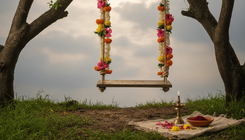
Teej is a monsoon festival celebrated primarily by women across northern and central India, marked by fasting, swinging on decorated swings and singing traditional songs. The most significant is Hartalika Teej, which falls on the third lunar day (tritiya) of the bright fortnight of Bhadrapada, usually in August or September. The festival is rooted in the story of Parvati's devoted tapasya (spiritual practice) to win Shiva as her husband, and it has remained central to women's celebrations for centuries.
Teej is not a single observance but a family of celebrations. Across northern India, the term refers primarily to Hartalika Teej. In some regions, women also observe Kajari Teej during the monsoon months. Each carries its own customs and spiritual significance, though all centre on themes of devotion, fertility, good fortune and the pleasures of the monsoon season.



The Story of Parvati and Hartalika Teej
Hartalika Teej commemorates Parvati's intense spiritual practice to win Shiva's love and become his consort. According to tradition, Parvati's father once attempted to arrange her marriage to someone else. Learning of this, Parvati fled to the forest with her closest friend to perform rigorous tapasya, fasting and meditation. She spent the entire monsoon season in devotion, undertaking vows and spiritual disciplines. Moved by her unwavering dedication, Shiva granted her his companionship. The word "Hartalika" itself means "taking away the friend" or "fleeing with a girlfriend", referring to Parvati's departure with her friend to perform this sacred practice.
This story has made Hartalika Teej a festival of feminine spiritual power. Parvati's tapasya is not passive waiting but active spiritual pursuit. The festival celebrates women's capacity for devotion, determination and the grace that such dedication can attract.
How Teej is Observed: Fasting and Ritual
Most women who observe teej keep a strict fast (vrat) for the entire day, abstaining from food and sometimes water. The fast is considered auspicious for the wellbeing of one's family, particularly for the health and long life of husbands and sons. In some households, only single women fast to pray for a good marriage. Others observe it as a practice for spiritual merit and the blessings of Shiva and Parvati.
The fast is broken only after observing the sunset ritual. In many regions, women bathe, dress in new or festive clothes, and apply henna (mehndi) to their hands in intricate traditional patterns. Vermillion, sandalwood paste and flowers adorn the appearance. Some gather at temples or sacred spaces to offer flowers, incense and prayers to Shiva and Parvati. After the ritual observances are complete and evening prayers are done, women eat their first meal together, often with family members.
The spiritual discipline of teej fasting is not considered an ordeal but a joy. Women speak of the fast as a form of devotion and a time of reflection, similar to how Parvati's tapasya in the forest was not suffering but purposeful spiritual practice.
Swings, Songs and Community Celebration
The most visible expression of teej is the swinging (jhula). Women gather in courtyards, gardens and open spaces to swing on decorated swings suspended from large trees or wooden frames. The swings are often adorned with flowers, silks and ribbons. Multiple women may swing together, their movements synchronized, while others sing traditional teej songs (teej geet).
These songs are specific to the festival and have been passed down through generations. They speak of the monsoon's arrival, the joy of rain, romantic longing, friendship and devotion. Many teej songs reference Parvati and Shiva's story, while others celebrate the natural beauty of the season. The melodies are distinctive and regional—the teej songs of Rajasthan differ from those of Uttar Pradesh or Madhya Pradesh, each region maintaining its own musical tradition.
Swinging itself carries cultural and symbolic significance. In Indian classical tradition, swinging is associated with joy, lightness and freedom. During monsoon, when the earth is muddy and fields are waterlogged, the swing becomes a space where women can move freely and joyfully. The collective singing and swinging create a strong sense of community and shared celebration among women of all ages.
Regional Variations in Teej Observance
Teej practices vary considerably across different regions of India. In Rajasthan, Hartalika Teej is celebrated with particular grandeur, featuring large public gatherings, colourful clothing and elaborate henna designs. The swinging tradition is especially prominent, with entire villages coming together for collective celebrations. Rajasthani teej songs have distinctive rhythms and often reference the desert landscape and the joy of monsoon rains.
In Uttar Pradesh and Bihar, teej observances are more family-centred, with women often visiting their birth homes for the festival. Married women maintain the fast for the wellbeing of their husbands, while unmarried women fast for a suitable marriage. The ritual elements may include offerings at local temples or sacred groves.
In Maharashtra, a related festival called Hariyali Teej emphasizes the fertility of the land and the abundance brought by monsoon rains. The focus is somewhat less on romantic devotion and more on nature's abundance and the goddess's role as giver of fertility.
The underlying themes—devotion, the monsoon season, women's gathering and joy—remain constant across regions, but the specific customs, the style of dress, the particular songs and the emphasis of the fast adapt to local culture and landscape.
Why Teej Matters Today
Teej remains one of the few Indian festivals where women are at the centre of the celebration rather than supporting roles in a family ritual. The festival gives public recognition to women's spiritual practice, their friendships and their agency. The fast is undertaken for reasons women choose, whether for family wellbeing or personal spiritual growth. The swinging and singing are moments of freedom and joy, sometimes in contrast to the constraints of daily life.
For many women, teej is a time to reconnect with ancestral knowledge and with other women. The traditional songs carry stories and wisdom. The gathering to swing together affirms bonds of family and friendship. The fast itself, when undertaken with intention, becomes a practice of self-discipline and spiritual awareness.
Whether observed as a religious vow, a cultural tradition or simply as a joyful festival with other women, teej carries meanings that have survived centuries. It speaks to the Indian spiritual understanding that joy and discipline are not opposites, and that women's devotion—to family, to ideals, to spiritual practice—is worthy of celebration.
Common questions
What is the difference between Hartalika Teej and Kajari Teej?
Hartalika Teej, observed on the tritiya of Bhadrapada, is the major teej festival and focuses on Parvati's devotion to Shiva. Kajari Teej, observed earlier in the monsoon season, emphasizes fertility and the pleasures of the rainy season. Both are celebrated by women with fasting and swinging, but Hartalika Teej carries the stronger spiritual narrative of devotional practice.
Do women have to fast for teej if they are single?
In many regions, single women observe teej by fasting to pray for a good marriage and the blessings of Parvati and Shiva. Married women typically fast for their husband's health and wellbeing. However, customs vary by region and family; some women fast simply as a spiritual practice without specific intentions tied to marriage status.
Why do women apply henna and dress specially for teej?
Applying henna and wearing festive clothes is part of honoring the occasion and expressing joy. The ritual beautification also reflects the idea of celebrating feminine vitality and the celebration of women's gathering. Henna designs are often traditional patterns passed down through families, making them part of cultural continuity.

Related Articles


