Surpanakha, the Catalyst of Conflict!
A tale of rejection, rage, and the questions that shape dharma.

Meghana C
20 Dec 2024 • 4min
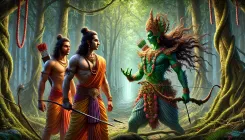
The Ramayana, a timeless epic of dharma, duty, and devotion, is filled with pivotal moments that shape its narrative. One such moment is the tale of Surpanakha, the rakshasi whose actions set off a chain of events leading to the great war between Rama and Ravana.
Surpanakha was the sister of Ravana, the ten-headed king of Lanka. When she grew up, she secretly married a Danava prince, Vidyutjihva. The Danavas were Rakshasas' mortal enemies, and an enraged Ravana decided to kill both of them. Ravana killed Vidyutjihva and was about to kill Surpanakha too, but Ravana's wife Mandodari saved her. She roamed the woods to search for another husband.
She encountered Rama in the Panchavati forest and was captivated by his beauty and valour. Her desire to marry him led her to approach him with a proposal. However, Rama, devoted to Sita, rejected her advances. Surpanakha then turned her attention to Lakshmana, only to face rejection again.
Humiliated by rejection and provoked by Sita’s presence, Surpanakha’s rage knew no bounds. She attacked Sita, intending to eliminate her rival. Lakshmana intervened, and in an act of fury, he disfigured Surpanakha by cutting off her nose.
This act of violence deeply humiliated Surpanakha. Her disfigurement was not just a physical injury but a blow to her pride and status. Enraged, she sought revenge by going to Ravana and recounting the events. She described Sita’s unparalleled beauty, igniting Ravana’s desire to possess her. This led to Sita’s abduction, which became the crux of the Ramayana’s conflict.
Surpanakha is often dismissed as a mere antagonist, but her story is layered with complexity. Her feelings of rejection and humiliation are deeply relatable, showcasing her vulnerability despite her rakshasi identity. Her actions, though impulsive, set the epic into motion, highlighting how seemingly minor events can have far-reaching consequences.
Interestingly, her tale also raises questions about the moral choices of the protagonists. Was Lakshmana’s act of disfiguring her justified? Lakshmana’s decision to disfigure Surpanakha was an act of retaliation in the heat of the moment. Surpanakha’s attempt to harm Sita provoked his anger, and he acted swiftly to protect her. But was his response proportionate to the situation?
Some might argue that Lakshmana’s actions were necessary to stop a threat and protect Sita. Others could question whether his response was driven by a personal sense of superiority or contempt for Surpanakha’s audacity to approach them. Was it truly dharma to inflict such a severe punishment, or could there have been a more compassionate way to handle the situation?
Ultimately, this episode compels us to question our own responses to conflict. When faced with anger or rejection, do we act with empathy, or do we let our emotions dictate our actions? Ramayana’s greatness lies in its ability to provoke these questions, making it relevant even today.

Related Articles
Try a fuller and better experience on the
Dharmayana App