
Skanda Sashti: Murugan's Victory over Surapadman
When the mighty warrior god conquered darkness.

Abhilash Ramakrishna
09 Nov 2026 • 7min
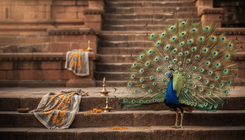
Skanda Sashti is a six-day festival that marks Murugan's victory over the demon Surapadman. This is one of the most significant festivals for Murugan, also known as Kartikeya or Skandha, the warrior god worshipped especially in South India. The festival culminates on the sixth day, called Sashti (the sixth lunar day), and thousands of devotees observe it with fasting, prayer and pilgrimage to Murugan temples. The story of Surapadman's defeat is not merely a battle tale—it represents the triumph of dharma over adharma, order over chaos, and is understood as a spiritual victory that devotees celebrate within themselves.



The Story of Surapadman
Surapadman was a powerful demon who had received a blessing that made him nearly invincible. According to the Skanda Purana, he became arrogant with his power and began oppressing the devas (gods) and the earth itself. No weapon could harm him, because his boon protected him from all conventional forms of attack. The devas appealed to Murugan, who was born for this very purpose: to destroy evil forces that threatened cosmic order.
In the battle, Surapadman transformed himself into two peacocks, a copper-coloured and a golden one, thinking this disguise would protect him. But Murugan saw through the deception. He killed both peacocks and then subdued the demon. One peacock was transformed into Murugan's vahana (mount), the vehicle the god rides, while the other entered his body. This is why Murugan is often depicted riding a peacock, and why the peacock is sacred to him. The victory is not just physical conquest—it is the subduing of ego and arrogance, which are understood as the real demons within each person.
When Skanda Sashti Falls
Skanda Sashti occurs during the month of Kartik, typically falling between October and November in the Gregorian calendar. However, the exact date shifts each year because it follows the lunar calendar. The festival begins five days before the actual Sashti tithi (lunar day) and reaches its climax on the sixth day itself. Many temples and communities begin pre-festival observances several days earlier, building up the spiritual intensity towards the final day. Some devotees extend the observance beyond the formal six days, particularly during special years when rituals align with significant astrological periods.
How Devotees Observe the Festival
The most common way to mark Skanda Sashti is through fasting. Many devotees observe a partial or full fast, particularly on the final day, and break it only after worshipping or after receiving prasad (blessed food) at a temple. Some people fast for the entire six-day period, though this is less common. Others fast on the sixth day only, making it a day of special focus and discipline.
Visiting Murugan temples is central to the celebration. On the final day, temples hold special pujas and processions, often attracting large crowds. In Tamil Nadu, Kerala and other regions where Murugan worship is strong, temples organize elaborate Sashti celebrations with abhishekam (ritual bathing of the deity), archanai (worship offerings) and distribution of prasad. Many devotees walk long distances or undertake pilgrimage to famous Murugan shrines, particularly the six major temples associated with Murugan's life, known as Arupadai Veedu (six sacred places).
Some devotees wear special beads or rudraksha and perform japa (repetition of mantras) during this period. The most common mantra is the Murugan Gayatri, repeated 108 times or more. Others undertake vows—some promise to visit the temple daily, others take specific offerings they will make if their wishes are granted. This personal commitment transforms the festival from a general celebration into a meaningful spiritual practice.
Regional Variations
Skanda Sashti is observed across India, but the practice is most established in Tamil Nadu, Karnataka and Kerala. In Tamil Nadu, the festival is called Soorasamharam (the slaying of Sura), and it is observed with immense devotion at temples like Palani Murugan Temple and Tiruchendur. The Palani temple pilgrimage is particularly famous; many devotees believe climbing the temple steps is itself an act of spiritual discipline that honours Murugan's warrior nature.
In Karnataka, the festival is observed at temples like Chamundeshwari Temple and others dedicated to Murugan. In Kerala, Murugan is called Mahavidya or Kumara, and the festival connects to local traditions and temple customs. Even in North India, where Murugan is less commonly worshipped, some temples hold special events. The core story and the timing remain the same, but the rituals, the languages of prayer and the temple traditions vary by region and sampradaya (tradition).
What the Victory Means
Understanding Skanda Sashti as purely a historical or mythological event misses the deeper meaning that the tradition holds. The defeat of Surapadman represents the destruction of ego, arrogance and the inner demons that each person faces. Surapadman's power came from a blessing, yet his misuse of that power led to his downfall. The peacock, into which he was transformed, becomes beautiful precisely because it carries Murugan's grace—what was destructive is redeemed and becomes a vehicle for the divine.
For devotees, the festival is an opportunity to reflect on their own struggles with greed, anger and ignorance, understood in the tradition as the real enemies. The discipline of fasting, the act of pilgrimage, and the repetition of mantras are all ways of aligning oneself with the victory that Murugan represents. It is not a distant celebration of something that happened in myth; it is an invitation to participate in that victory within one's own spiritual life.
Preparing for the Festival
If you plan to observe Skanda Sashti, you might begin by learning about your nearest Murugan temple and whether it hosts special events. Many temples publish their schedules in advance. If you are planning to fast, decide in advance whether you will observe a full fast or a partial one (many people eat fruits and dairy during a partial fast), and make sure you are physically able to do so. If pilgrimage is part of your plan, check travel arrangements and temple timings.
You can prepare mentally and spiritually by reading or listening to stories of Murugan, or learning more about the deity. Some devotees spend the days leading up to Sashti in more conscious practice—praying a little earlier, being more mindful, or studying the spiritual texts. There is no single "right" way to observe Skanda Sashti; what matters is that your observance is sincere and meaningful to you. The festival is an invitation: to honour a tradition that has endured for centuries, to strengthen your connection to the divine, and to reflect on your own inner transformation.
Common questions
Is Skanda Sashti the same as Soorasamharam?
Yes, they refer to the same festival. Soorasamharam is the Tamil name, meaning 'the slaying of Sura' (Surapadman). Skanda Sashti is the Sanskrit-derived name used more widely across India. In Tamil Nadu particularly, you will hear it called Soorasamharam.
Can I observe Skanda Sashti if I cannot fast for six days?
Absolutely. Fasting is common during this festival, but it is not required. Many people fast only on the final day (Sashti), or observe a partial fast eating only fruits and dairy. Some devotees simply visit a temple or perform prayers without fasting at all. Your sincere participation is what matters.
Which are the six Arupadai Veedu temples of Murugan?
The six sacred temples are Palani (Tamil Nadu), Tiruchendur (Tamil Nadu), Tiruttani (Tamil Nadu), Pazhamudircholai (Tamil Nadu), Swamimalai (Tamil Nadu) and Kumarakottam (Tamil Nadu). Pilgrimage to these six temples during or around Skanda Sashti is considered especially auspicious.

Related Articles


