
Sita Jayanti 2027: Why Sita is Known as the Daughter of the Earth
The story of a goddess born from the soil itself

Abhilash Ramakrishna
27 Oct 2026 • 6min
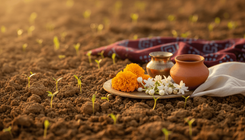
Sita Jayanti, or Sita Navami as it is also called, celebrates the birth of Sita—one of the most revered figures in Hindu tradition. She is known as the daughter of the earth because, according to the Ramayana, she was not born from a mother in the ordinary sense. Instead, Sita emerged from the ground itself during the ploughing of a sacred field. This extraordinary origin gives her a unique place in the tradition and shapes how she is understood and honoured in devotional practice today.
The date of Sita Jayanti is determined by the lunar calendar, falling on the Navami (ninth day) of the bright half of the month of Chaitra. Each year this falls on a different date in the Gregorian calendar, but it usually occurs in March or April. The festival marks the moment when Sita appeared to King Janaka, her adoptive father, and it remains an important observance for those devoted to her story and teachings.



The Birth of Sita from the Earth
The story of Sita's birth is found in the Ramayana, the epic narrative that forms the foundation of Hindu dharma. According to this account, King Janaka was performing a sacred ritual called a yagna when he decided to plough the ground to purify the earth for the ceremony. As the plough broke the soil, a child emerged from it—a girl of extraordinary radiance and beauty. King Janaka was astonished and joyful. He named her Sita, which means "furrow" in Sanskrit, in reference to the furrow from which she had appeared. He treated her as his beloved daughter, though she was not born of his body.
This origin story carries profound spiritual meaning. By being born from the earth itself, Sita embodies purity, fertility and the sacred nature of the land. She is understood as a form of the earth goddess Bhumi, and her birth from the ground connects her to the abundance and generative power of nature. When she is called "Prithvi Suta"—the daughter of the earth—it speaks to this deeper layer of her identity, beyond the narrative of the Ramayana alone.
Sita as a Manifestation of Lakshmi
While Sita is the daughter of the earth in her origin, she is also revered as an incarnation of Lakshmi, the goddess of prosperity, fortune and grace. This dual nature—earthly yet divine—is central to how she is understood in Hindu tradition. Lakshmi is often depicted alongside Vishnu, and Sita is held to be Lakshmi's manifestation on earth during the age in which Ram lived. This makes Sita both fully earthly and fully divine at once.
This understanding shapes how devotees relate to her. Sita represents not only the ideal woman of virtue and steadfastness—the qualities for which she is most famous—but also the grace that flows into the world through the earth itself. Her role as Lakshmi means that worshipping her on Sita Jayanti is also a way of inviting prosperity and blessing into one's own life. Many people perform pujas and offer flowers and sweets at Sita Jayanti to seek her favour.
The Significance of Sita Navami
Sita Navami is more than a simple birthday celebration. It is an occasion to reflect on what Sita represents: absolute dharma, steadfastness, and the power of Earth itself. Throughout the Ramayana, Sita faces extraordinary challenges—abduction, exile, and finally rejection by the people despite her virtue—yet she remains unmoved in her commitment to dharma and truth. Her resilience comes not from force, but from her grounding in the earth and in righteousness.
The festival is observed with pujas in temples and homes across India, particularly in regions with a strong tradition of Ram worship such as Ayodhya and other parts of North India. Devotees sing hymns, read passages from the Ramayana, and make offerings of flowers, fruits, sweets and incense. Some communities organise recitations of the Ramayana in her honour. The festival is a chance to honour her steadfastness and to call upon her strength and grace.
Celebrating Sita Jayanti in Practice
On Sita Jayanti, many people rise early and bathe, then visit a temple or create a small altar at home. They offer flowers—particularly lotus flowers, which are associated with purity and divinity—along with sweets, fruit and incense. The Sita Ashtottara (108 names of Sita) is recited by many devotees as a way of honouring her qualities and invoking her presence. Some people fast or eat only simple food as a mark of respect.
The festival is also an opportunity to reflect on Sita's teachings through the stories of the Ramayana. Her unwavering virtue in the face of trials, her loyalty, and her choice to return to the earth at the end of the epic—all these carry lessons for devotees today. In a world that often prizes external power, Sita's example of strength through dharma and surrender to truth remains profoundly relevant. Many people use this day to strengthen their own commitment to dharma and to call upon Sita's grace to guide them.
Sita's Return to the Earth
Sita's story does not end with triumph and celebration. At the close of the Ramayana, after years of exile and struggle, Sita is rejected once more by the people, who doubt her virtue despite all she has suffered. Unable to bear this injustice, she calls upon her mother, the earth, to take her back. The ground opens, and Sita descends into it, returning to the soil from which she came. This final act is not one of defeat, but of a conscious choice to return to her true nature and her true home.
This return to the earth is often understood as a moment of spiritual liberation rather than tragedy. It speaks to the cycle of life and death, and to the ultimate reality that the earth sustains all life and receives all back into itself in the end. For many devotees, this closing of Sita's earthly story deepens the meaning of calling her "the daughter of the earth": she came from the earth, she walked upon it in dharma, and at last she returned to it—complete and at peace.
Common questions
When is Sita Jayanti celebrated each year?
Sita Jayanti falls on the Navami (ninth day) of the bright half of Chaitra, which usually falls in March or April. The exact date shifts each year because the lunar calendar does not align with the Gregorian calendar.
Why is Sita called the daughter of the earth?
Sita is called Prithvi Suta (daughter of the earth) because according to the Ramayana, she emerged from the ground itself during a sacred ploughing by King Janaka. She is also understood as a manifestation of Bhumi, the earth goddess.
What offerings are traditionally made on Sita Jayanti?
Devotees typically offer flowers (especially lotus flowers), sweets, fruit and incense at temples or home altars. Many also recite the Sita Ashtottara (108 names of Sita) and some observe a fast or eat only simple food as a mark of devotion.

Related Articles


