
Shiva Linga: Meaning and Symbolism of the Aniconic Form
The formless form that holds infinite meaning

Abhilash Ramakrishna
13 Nov 2026 • 7min
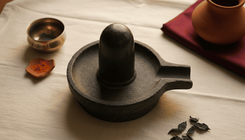
The shiva linga is one of the most widespread symbols in Hindu worship, yet one of the most misunderstood. You see it in temples across India and in homes, a simple stone or metal form—usually cylindrical, often sitting within a circular base called the yoni. What does the shiva linga mean, and why is this shape so central to how millions worship Shiva?
The shiva linga is not a representation of Shiva as a person or deity with a form. It is an aniconic symbol—a way of expressing something beyond form, beyond shape, beyond what the eye can hold. In Sanskrit, linga means "sign" or "symbol". The linga represents the infinite, formless reality of Shiva: consciousness itself, the ultimate source from which all things arise.



The Formless Made Present
Shiva is understood in Hindu philosophy as that which has no form, no beginning, no end. Yet devotees need something to focus on when they worship. The linga solves this paradox. It allows you to contemplate the infinite through a simple, unchanging symbol. The vertical dimension of the linga points upward—toward transcendence, toward the beyond. The circular yoni base beneath it represents the manifest world, matter, the feminine principle that receives and contains.
When you stand before a linga in a temple, you are not looking at a picture or a statue meant to look like someone. You are facing a symbol that points your mind toward what cannot be pictured: the consciousness that underlies existence. This is why the linga has remained powerful across centuries and across every region of India. It does not compete with changing fashions in art or sculpture. It simply is—a form that asks you to look through it toward what has no form.
Why a Cylinder? Why a Base?
The shape itself carries meaning. A cylinder—smooth, tapering, unadorned—has no features to distract the mind. It does not ask you to imagine a face or read an expression. It is complete and whole in itself, needing nothing added. This simplicity is precisely the point.
The circular or square base, the yoni, is equally important. In Shaivite theology, Shiva (pure consciousness, the masculine principle) cannot manifest in the world without Shakti (the divine feminine energy, the principle of matter and manifestation). They are not separate. The linga rests in the yoni not as two distinct things, but as an expression of their eternal union. Creation, sustenance, and dissolution all flow from this meeting of consciousness and creative power.
Different temples and regions add different elements. Some lingas are marked with horizontal lines or bands called rudraksha beads or other symbols etched into the stone. Some rest on elaborate bases. Some are made of black stone, others of white or crystal. These variations express local tradition and aesthetic preference, but they do not change the fundamental meaning. The linga itself remains the symbol of the formless, infinite Shiva.
Worship and Ritual Understanding
When devotees pour water or milk over a linga during worship (abhisheka), they are not performing an action directed at a person hidden inside stone. The act itself is the meaning. Pouring water symbolizes the flow of grace, the washing away of impurity, the cooling of the burning heat of ego and desire. The water flows down through the yoni and out into channels carved for this purpose—a circulation of divine energy through the worshipper and back into the world.
Flowers, incense, and offerings are made not because Shiva needs food or wants garlands, but because the act of offering trains the mind in surrender and devotion. The ritual creates a container for your own transformation. By making an offering before the linga, you are rehearsing the surrender of what you hold as "mine"—your pride, your possessions, your separate identity.
This is why the linga remains central even in temples dedicated to other deities. A Vishnu temple may also house a linga shrine because Shaivite and Vaishnava traditions recognize the same ultimate reality differently named. The symbol transcends sectarian boundaries in a way that a statue or narrative image cannot.
Common Misunderstandings
The linga is sometimes described in popular texts in ways that can confuse or embarrass newcomers to Hindu practice. It is important to understand that the symbol is not itself erotic or sexual in meaning, though abstract representations of masculine and feminine principles are part of its theology. To read it as primarily sexual is to miss the philosophical depth entirely and to mistake metaphor for literal description.
The linga is aniconic precisely to avoid the trap of thinking about divinity in human or animal terms. A statue of Krishna playing the flute tells a story and asks you to imagine a scene. The linga asks something different: it asks you to rest in silence and contemplate what cannot be imagined. This is its strength, not a limitation.
The stone or metal is not considered sacred because it is mysterious or because power is magically contained within it. It is sacred because it is the focus point for your devotion and your contemplation. Hindus traditionally understand that divinity is present everywhere—in stone, in water, in earth, in the space between atoms. The linga simply declares this truth in a form that turns the mind inward.
The Linga Across Regions and Traditions
Across India, the linga appears in forms adapted to regional stone, regional aesthetics, and regional practice. In South Indian temples, you will find elaborate linga shrines with specific ritual sequences. In Kashmir, Shaivite philosophy developed sophisticated explanations of how the formless becomes form. In Bengal, Tantric traditions placed emphasis on the linga's role in meditation and energy practices. Yet the core meaning remains constant: the linga is the bridge between the transcendent and the manifest, between consciousness and its expression in the world.
When you encounter a shiva linga in a temple or in a home shrine, you are meeting one of the oldest continuous religious symbols in the world. Its permanence across time and place speaks to something true about human need: the need to have something to hold your attention when contemplating what cannot be held, to have form when approaching the formless. This paradox is not a weakness in Hindu thought. It is, rather, a recognition of how the human mind actually works—and an elegant solution that has endured.
Common questions
Why is the yoni base important in linga worship?
The yoni represents Shakti, the divine feminine energy and principle of manifestation. In Shaivite theology, Shiva (consciousness) and Shakti (creative power) are inseparable. The linga resting in the yoni expresses their eternal union, which is necessary for anything to exist or be created in the world.
What does it mean when water is poured over the linga?
Pouring water (abhisheka) during worship symbolizes the flow of grace, purification, and the cooling of ego and desire. The water flowing down through the yoni and out through channels represents a circulation of divine blessing through the worshipper and into the world. It is an act of surrender and devotion, not a literal offering to a person.
Do different regions worship the linga differently?
Yes. South Indian temples have specific ritual sequences and elaborate linga shrine designs. Kashmir Shaivite traditions incorporated the linga into meditation and energy practices. Bengal's Tantric traditions also developed their own approaches. However, the core meaning—the linga as a symbol of Shiva's formless nature—remains constant across all regions.

Related Articles


