
Shantakaram Bhujagashayanam: Understanding the Vishnu Dhyana Verse
The sacred meditation on Vishnu at rest

Abhilash Ramakrishna
17 Nov 2026 • 5min
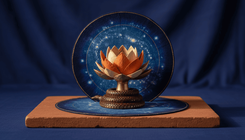
When you begin your puja with the words "Shantakaram bhujagashayanam padmanabham suresham," you are reciting one of the most beloved mantras in Hindu devotional practice. This verse, known as the Vishnu Dhyana Mantra, is a meditation on Lord Vishnu in his cosmic repose. Understanding what these Sanskrit words mean opens a doorway to deeper devotion and presence in your worship.



The Opening Image: Vishnu in Repose
"Shantakaram bhujagashayanam" sets the scene immediately. Shanta means peaceful or tranquil, while karam means hand or arm. Bhujaga is the serpent, and shayanam means reclining or lying down. Together, the phrase shows us Vishnu with peaceful hands, resting on the coils of Ananta, the infinite serpent. This is not a scene of idleness. In Hindu cosmology, Vishnu's rest is the space between creation and destruction, a state of perfect stillness from which all potential emerges. When you meditate on this image, you are contemplating the divine peace that underlies all existence.
This particular pose, called Anantasana in yoga and iconography, appears throughout temple sculptures and devotional art. The serpent beneath him represents infinity and the cyclical nature of time. By holding this image in your mind during puja, you align yourself with the eternal, unchanging reality beneath the world of change.
Padmanabham: The Cosmic Creator
Padmanabham describes Vishnu's navel, from which a lotus emerges. Padma means lotus, and nabham means navel. The lotus that grows from Vishnu's navel is not merely decorative. In this lotus sits Brahma, the creator god, and from Brahma's meditation flows all of creation. This single word holds the entire mechanism of how worlds come into being.
The lotus itself carries layers of meaning in Hindu thought. It grows from mud and water, yet emerges unblemished and pure. It represents both the material world from which creation springs and the transcendent realm of the divine. When you speak the word padmanabham, you are acknowledging that Vishnu holds within himself all creative potential, and that creation itself flows from his being as naturally as a lotus blooms from water.
Suresham: Lord of the Gods
Suresham, composed of sura (god or celestial being) and isha (lord or ruler), simply names Vishnu as the supreme lord of all beings. Yet this is not a proud claim. In the context of the full verse, it reminds us that even Brahma and Indra, the king of the gods, bow before Vishnu. All hierarchy, all order in the cosmos, rests on his will. When you call him Suresham, you are placing yourself in proper relationship to the universe: not at its centre, but as part of its vast, ordered structure.
The Middle Verses: Names and Attributes
The verse continues with descriptions of Vishnu's form and qualities that deepen the meditation. He is called "Lakshmikantam," the consort of Lakshmi, the goddess of wealth and abundance. Lakshmi here represents not material wealth alone, but all blessings, grace, and prosperity that flow from the divine. Vishnu as Lakshmikanta is the giver of all good things.
Then comes "Kamalakantalasangam," a longer phrase acknowledging Lakshmi's eternal closeness to Vishnu. Kamala is another name for the lotus and for Lakshmi herself. Kanta means consort or beloved. This part of the verse celebrates the divine couple in eternal union, their love and partnership the very source of cosmic order and abundance.
The Meditation's Purpose and Power
To recite Shantakaram Bhujagashayanam with understanding is to do more than speak words. You are placing your mind in direct contact with the cosmic reality the verse describes. The meditation works because Sanskrit, the language of the mantra, was crafted by ancient seers to carry layers of meaning simultaneously. Each word contains philosophy, theology, cosmology and poetry at once.
Many devotees begin their puja with this verse because it creates the right mental state for worship. The peacefulness of Shanta, the creativity of Padmanabha, the sovereignty of Suresham, and the grace of Lakshmikanta together paint a portrait of divinity that is both transcendent and intimately close. Vishnu is not remote. He rests eternally, yet his rest sustains all being. He is both infinitely great and intimately present with those who call upon him.
When and How to Use This Mantra
The Vishnu Dhyana Mantra is recited at the beginning of most Vishnu-centered pujas, particularly those honoring Narayana or Krishna. You will hear it in temples during morning worship, and many households begin their daily prayers with its words. Some traditions use it as a warm-up meditation before moving into more elaborate rituals or deity worship. Others recite it as a standalone practice, repeating the verses while holding the image of Vishnu's cosmic repose in the mind.
There is no requirement to understand every syllable to benefit from the mantra. The sound itself carries power. But when you know what the words mean, your practice deepens. Your mind settles more quickly into the image the verse creates. Your devotion becomes not just feeling, but also understanding. And that union of knowledge and love is the heart of Hindu spiritual practice.
Common questions
Is Shantakaram Bhujagashayanam part of a longer prayer?
Yes, this is the opening verse of the Vishnu Dhyana Mantra, which continues with additional descriptions of Vishnu and Lakshmi. Many traditions recite the full multi-verse mantra as a complete meditation before moving into puja proper. Some versions extend to eight or more verses.
Can I recite this mantra if I don't speak Sanskrit?
Absolutely. Many devotees learn the phonetic pronunciation and recite the mantra by sound alone, which itself carries spiritual benefit. However, learning the meaning deepens your practice by anchoring your mind to the image and concepts the verse describes rather than letting attention wander.
What is the difference between Shantakaram Bhujagashayanam and other Vishnu mantras?
This particular mantra is a dhyana, or meditation verse, designed to create a clear mental image of Vishnu for worship. Other Vishnu mantras, like the Narayana Kavacham or mantras from the Upanishads, serve different purposes—protection, praise, or philosophical inquiry. All have their place in different contexts of practice.

Related Articles


