
Shaligram Shila: The Sacred Stone of Vishnu Worship
A fossil form of the divine that lives in your home

Abhilash Ramakrishna
12 Nov 2026 • 7min
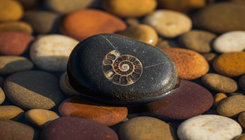
A shaligram shila is a sacred stone believed to be a natural form of Vishnu himself. These dark pebbles come from the Gandaki River in Nepal, where they have been collected for centuries by devotees seeking to bring Vishnu's presence into their homes and temples. You do not carve or craft a shaligram: you find it in the riverbed, recognise its inherent sanctity, and welcome it as a manifestation of the divine.
The belief in shaligram as divine form runs deep in Hindu tradition. Unlike a murti—an idol carved and consecrated by human hands—a shaligram is understood to be already whole and complete in its spiritual nature. It is discovered rather than made. This distinction shapes how devotees approach the stone: with the reverence you would give to a spontaneous appearance of the sacred itself.



The Origin and Source of Shaligram Stones
Shaligram stones are fossils of ancient ammonites, spiral-shelled sea creatures that lived millions of years ago. The Gandaki River, which flows through the foothills of the Himalayas in Nepal, passes through geological layers where these fossils are embedded. Over centuries, the river has worn them smooth and polished them into the rounded stones that devotees now collect. The stone's dark colour—usually black or grey-black—and its distinctive spiral markings are the remains of these ancient shells.
The Gandaki is considered sacred precisely because these stones emerge there naturally. Pilgrims travel to the river to find shaligrams, though they are also traded by vendors and spiritual suppliers. The process of discovery matters: a shaligram found during your own journey is often considered more personally blessed than one purchased. However, there is nothing wrong with buying a shaligram if that is how it reaches you. The stone's sanctity does not depend on the method of acquisition.
Not every dark pebble from the Gandaki is a true shaligram. Tradition teaches that the stone should show certain marks: often a circular spiral or a natural depression. These natural features are believed to represent Vishnu's chakra (disc), his conch shell, or his other divine symbols. Different marks are associated with different forms of Vishnu: the serpent mark relates to the deity's cosmic role, while the plain round stone represents Vishnu in his universal form.
How to Worship a Shaligram at Home
Shaligram worship is accessible and does not demand elaborate ritual, which is one reason it remains popular in Hindu homes across the world. The stone can be placed on a small shrine, a dedicated shelf, or even on a corner of your domestic altar. Many families keep a shaligram in the puja room—the space set aside for daily prayer. Some place it in a container of water or on a bed of flowers, both traditional ways of honouring the stone.
Daily worship typically begins with washing the stone with water—often collected fresh that morning—and wiping it dry with a clean cloth. This act itself is devotional: the washing is understood as serving and caring for the divine form. After washing, you can offer the stone flowers, incense, or a lamp. Many devotees recite mantras while in the presence of the stone, particularly mantras to Vishnu such as the Hari naam or passages from the Bhagavad Gita.
Food offerings are central to shaligram worship. Rice, fruit, or prepared sweets can be placed before the stone as naivedya—an offering to the deity. After a brief time of prayer, this food becomes prasad, blessed by the deity's presence, and can be eaten by family members. The stone itself receives no food: the offering is made in the space before it, acknowledging both the sanctity of the stone and the sustenance it represents.
Water worship is particularly important. Many devotees pour a small amount of water over the stone each day, sometimes incorporating this into their morning or evening routine. The water used may then be sprinkled in the home or consumed as tirtha—water blessed by contact with the divine. This practice echoes the stone's origin in the Gandaki River and keeps the connection between the stone and its source alive in the worshipper's consciousness.
Rules and Restrictions for Shaligram Care
Shaligram worship carries certain conventions that mark the stone's sacred nature. The stone should never be left neglected or placed in an unclean space. Many families keep the shaligram in a dedicated container or on a special cloth to protect it from casual contact. The place where the stone sits should be treated with respect: a puja corner or a high shelf is more appropriate than a location where people's feet might be pointed toward it or where it might be jostled.
Traditionally, women who are menstruating have not approached a shaligram in conventional practice, as many Hindu traditions restrict entry to the inner sanctum during this time. However, contemporary understanding varies widely. Some families continue this custom, while others consider it outdated or contrary to the modern understanding of purity. What matters is that you follow the practice that aligns with your household's values and your personal relationship with faith.
The shaligram should be handled with clean hands and a respectful frame of mind. It is not a curio or decorative object but a living form of the deity in your perception and practice. If the stone falls or breaks, this is not seen as a catastrophe but as a natural event. Many devotees believe a broken shaligram should be immersed in a river or sacred water with prayers of gratitude, completing the stone's journey.
Shaligram is not meant to replace visits to temples or engagement with a larger spiritual community. It is a personal practice, a way of maintaining a connection with Vishnu within your home. The stone serves as a focal point for devotion, a tangible reminder of the divine, and an anchor for daily prayer and reflection. For many practitioners, the simplicity of shaligram worship—requiring no priest, no elaborate ritual, no special training—makes it a profound expression of bhakti, the devotional path of the heart.
Understanding Shaligram's Role in Your Practice
Shaligram has particular significance in sampradayas—schools of practice—that emphasise bhakti and home-based spirituality. The Vaishnava traditions especially honour the stone as an accessible form of Vishnu. However, even within these traditions, the stone is understood differently by different devotees. For some, the shaligram is Vishnu himself, present in physical form. For others, it is a symbol of the divine, a sacred object that focuses and amplifies devotional practice.
Neither understanding is wrong. Hinduism accommodates many levels and modes of belief within the same tradition. Your relationship with the shaligram is deeply personal. Some people find that daily contact with the stone transforms their sense of the sacred. Others use it as one element among many in their spiritual life. Both approaches are valid.
The gift of shaligram is that it asks very little while offering much. You need no Sanskrit knowledge, no ritual expertise, no expensive materials. You need only the intention to honour something you believe to be sacred, and the willingness to turn up each day to that practice. For many practitioners over many centuries, that simplicity has been enough to sustain a life of faith.
Common questions
Where exactly do shaligram stones come from?
Shaligram stones are ammonite fossils from the Gandaki River in Nepal. The river has worn them smooth over centuries. While they are collected and sold by vendors, the most revered shaligrams are those found personally by pilgrims who travel to the river.
Can I keep a shaligram if I am not vegetarian?
There is no universal rule prohibiting non-vegetarians from keeping a shaligram. Many households worship one regardless of diet. If you have concern about this, consult an elder in your family tradition or a guru who knows your practice well.
What should I do if my shaligram breaks?
A broken shaligram is not inauspicious. Tradition holds that you should immerse it in a river or sacred water with gratitude and prayers, allowing the stone to return to the elements. Some devotees keep the pieces on their altar if they wish.

Related Articles


