Shakambhari Navratri 2027: Understanding the Goddess of Vegetation
Feeding the world through sacred plants

Kushal K
29 Oct 2026 • 7min
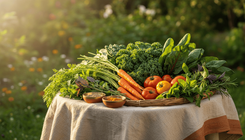
Shakambhari Navratri 2027 honours the Goddess Shakambhari, one of the manifestations of Devi revered for her role as the provider of vegetation and sustenance to all beings. The name Shakambhari comes from two Sanskrit words: shakam, meaning vegetables or greens, and hari, meaning the one who carries or sustains. Unlike Navratri celebrations held in autumn, Shakambhari Navratri falls in spring and centres on gratitude for the earth's fertility and the goddess's power to nourish life through plants.
The connection between Shakambhari and vegetation flows from her mythological narrative. According to devotional tradition, the goddess took this particular form to feed and heal the world during a time of great famine and suffering. Rather than fighting a demon directly as in other Navratri stories, Shakambhari manifested as a provider, her compassion taking the form of abundance. Her eight or nine arms are said to overflow with vegetables, fruits and grains, and her presence is believed to protect crops, ensure good harvests and sustain all living creatures. This is why she is particularly venerated by farming communities and in regions where agriculture forms the backbone of life.



The Mythology of Shakambhari
The stories of Shakambhari appear in various Puranas and devotional texts, though the exact scriptural sources vary by region and sampradaya. In some accounts, she appears during a period when the world faced severe drought and starvation. The goddess is said to have nourished all beings through the abundance of her form, which manifested as every kind of vegetable and herb. Her compassion was so vast that she sustained the entire creation through vegetation alone during this crisis. This narrative sets her apart from other Devi avatars, whose stories often centre on vanquishing evil: Shakambhari's power lies in creation and sustenance rather than destruction.
Different regions of India maintain their own understandings of this goddess. In some traditions, Shakambhari is considered one of the nine forms worshipped during the spring Navratri, while in others she may be honoured separately or as a manifestation of Durga or Parvati. The flexibility of her story within the Hindu tradition reflects how goddess worship often adapts to local needs and concerns. For communities dependent on soil and seasons, a goddess who feeds through vegetation carries especially deep meaning.
Why Vegetation Holds Sacred Significance
In Hindu understanding, vegetation is never merely material—it holds spiritual and nutritional value inseparable from worship. Every plant, herb and grain is seen as a living gift from the divine. Shakambhari's link to plants reflects this deeper principle: the goddess embodies the recognition that all nourishment ultimately comes from the sacred, and that the act of providing food is itself an act of divine compassion.
The reverence for vegetation also connects to the concept of ahimsa, or non-violence. In many Hindu and yogic traditions, eating plants is understood as a gentler path than consuming flesh, a way of sustaining oneself while minimizing harm to other beings. When Shakambhari is depicted nourishing the world through vegetables and grains, she represents this conscious, sustaining way of living. Her worship often takes place during growing seasons when the earth is actively producing new life, making the timing deeply symbolic.
Plants also represent abundance without competition. Unlike resources that diminish when shared, a harvest can feed many, can be preserved and replanted. This makes vegetation an apt symbol for the kind of providence that benefits all beings simultaneously—exactly what Shakambhari represents. Her generosity has no limit.
Observing Shakambhari Navratri
Shakambhari Navratri typically falls in the spring months, most commonly during Chaitra (March to April) in the lunar calendar, though the exact timing shifts each year based on the movements of the moon. Some communities also observe a separate Shakambhari Navratri at other times in the year. The festival spans nine days, with each day traditionally dedicated to a different aspect of the goddess or a particular form of devotion.
During these nine days, devotees honour Shakambhari through worship, meditation and offerings. Many people maintain a sattvic (pure and light) diet, often incorporating fresh vegetables, fruits and herbs into their meals as a direct acknowledgment of the goddess's gift. Some keep fruit or vegetable fasts, consuming only plant-based foods to align themselves with the spirit of the observance. Temple worship intensifies during this period, with special pujas and recitations of devotional texts.
The practice of offering vegetables and grains at temples or home shrines is central to the celebration. Devotees bring fresh produce—whatever is in season—to present before the goddess, both as gratitude and as a reminder that all nourishment flows from her compassion. In agricultural regions, Shakambhari Navratri often coincides with moments in the farming calendar when crops are growing or about to be harvested, making the ritual observance and the practical life of the farmer naturally aligned.
Regional Variations in Practice
Shakambhari worship varies considerably across India, reflecting regional traditions and local languages. In some parts of northern India, particularly in Himachal Pradesh and Rajasthan, Shakambhari temples serve as important pilgrimage sites. In other regions, she may be honoured within larger Navratri celebrations rather than as a separate festival. South Indian traditions may emphasize different forms of the goddess, though the principle of revering the divine feminine as the source of nourishment remains central.
The goddess is particularly important in areas where vegetable farming has deep historical and cultural roots. Communities that have sustained themselves through the earth for generations often have the most robust practices connected to Shakambhari worship. Even in urban areas, increasingly, people observe Shakambhari Navratri by choosing plant-based eating, planting seeds or gardens, and studying the goddess's mythology. These varied expressions all reflect the same underlying truth: that the earth provides for us, and that gratitude and conscious living are the proper human response.
Carrying the Practice Forward
Whether you live near a Shakambhari temple or observe the festival at home, the core practice is simple: conscious recognition of where nourishment comes from. During Shakambhari Navratri, you might choose to eat only vegetables and whole grains, not as restriction but as alignment with the goddess's principle of gentle sustenance. You might visit a temple if one is accessible to you, or set up a small altar at home where you offer fresh produce and flowers. Reading or listening to the goddess's stories is a form of worship that requires no special preparation.
The deeper invitation Shakambhari offers is to see the sacred in the ordinary act of eating. Every meal can become a moment of gratitude and recognition. The spring season makes this especially possible, when fresh greens return to the market and earth, and the world itself seems to be offering generously. In honouring Shakambhari during her Navratri, you join a continuous chain of devotion stretching back through time, one that asks: How can we live in gratitude? How can we consume mindfully? How can we recognize the divine generosity that sustains every breath?
Common questions
When is Shakambhari Navratri in 2027?
Shakambhari Navratri typically occurs in spring during the Chaitra month (March to April in the lunar calendar), but the exact dates shift each year based on lunar movements. Check a current Hindu panchang or calendar to find the precise dates for 2027.
How is Shakambhari worship different from other Navratri observances?
Unlike autumn Navratri, which often focuses on the goddess's victory over demons, Shakambhari Navratri emphasizes her role as the provider of nourishment and fertility. The practice typically involves offerings of fresh vegetables, plant-based eating, and gratitude for the earth's abundance rather than fasting or martial themes.
Can I observe Shakambhari Navratri without a temple nearby?
Yes. You can create a simple home altar with an image or name of the goddess, offer fresh fruits or vegetables, and maintain a sattvic plant-based diet for the nine days. Reading the goddess's stories or listening to devotional songs are equally valid forms of worship that require no special space.

Related Articles