
Saptapadi: The Seven Steps of a Hindu Wedding
Walking together, vow by vow

Kushal K
07 Nov 2026 • 5min
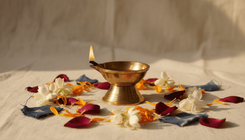
The saptapadi, or seven steps, is the ritual heart of many Hindu weddings. As the bride and groom walk together around the sacred fire, they take seven steps—each one a vow and a promise. The fire itself, called agni, serves as witness to these steps. This is why fire is called agni sakshi, the witness of truth.
The saptapadi is not performed in quite the same way everywhere. Different regions and different sampradayas (traditions) have their own variations. But the meaning of the seven steps is consistent: they bind the couple in a partnership that extends beyond this one life.



What the seven steps represent
Each step traditionally relates to a different aspect of married life. The first step is for nourishment and health. The second is for strength and wellbeing. The third concerns prosperity and well-being. The fourth is for happiness in the household. The fifth is for health and long life. The sixth is for beauty, health and vitality. The seventh step is for loyalty, friendship and lifelong companionship.
In some traditions, the verses spoken during each step make these meanings explicit. In others, the meaning is held implicitly, understood through the act of taking the step itself. The recitation of mantras during saptapadi varies between different families and different temples. Some couples speak Sanskrit mantras; others speak in their own regional language.
The role of agni sakshi
Agni, the fire, is central to why saptapadi is sacred. Unlike a human witness who might forget or be swayed, the fire witnesses with complete objectivity. Agni is also a purifying force in Hindu practice. The fire between the couple represents truth, clarity and the transformation that marriage brings.
The couple does not face each other during the steps; they usually walk around the fire, moving in a direction that varies by tradition. In some customs, the groom leads; in others, the bride leads one step. Some traditions have the couple walk between the fire and witnesses. The precise choreography depends on regional practice, but the presence of agni as sakshi remains essential.
How saptapadi fits into the larger marriage ceremony
The saptapadi usually comes late in the wedding ceremony, after rituals such as the kanya daan (gifting of the bride by her parents) and the exchange of garlands. By the time the couple takes the seven steps, they have already been ritually prepared and the main elements of the ceremony have unfolded.
The moment of the saptapadi is often the most emotionally present part of the wedding for the couple themselves. Earlier rituals involve families and priests; the seven steps are unmistakably about the two people walking. After the saptapadi is complete, the couple is considered married, and further rites seal and celebrate this status.
Regional variations in practice
The number seven and the basic structure are constant, but how the steps are taken differs. In South Indian weddings, especially in Tamil traditions, the seven steps might be taken in one direction around the fire. In North Indian weddings, the structure and direction vary by region and sampradaya. Some families have the groom take the first three steps with less agency, then the bride leads forward.
In some traditions, family members hold the couple's hands or clothing as they walk, binding the families as well as the couple. In others, the couple walks more independently. Some ceremonies include the throwing of rice or flower petals during the steps; others are more austere. These variations do not weaken the ritual; they root it in the specific community and family performing it.
Preparing for the saptapadi
Couples preparing for this ritual do not usually need to learn the steps in advance. The sequence is slow and deliberate. The priest or elder conducting the ceremony will guide the couple through each step. In many cases, the groom's hand is placed around the bride's waist or they hold hands, their bodies close together so they move as one.
The couple may or may not speak aloud during the steps, depending on the tradition. Some couples repeat a Sanskrit mantra or verse with each step; others listen as the priest chants or as family members sing. Some traditions call for the bride to place her foot on a grinding stone before each step, a symbol of stability and grounding.
What saptapadi means in modern practice
For couples today, the saptapadi offers a moment of stillness and intention in the midst of a long, elaborate ceremony. Even when other elements of the wedding have changed, the seven steps remain rooted in ancient practice. The fire, the steps, and the witnesses connect the couple to a lineage of married people stretching back generations.
Some couples choose to emphasize the saptapadi above other rituals; others are drawn to the older, quieter rites that have held meaning in their specific family. Either way, the seven steps remain a public commitment in front of fire and community—visible, deliberate and impossible to undo.
Common questions
How many people usually witness the saptapadi?
The entire assembled wedding party witnesses the seven steps—family, friends and invited guests. Some traditions also place particular weight on certain designated witnesses, often senior family members or the parents of the couple. But the primary witness is agni, the fire, which has objectivity no person can offer.
What happens if one person stumbles during the steps?
A stumble is considered part of the human reality of the moment and does not invalidate the ritual or the marriage. The ceremony continues. Many couples stumble or need guidance finding the rhythm of moving together, and this is understood as the beginning of learning to walk as partners.
Do both the bride and groom take every step, or does each person take some steps alone?
This varies by tradition and regional custom. In some traditions, both walk all seven steps together throughout. In others, the structure changes—one person might lead or the roles shift between steps. Your family tradition and the priest conducting the ceremony will determine the exact form.

Related Articles


