
Samudra Manthan: The Churning of the Ocean of Milk
From the depths, gifts for gods and mortals

Sunil Chaurasia
16 Nov 2026 • 5min
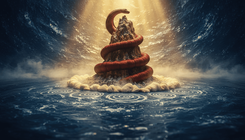
Samudra Manthan is the churning of the cosmic ocean of milk, one of the central events in Hindu mythology. This great act of cosmic creation lies behind many of the observances and symbols that shape the spiritual calendar. Understanding the story helps you recognise why certain things matter in daily practice and worship.



The Devas Lose Their Power
Long ago, the devas (divine beings) possessed the strength to maintain the cosmos through ritual and virtue. Over time, through the curses of sages and conflicts with asuras (anti-divine beings), they grew weak. The immortal nectar, amrita, that gave them strength had been exhausted. Without it, they could no longer hold back the forces of chaos and destruction. In desperation, the devas approached Lord Vishnu to find a way to obtain amrita again.
Vishnu told them that amrita lay at the bottom of the ocean of milk. To retrieve it, he said, they would need to churn the ocean itself. This would require the strength of the asuras as well. Though enemies, the devas and asuras agreed to work together for a short time, bound by the promise that they would share the amrita once it was obtained. They devised a great plan to turn the cosmic ocean as if churning butter.
The Churning Begins
For the task, the devas and asuras chose Mount Mandara as their churning staff and Vasuki the serpent king as their rope. They wound Vasuki around the mountain and pulled and released, pulled and released, creating a spinning motion that churned the ocean.
The effort was immense. The asuras held Vasuki's head while the devas held his tail, a choice that revealed their different natures: the asuras took the position of greater control, thinking only of their own advantage, while the devas accepted the lesser station.
As the churning continued, something unexpected happened. Halahala, a terrifying poison, emerged first. This black venom threatened to destroy all creation. The gods cried out in fear. Shiva, moved by compassion for the universe, drank the poison to protect both devas and asuras. He held it in his throat, which is why Shiva is sometimes called Nilakantha, the blue-throated one.
The Gifts Emerge
After the poison came other treasures. The moon appeared, pale and radiant. Then Lakshmi, the goddess of wealth and fortune, rose from the waters in her full glory. The devas welcomed her with joy; the asuras watched in envy. Then came Apsaras, the celestial dancers; Kalpa Vriksha, the wish-fulfilling tree; Kamadhenu, the divine cow; and other precious things.
At last, Dhanvantari, the physician of the gods, emerged holding a vessel of amrita in his hands. The moment had come. But before the devas could secure the nectar, the asuras seized it and fled.
Vishnu's Intervention
Vishnu then displayed his powers of illusion and cunning. He took the form of Mohini, an enchantress of extraordinary beauty, and approached the asuras. Dazzled by her charm, they were persuaded to place the amrita back into her hands for distribution. Mohini then cleverly served the amrita only to the devas, giving the asuras something else. The devas regained their strength and immortality.
One asura, however, saw through the deception. Before Mohini could stop him, he drank a small quantity of amrita himself. Vishnu hurled his Sudarshan Chakra to cut off the asura's head before the nectar could take full effect. That asura's head remained immortal, and his body fell, creating two separate entities: Rahu and Ketu, the shadow planets in Jyotisha (Vedic astrology), whose ongoing pursuit of the sun and moon explains lunar and solar eclipses.
The Meaning Behind the Story
Samudra Manthan teaches several lessons that run through Hindu practice and belief. It shows that cooperation between opposing forces can achieve what neither alone could accomplish. The emergence of halahala before amrita reminds us that every endeavour encounters difficulty and poison before the fruit appears. Shiva's drinking of the poison shows that compassion and sacrifice protect not just oneself but all beings.
The story also explains the cycles of worship and observance. The moon that emerged is worshipped in lunar rituals. Lakshmi, who appeared during the churning, is honoured in festivals and daily prayer. The poison Shiva drank is remembered as a profound teaching about transformation and protection. Rahu and Ketu, born from this event, shape the timing of festivals and auspicious moments according to the Panchanga (Hindu calendar).
Why This Story Still Matters
Samudra Manthan is not merely an ancient tale. It appears in ritual, in temple decoration, and in the seasonal observances that structure the year. When you light a lamp at Diwali, you are honouring the strength that the devas reclaimed. When you make offerings to Lakshmi during the autumn season, you remember her emergence from the cosmic ocean. The story reminds you that spiritual power is not automatic; it must be earned through effort, cooperation and sacrifice. That effort continues in your own practice today.
Common questions
Why did the devas and asuras work together if they were enemies?
Vishnu told the devas that only the combined strength of both could churn the ocean deep enough to reach the amrita at the bottom. Though enemies, they agreed to cooperate for this single purpose, bound by the promise to share the nectar once obtained.
What did Rahu and Ketu do after becoming immortal?
According to Vedic astrology, Rahu and Ketu became the shadow planets that pursue the sun and moon through the sky. Their movements create the nodes of the lunar path and are believed to cause solar and lunar eclipses.
How is Samudra Manthan remembered in modern worship?
The story shapes several observances: Lakshmi, who emerged during the churning, is honoured especially during Diwali and the autumn season. The moon that appeared is worshipped in lunar rituals, and the timing of auspicious moments in the Panchanga is influenced by Rahu and Ketu.

Related Articles


