
Ram Navami Traditions: How Rama's Birth Is Celebrated Across India
Born in devotion, celebrated across the land

Kushal K
16 Nov 2026 • 7min
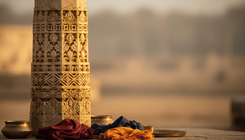
Ram Navami marks the birthday of Lord Rama, and across India the festival brings together millions in celebration of his birth. The word "Navami" means the ninth lunar day, and Ram Navami falls on the ninth day of the bright lunar fortnight (Shukla Paksha) in the month of Chaitra. While the specific calendar date changes each year, the festival is always determined by the lunar calendar rather than the Gregorian one. Devotees observe the day through prayer, fasting, recitation of sacred texts, and community gatherings that reflect regional customs and family traditions.



The Story of Rama's Birth
Rama was born to King Dasharatha and Queen Kaushalya in the city of Ayodhya, as told in the Ramayana, one of Hinduism's foundational epics. According to the narrative, Dasharatha had performed a ritual sacrifice that granted him sons, and Rama was born as the eldest. His birth is understood in Hindu tradition not as an ordinary human birth but as an avatar—a divine incarnation—of Vishnu taking human form. The circumstances of his birth, his lineage, and his purpose are central to understanding why his birthday holds such significance across Hindu communities.
Rama's life, as recounted in the Ramayana, encompasses themes of dharma (righteous duty), loyalty, and virtue. His birth is celebrated as the arrival of a divine protector into the world. Different regional tellings of the Ramayana—such as Tulsidas's Ram Charit Manas in North India and Kambar's Ramayana in Tamil Nadu—weave local cultural elements into the story while maintaining its essential spiritual message. This diversity in how the story is told across India reflects how Ram Navami itself varies by region while remaining rooted in the same devotional core.
Fasting and Ritual Observance
Many devotees observe Ram Navami by fasting, though the form of the fast varies widely. Some people fast completely from dawn to dusk, while others observe a partial fast, eating only simple vegetarian food or fruit. In households where fasting is not practiced, the day is marked by attending temple, making special offerings, or preparing traditional sweets and dishes. The choice to fast or not is personal and depends on individual capacity, family custom, and regional practice.
The ritual day often begins with a bath and the wearing of clean clothes. Devotees visit temples dedicated to Rama or worship at home before a personal altar. The core practice involves chanting mantras, reading passages from the Ramayana, and singing devotional songs that retell Rama's story. In many temples, particularly in North India, large gatherings congregate for satsang—spiritual discourse—where scholars and teachers speak about Rama's life and its moral lessons. The Ramcharitmanas, compiled by the poet-saint Tulsidas in the 16th century, is recited in many communities during this time.
Regional Variations in Celebration
Ram Navami is observed differently across India's regions, reflecting local languages, customs, and theological emphases. In North India, the festival often involves elaborate temple processions, the decoration of homes and temples, and the preparation of special sweets like gujhiya and khir. In South India, particularly in Tamil Nadu, the day is marked with temple visits and the preparation of traditional foods specific to the region. In Maharashtra, the festival may include the display of swings (Rath) in temples where devotees believe Rama plays. In Gujarat, the day often coincides with Navratri celebrations in some areas, blending the two observances.
The language of devotional songs and prayers also shifts by region. While Sanskrit hymns are chanted in formal temple settings across India, regional languages—Hindi, Tamil, Marathi, Gujarati, Kannada and others—shape the devotional music and poetry people engage with at home and in community gatherings. This linguistic diversity does not fragment the festival but rather demonstrates how a single observance takes on the texture of local life while maintaining its spiritual significance.
Community Gatherings and Temples
Many temples hold special events during Ram Navami that draw both regular worshippers and those who visit primarily for festivals. Temple authorities often organize recitations of the Ramayana that may last several hours or extend over multiple days leading up to the festival. In some temples, especially in North India, the entire Ramcharitmanas is recited in a continuous reading that can span two days or more. These gatherings create spaces where the story is not just heard but experienced communally, with participants often contributing their own voices through group chanting or prayer.
The social aspect of Ram Navami extends beyond temple walls. Families prepare special meals, exchange sweets with neighbors, and gather for meals together. In many communities, the festival is an occasion for social bonding and the reinforcement of ties across neighborhoods. Prasad—blessed food offered first to the deity and then distributed to worshippers—plays an important role in these gatherings, creating moments of shared reverence and fellowship.
Spiritual Significance and Personal Practice
For many Hindus, Ram Navami is more than a historical commemoration; it is an opportunity for spiritual reflection on Rama's qualities and teachings. Rama is revered as an exemplar of dharma, the righteous path, and his life offers lessons on duty, integrity, and devotion. By observing the festival, devotees engage with these teachings and consider how Rama's values might guide their own lives. The recitation of his story is not merely narrative entertainment but a spiritual practice through which listeners encounter teachings about virtue, sacrifice, and the pursuit of a meaningful life.
Personal practice on Ram Navami might include meditation on Rama's qualities, the chanting of his name (japa), or the study of scriptural texts that describe his life. Some devotees use the occasion to deepen their understanding of the Ramayana's philosophical dimensions, engaging with commentaries that explore the text's spiritual significance. Others approach the day more devotionally, focusing on heartfelt prayer and the expression of love and gratitude toward Rama as a divine presence in their lives.
Preparing for Ram Navami
As the festival approaches, many households begin preparations weeks in advance. Homes are cleaned and decorated, often with flower garlands, rangoli (decorative floor patterns), and images of Rama. In the days leading up to Ram Navami, some people undertake additional spiritual practices such as reading sections of the Ramayana daily, chanting specific mantras, or observing minor fasting. These preparations serve to orient the mind and heart toward the festival and create an atmosphere of anticipation and devotion.
If you plan to observe Ram Navami, consider what form of participation feels authentic to you. This might mean visiting a local temple, fasting according to your capacity, reading the Ramayana or listening to recordings of devotional music, or simply creating a quiet space at home for prayer and reflection. The festival invites personal engagement rather than prescribing a single correct way to celebrate, so your own connection to Rama's story and teachings can shape how you mark the day.
Common questions
What date is Ram Navami in 2024 or 2025?
Ram Navami dates shift each year because it is determined by the lunar calendar, not the Gregorian calendar. To find the specific date for any given year, consult a Hindu panchanga (lunar calendar) or check with your local temple, which will have the exact date.
What foods are traditionally eaten on Ram Navami?
Regional foods vary widely: in North India, gujhiya (a sweet pastry) and khir (rice pudding) are common, while South Indian regions prepare their own traditional sweets and dishes. Many devotees prepare simple vegetarian meals or fast partially, eating only fruits or specific permitted foods.
Can I celebrate Ram Navami if I don't fast?
Yes, fasting is not mandatory for observing Ram Navami. You can celebrate by visiting a temple, reading the Ramayana, chanting Rama's name, preparing a special meal to share, or simply spending time in prayer and reflection at home.

Related Articles


