
Rahu Kalam: Understanding the Daily Inauspicious Period
When the day turns unfavourable in your Panchanga

Aditya Pandey
12 Nov 2026 • 6min
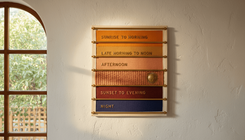
Rahu Kalam is a daily inauspicious period in the Panchanga—the Hindu calendar based on planetary positions—when it is best to avoid beginning new activities or important undertakings. Every day has a Rahu Kalam lasting about ninety minutes, and its timing shifts throughout the week following a fixed pattern. It is one of several concepts in Panchanga that help you choose the right moment for action, a practice called muhurta that remains central to how many people plan their lives.



What Rahu Kalam is
Rahu Kalam is a window of time each day when the shadow planet Rahu is considered to hold particular power. In Vedic astrology, Rahu is not a visible celestial body but a mathematical point where the moon's orbit crosses the ecliptic. Despite its non-physical nature, Rahu is believed to influence events and human affairs. The Panchanga divides each day into eight equal parts, and one of these always falls under Rahu's influence. This segment, lasting roughly ninety minutes (one-eighth of a day), becomes the time when beginning enterprises or auspicious work is considered inauspicious.
The concept has roots in Vedic astronomy and ritual practice, though it is treated differently across regional traditions and schools of Vedic astrology. Some practitioners regard Rahu Kalam as mandatory to observe, while others see it as one factor among many to consider when choosing a muhurta for important work.
The Pattern Through the Week
Rahu Kalam follows a weekly cycle that remains constant. On Monday it falls in the first eighth of the day, on Tuesday in the second, on Wednesday in the third, and so on through Sunday, when it falls in the eighth eighth (the final portion of the day). This means the time when Rahu Kalam occurs shifts by roughly two hours each day of the week.
Since days vary in length depending on season and latitude, Rahu Kalam begins and ends at different clock times throughout the year. In winter, when daylight is shorter, each eighth of the day is narrower, so Rahu Kalam occurs over a shorter duration. In summer it lasts longer. This is why if you check a Panchanga or calendar app for different dates, the clock time of Rahu Kalam appears to change daily, even though the cycle itself is unchanging.
For calculating Rahu Kalam precisely, you must know your local sunrise and sunset, divide the day into eight equal parts, and identify which eighth corresponds to your day of the week. Many online Panchanga tools and apps do this automatically and display the Rahu Kalam times for your location.
Rahu Kalam and Muhurta
Muhurta is the practice of choosing an auspicious moment—based on the position of planets, lunar phases and other factors in the Panchanga—to begin an important action. Buying a house, starting a business, beginning education, scheduling a wedding ceremony or performing surgery are all events for which many people consult a muhurta, and Rahu Kalam is one consideration in that choice.
A muhurta consultation typically weighs many factors: the moon's position in the lunar calendar (tithi), the day of the week, planetary positions, and various periods considered inauspicious, of which Rahu Kalam is one. Other inauspicious periods include Yamaganda (a different eighth of the day ruled by Saturn), Gulika Kalam, and Hora. Some practitioners avoid all of these; others focus mainly on Rahu Kalam.
The principle underlying muhurta is that timing matters—not in a superstitious sense, but because certain periods and planetary configurations are believed to support success, health and harmony. Whether someone consults a muhurta for every action or only for major life events depends on their tradition, upbringing and personal conviction.
Regional and Sectarian Variations
Different schools of Vedic astrology apply Rahu Kalam with varying emphasis. Some sampradayas—schools or lineages within Hindu tradition—treat it as essential and always to be respected; others regard it as a minor caution among many astrological considerations. South Indian Vedic astrology often gives Rahu Kalam more weight than some North Indian approaches, though this is a general tendency and exceptions exist in both regions.
Some traditions recommend avoiding only major undertakings during Rahu Kalam—building works, business launches, medical procedures—while accepting that everyday work and routine must sometimes occur during this window. Other practitioners prefer to avoid all new work, even small tasks, if possible.
The strictness of application also varies with the context. Daily activities like cooking, cleaning or administrative work are generally not treated as violations, whereas beginning a journey, attending an important meeting, or performing a ritual might be rescheduled if Rahu Kalam can be avoided.
When Rahu Kalam Cannot Be Avoided
In modern life, it is not always possible to schedule everything around Rahu Kalam. If you must travel during this period, or if medical treatment cannot be postponed, most traditions accept the circumstance as valid. The intent of observing Rahu Kalam is to align yourself with auspicious timing when choice is possible, not to create hardship or deny yourself necessary care.
Some practitioners perform a small ritual or recite a mantra before undertaking unavoidable work during Rahu Kalam, as a way of asking for protection or blessings. Others simply note the time and proceed with intention. This reflects the underlying philosophy: awareness of inauspicious periods is meant to guide your choices, not to generate anxiety.
Finding and Using Rahu Kalam
To use Rahu Kalam in planning, check a Panchanga calendar or app for your location on the date you are considering. Many online tools display Rahu Kalam alongside other daily information. Once you know the Rahu Kalam time for that day, you can choose to schedule your activity outside that window if it is important and you have flexibility.
Over time, observing Rahu Kalam becomes a habit of checking the calendar before committing to significant plans, much like checking the weather or your own schedule. For those who value it, this small attention to timing becomes part of living in alignment with the natural and cosmic order that the Panchanga describes.
Common questions
What time does Rahu Kalam happen each day?
Rahu Kalam occurs at a different clock time each day of the week, and shifts seasonally because it is calculated as one-eighth of the daylight period. Use a Panchanga app for your location to find the exact time on any given date, as it cannot be predicted by a universal clock time.
Is it a sin to do something during Rahu Kalam?
Most traditions do not treat Rahu Kalam as a sin but as an inauspicious period to avoid when choosing when to begin something important. If you must act during this time for reasons of health, work or necessity, most practitioners accept the circumstance. Some perform a mantra or small ritual beforehand to ask for blessings.
Do I have to follow Rahu Kalam if my tradition doesn't emphasize it?
Following Rahu Kalam is not universal across all Hindu traditions. Some sampradayas weight it heavily while others regard it as minor. Your own tradition, your guru's guidance, or your personal conviction should guide how strictly you observe it. It is one tool among many in the Panchanga.

Related Articles


