
Pushkar Fair Tradition: The Lake, Temple and Pilgrimage
Where Brahma's temple meets the desert's sacred gathering
Sunil Chaurasia
18 Nov 2026 • 6min
The Pushkar fair tradition draws over a million visitors each year to a small town in Rajasthan where the god Brahma has a temple, a sacred lake holds pilgrims who come to bathe, and a livestock market brings traders and their animals across hundreds of miles. It is not one observance but three distinct practices that converge: a pilgrimage tied to the Hindu calendar, a temple ritual specific to one deity, and a fair that has grown from practical gathering into spiritual event. Understanding Pushkar means seeing how these layers exist together.



The Lake and the Pilgrimage Calendar
The Pushkar fair tradition is anchored in the lunar month of Kartik, which falls between October and November. The pilgrimage reaches its peak during Kartik Purnima, the full moon of that month, though visitors arrive for weeks before and after. This timing comes from the Hindu calendar's rhythm: Kartik Purnima is auspicious for ritual bathing at pilgrimage sites across India, and Pushkar's sacred lake draws those seeking this benefit.
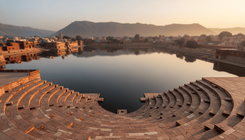
The lake itself holds the religious centre of the town. Hindus believe that bathing in the Pushkar lake during Kartik Purnima washes away past karma and opens the path to moksha, liberation. Fifty-two ghats, or steps leading down to the water, allow pilgrims to descend and submerge. Each ghat carries its own name and legend; some are associated with particular deities or named for donors who built them. The water comes from an underground spring, which has fed the lake for centuries and has not dried even during severe droughts in the surrounding desert.
Pilgrims arrive not only from across India but increasingly from overseas. The crowd swells most dramatically during the three days around Kartik Purnima itself, when the moon is full and the spiritual power is believed to be strongest. Beyond the pilgrims seeking bathing and prayer, the gathering draws sadhus, wandering ascetics who come to lead rituals and give blessings.
The Brahma Temple: Unique Worship in India
Pushkar holds one of the rarest temples in Hinduism: a temple dedicated to Brahma, the creator god of the trinity. Most Hindu temples honour Vishnu or Shiva and their avatars and consorts. Brahma temples are few—this is one of only a handful in India, and the most visited. The temple's age is debated by scholars; local tradition holds it was built over many centuries, with significant reconstruction in the 11th century.
Inside the temple, Brahma is depicted with four faces, each looking toward one of the cardinal directions, and four arms. This form represents his role as creator: facing all directions to oversee creation. The worship here follows Vedic protocols, and the temple priests perform daily puja, ritual offerings, following a schedule tied to the hours of daylight and the movements of heavenly bodies.
During Kartik month, the temple receives heightened attention. Pilgrims visit to offer prayers and flowers, and many time their temple visit to coincide with their lake bathing. The temple does not charge formal entry fees; donations are voluntary. The architecture is modest in scale, decorated without grandeur, which reflects both the region's building tradition and the restraint the tradition associates with Brahma, a more inward-facing deity than the popular gods.
The Fair: Livestock, Trade and Gathering
What began as a camel fair—traders bringing camels and horses for sale during the safest travel season—has grown into a multi-layered event. The fair's timing aligns with the pilgrimage calendar, but it serves a wholly practical purpose: selling livestock, trading goods, and doing business. Camel herders from across Rajasthan and neighbouring states bring their animals. Buyers come seeking working animals or breeding stock. The fair is now also a place for handicraft vendors, food stalls, and tourist services to gather.
The fair's scale has expanded dramatically in recent decades. What once was a regional gathering is now a national and international event, drawing curious visitors alongside traders and pilgrims. This has created tension between the fair's commercial character and its pilgrimage roots. Local authorities and temple trusts work to manage this: some areas of the town remain focused on pilgrimage ritual, while the fair sprawls across another zone, yet the two remain inseparable parts of the same event.
The fair does not run on a fixed calendar date; it moves with the lunar month of Kartik and the full moon. This means the fair's dates shift from year to year in the Gregorian calendar, following the Hindu calendar instead. Most vendors and pilgrims plan their journeys months in advance, coordinating with the lunar calendar rather than fixed weeks.
Why Three Practices Converge
The Pushkar gathering works because each element serves a different need. Pilgrims come to bathe and seek moksha. Traders come to conduct business at a time and place where gathering is practical. Temple visitors come to worship a rare deity. The fair tradition thrives because these three purposes reinforce each other: the infrastructure built for pilgrims serves traders, the safety of numbers attracts both, and the shared calendar synchronises them all. Over centuries, what might have begun as coincidence has become tradition, and Pushkar has become the place where devotion, commerce and community gather.
Common questions
When does the Pushkar fair happen each year?
The Pushkar fair is held during the lunar month of Kartik, which falls between October and November in the Gregorian calendar. The peak occurs during Kartik Purnima, the full moon of that month. Because it follows the lunar calendar, the fair's dates shift each year and do not fall on the same dates twice.
Why is Brahma's temple at Pushkar so rare in Hinduism?
Brahma temples are uncommon in Hindu practice; most temples worship Vishnu or Shiva instead. Pushkar holds one of only a handful of Brahma temples in India and the most visited. This rarity draws scholars and devotees seeking to worship the creator god, who is less commonly worshipped than other deities in the trinity.
Who comes to the Pushkar fair besides pilgrims?
Traders bring camels, horses and livestock for sale; camel herders from across Rajasthan gather to do business. Sadhus, wandering ascetics, arrive to lead rituals and give blessings. In recent decades, handicraft vendors, food stall owners and tourists have expanded the gathering, making it a multi-purpose event that is no longer purely commercial or purely pilgrimage-focused.

Related Articles


