
Purnima and Amavasya: The Two Fortnights of the Lunar Month
Two halves of the moon, two rhythms of life

Abhilash Ramakrishna
09 Nov 2026 • 6min
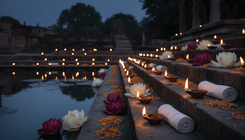
The Hindu lunar calendar divides each month into two fortnights marked by the phases of the moon: purnima (the full moon) and amavasya (the new moon). These are not simply astronomical events. They form the backbone of how Hindus reckon time, observe festivals, perform rituals and structure their year. Understanding purnima and amavasya is essential to reading the panchanga, the Hindu calendar, and to living in step with the rhythms of practice.



What Purnima and Amavasya Mean
Purnima comes from the Sanskrit word purna, meaning complete or full. Purnima is the moment when the moon is fully illuminated by the sun—the full moon night. Amavasya, also called amavasya tithi, is the new moon: the moment when the moon passes between the earth and sun, and appears dark in the sky. Both mark turning points in the lunar cycle, and both have deep significance in Hindu life.
The month in the Hindu calendar is built around these two points. From purnima to amavasya is one fortnight. From amavasya to the next purnima is the other. Every festival, every fast, every ritual date is pinned to one of these phases and counted in a specific direction from it.
Shukla Paksha and Krishna Paksha
The first fortnight, from amavasya (new moon) to purnima (full moon), is called shukla paksha. Shukla means bright or white. The moon waxes during this period—it grows bigger and brighter night by night. The second fortnight, from purnima to amavasya, is krishna paksha. Krishna means dark. The moon wanes during this period.
These are not mere names. They carry a spiritual meaning. The bright fortnight, shukla paksha, is associated with growth, gain, outward activity and favour. The dark fortnight, krishna paksha, is linked to inward work, release, closure and surrender. Practices that build or accumulate—starting something new, taking initiation, beginning a fast—are often done in shukla paksha. Practices of release or completion may be done in krishna paksha. Neither is higher; each has its purpose.
The name krishna paksha does not refer to Krishna the deity, though the two words share the same root. It refers to the darkening of the moon. However, because Krishna is associated with the divine play of light emerging from darkness, there is a poetic resonance in the names.
How Purnima and Amavasya Structure the Year
Every lunar month in the panchanga is named after the purnima in or near that month. Chaitra month ends with Chaitra purnima. Vaishakh month ends with Vaishakh purnima. The year turns on these full moons. Major festivals are timed to specific purnimas: Holi to Phalguna purnima, the Buddha Jayanti to Vaishakh purnima, Guru Nanak Jayanti to Kartik purnima.
Amavasya nights also mark important festivals and observances. Diwali falls on Kartik amavasya, the new moon of autumn. Many regional festivals and ancestor rites are performed on amavasya. In some traditions, amavasya is a day of fasting or inward practice.
The two fortnights also govern the timing of ritual action. Fasts, vrats and upavasa are often begun on specific tithis (lunar dates) within a specific paksha. An ekadashi fast (a fast on the eleventh lunar day) in shukla paksha has a different name and significance from an ekadashi in krishna paksha. The panchanga gives priests, householders and practitioners the precise day to act.
Regional and Sampradaya Variations
The way purnima and amavasya are observed varies across India and within different Hindu traditions. Some sampradayas (lineages) give greater emphasis to shukla paksha practices; others honour both equally. In some regions, amavasya is marked with ancestor rituals and offerings to those who have passed. In others, it is a day of quiet reflection or spiritual practice.
The lunar calendar itself is ancient and consistent across Hindu traditions, but the festivals and fasts tied to each purnima and amavasya may differ. A festival celebrated on Kartik purnima in one region might be observed differently or on a slightly different date (by solar reckoning) elsewhere. What remains constant is the structure: the calendar turns on these two moons, and the spiritual year flows between them.
Living by Purnima and Amavasya
To live in rhythm with the panchanga is to notice these two nights and the fortnights between them. A practitioner who consults the panchanga before beginning something new will often choose a date in shukla paksha. Someone observing a fast or doing tapasya (disciplined practice) may time it to a krishna paksha or to a specific amavasya.
Many temples mark purnima and amavasya with special pujas (worship rituals). Some people observe a personal practice on these nights—meditation, japa (repetition of a mantra), or ritual bathing. Others simply mark them by noting the changing light and the shift in energy that many describe feeling. The practice is not obligatory; it is an invitation to synchronise your awareness with the natural rhythms that have governed Hindu life for thousands of years.
Understanding purnima and amavasya is the first step to reading the panchanga with ease and to grasping why so many Hindu observances fall where they do. The next time you see a festival date or fast day, you can trace it back to one of these two moons and understand the logic that places it there.
Common questions
How many days are in shukla paksha and krishna paksha?
Each fortnight contains 15 lunar days (tithis). Shukla paksha runs 15 tithis from amavasya to purnima, and krishna paksha runs 15 tithis from purnima to amavasya. The exact number of solar days varies because lunar days do not align neatly with the 24-hour day.
Can I start a new business or marriage during krishna paksha?
Many Hindu traditions prefer to begin major undertakings during shukla paksha because it is associated with growth and favour. However, krishna paksha is not inauspicious; it is simply considered better suited to practices of completion, release or inward work. Your family's sampradaya and a qualified astrologer are the best guides.
Is amavasya inauspicious?
Amavasya is not inauspicious; it is simply different from purnima. Many important festivals, including Diwali, fall on amavasya. It is traditionally a time for ancestor veneration, inner reflection and spiritual practice. The perception of amavasya as unlucky may come from its association with darkness, but darkness in Hindu philosophy is not negative—it is the fertile void from which all things emerge.

Related Articles


