
Purnahuti: The Final Offering That Completes a Homa
The sacred conclusion where fire receives what it needs

Aditya Pandey
19 Nov 2026 • 6min
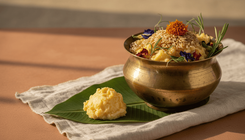
When you perform a havan—a fire ritual also called yajna—the purnahuti is the last offering you make to the fire. It is not one more log or handful of ghee and herbs among many. It is the offering that formally closes the ritual and marks the moment the gods have received your worship. Purnahuti comes from two Sanskrit words: purn, which means complete or full, and huti, which means offering. This is the offering that makes the sacrifice whole.
The havan builds toward purnahuti. All the offerings that come before—the ahuties, or individual oblations—are invocations and requests. They call down the gods and invite them to witness. Purnahuti is different. It is an offering of completion, made not to ask for something but to say the ritual is finished and the gods' blessings are now sealed. For this reason, many ritual texts describe purnahuti as the most important moment of the entire havan.



What purnahuti is
The purnahuti itself usually consists of ghee, grains (most commonly rice or wheat), and dried herbs or flowers. Some families add coconut, sesame seeds or jaggery. A priest or the householder performing the ritual gathers these items and makes one final oblation directly into the fire, often speaking a particular mantra that acknowledges both the divine and the purpose of the ritual. The flames consume everything in a single moment.
Because purnahuti closes the ritual, some traditions hold that it should be more generous than the earlier offerings. It represents not scarcity but fullness—the sense that you have given your best and now release the ritual into the hands of the divine. In some homes, the purnahuti is made with clarified butter alone, poured in a steady stream as a final gift. In others, a mixture of all the auspicious materials used throughout the ritual is gathered into a single offering.
The meaning behind the gesture
In the older understanding of ritual, all actions have an inner meaning. The outer act of putting something into the fire mirrors an inner movement: you are offering your desires, your anxieties, and your sense of separation to something larger than yourself. The fire represents transformation. What you offer is burnt away, and what you receive is a state of completion—the sense that your request has been heard and you can let it go.
This is why purnahuti feels different from the offerings that come before. Earlier offerings might feel hesitant or tentative. Purnahuti is decisive. You place your final offering in the fire, and you trust that the ritual is now concluded. For many people, this is the moment they feel the ritual has truly reached the gods.
How purnahuti fits into the ritual sequence
A havan usually follows a particular order. It opens with an invocation to the fire itself. Then come individual offerings, each accompanied by a mantra that names a deity or a desire. As the havan continues, the rhythm and the heat often intensify. The priest or householder may ring a bell or chant more loudly. Then, at the moment the priest or householder decides the ritual is complete, purnahuti is called.
Some rituals include a short pause before purnahuti. The fire might be allowed to settle. The priest might ask those gathered if anyone has a final prayer or request to offer. Then purnahuti is announced, and all attention turns to that single final offering. After the purnahuti, the ritual shifts into its concluding phase. The flames are allowed to die down or are gently extinguished. The ash is collected and distributed as vibhuti, a sacred powder believed to carry the blessings of the ritual.
The purnahuti and the aarti
In many homes, the aarti—the ritual of circling a light or sacred object—follows immediately after purnahuti. Some families light a small flame or ghee lamp from the dying fire of the havan itself and circle it before those gathered, a gesture that says the fire has been received and transformed into blessing. The bell that often rings during the aarti is the same bell that may have sounded during the havan, calling attention to important moments.
The aarti after purnahuti feels gentler and more inward than the aarti at other times. The urgency and intensity of the havan have finished. What remains is gratitude and the sense of having been heard. For this reason, many people find the minutes after purnahuti to be the most intimate part of the ritual—quieter, more settled, and somehow more certain of having made contact with something real.
Regional and personal variations
The exact form of purnahuti varies by family tradition and by region. In some parts of North India, purnahuti is made with coconut and jaggery added to the ghee and grains. In South Indian traditions, it may be accompanied by specific Vedic mantras that differ from those used in the North. Some families have their own words they speak during purnahuti, passed down through generations. Others follow the priest's lead and offer it in silence.
What remains constant is the function: purnahuti is the final offering, the one that signals completion. A havan without purnahuti is considered unfinished, no matter how many earlier offerings have been made. For this reason, many people who are new to havan ritual specifically ask their priest when purnahuti will happen and what they should watch for. Knowing when to expect it helps you recognise the moment the ritual is truly closing.
After purnahuti
Once purnahuti is offered, the next steps depend on the purpose of the havan and the tradition being followed. Some people offer water and flowers to the fire after purnahuti. Others immediately begin the aarti. Most collect the ash and distribute it as blessing to those present. The prasad—usually sweets or food blessed by the ritual—is also distributed at this time.
For many people, the feelings that come after purnahuti last long beyond the ritual itself. There is often a sense of completion, of having spoken what needed to be said and of having been heard. The fire was a messenger, and the message has been delivered. Purnahuti is the moment you know the ritual is truly finished and you can release what you have offered into the care of something larger than yourself.
Common questions
Can I perform purnahuti without a priest?
Yes. While many people have a priest lead the havan, the householder can perform purnahuti themselves if they have learned the basic steps and mantras. What matters is your sincerity and attention rather than priestly training.
What should I do if the fire goes out before purnahuti?
The fire should be carefully rekindled, and once it is stable and bright again, purnahuti can be offered. If the fire cannot be relit safely, some families choose to offer purnahuti into a lamp flame or defer the ritual to another day.
Is there a best time of day to perform purnahuti?
Purnahuti is usually performed as part of a complete havan, which many families do in the early morning or evening. The specific timing depends on the purpose of the ritual and your family tradition, not on a fixed rule.

Related Articles


