
Prasad: Why Offered Food Is Shared After Worship
The blessed food that returns the sacred to the everyday

Abhilash Ramakrishna
07 Nov 2026 • 6min
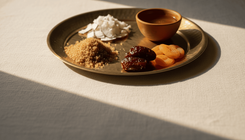
Prasad is food that has been offered to a deity during puja (worship) and then shared with those who have worshipped. The word means grace or blessing, and the food itself is understood to carry the deity's blessing back to you. When you receive prasad, you are receiving something that has touched the sacred.
This is not a transaction or a reward. Prasad works differently from ordinary food because it has been consecrated—offered with intention in a ritual space, in the presence of a deity. The act of offering makes it sacred, and the act of sharing it returns that sanctity to the community. What the deity receives is the devotion and the essence of what you give; what you receive back is grace.



The Difference Between Naivedya and Prasad
Naivedya (also spelled naivedhya) is the food while it is still being offered to the deity. It sits at the altar, placed before the murti (image) or in the sacred space, as part of the ritual. Prasad is what naivedya becomes once the offering is complete and the food is distributed to worshippers.
The ritual acknowledges this change. In many pujas, the priest will place the offered food before the deity for a set time, sometimes with specific mantras or prayers. This is the moment when the food is naivedya. Once the offering has been made—the time has passed, the prayers have been said—the food is no longer sitting before the deity. It has been received, spiritually speaking, and is ready to be shared. That food is now prasad.
Some traditions mark this moment very clearly. The prasad might be blessed again before distribution, or specific words might be spoken to acknowledge that the offering is now being returned to the worshippers. Other traditions move more fluidly from one to the other. The principle remains: naivedya is the food in the act of offering; prasad is the blessed food after the offering is complete.
What Can Be Prasad
In temples and at home pujas, prasad is most often something simple and sweet: fruit, a small quantity of kheer (rice pudding), laddoo, or unrefined sugar. Jaggery and coconut are common. In some traditions, cooked rice or a small portion of dal is prasad. At major festivals, temples may distribute larger amounts or more elaborate preparations.
The specific food varies by region, sampradaya (tradition or sect), and the nature of the puja. A quick household puja might use just sugar or a banana. A festival puja in a temple might involve sweets prepared especially for the occasion. The food does not need to be rare or expensive. What matters is that it was offered with devotion.
There is also a principle of purity about prasad. Traditionally, it is prepared in a clean space, often by people who have bathed and are in a state of ritual cleanliness. The idea is not that ordinary food is unclean, but that the act of offering requires intentionality and care. For this reason, prasad prepared at home for your own puja is understood differently from, say, leftover lunch. Both are food; only one has been offered.
How to Receive Prasad with Respect
Prasad should be received with the right hand, or with both hands. In some traditions, you bow slightly or touch your forehead with the prasad before eating it. These gestures acknowledge that you are receiving a blessing, not simply taking food.
Prasad is eaten, not thrown away or left uneaten. If you cannot finish it immediately, you keep it and eat it later, or offer it to someone else. It is not discarded. This is not about waste; it is about honoring what has been blessed.
You can receive prasad even if you have not been present for the entire puja. Someone who arrives partway through, or who visits the temple after worship has ended, can still receive prasad. Prasad is not only for those who have done the puja themselves. It is shared with all who come, as a sign that the blessing extends beyond those present at the altar.
Regional and community practices vary. In some temples, all prasad is vegetarian and distributed freely. In others, specific rules may apply about who can receive it or how it must be prepared. These rules come from the sampradaya or the deity's tradition, and they exist to preserve the sanctity of the offering within that particular practice.
Why Prasad Matters in Daily Life
Prasad is one of the ways that worship moves from the temple or puja space back into your ordinary life. You light a lamp and offer flowers or food to the deity, performing puja in a moment set apart from the everyday. But then you take prasad and eat it at home, or share it with family. The blessing does not stay in the temple; it comes with you.
This reflects a core understanding in Hindu practice: the sacred and the everyday are not completely separate. The deity is not only present in the murti at the altar. Prasad is a physical reminder of that presence and a way to acknowledge it in the simple act of eating. When you receive prasad and eat it, you are not just receiving food. You are completing the cycle of puja—offering to the divine, and receiving grace in return.
Prasad also creates community. In temples, the distribution of prasad after worship is often a moment when people gather, greet one another, and share something blessed together. At home, if you make prasad and share it with family or neighbors, you are extending the blessing beyond yourself. The food becomes a way of connecting people to each other and to the ritual that brought it into being.
Common questions
Can I eat prasad if I didn't do the puja myself?
Yes. Prasad is shared with all who come to the temple or gathering, whether or not they performed the puja. The blessing extends beyond those at the altar. Receiving prasad acknowledges your participation in the worship even if you arrived after the ritual was underway.
What do I do if I can't eat the prasad right away?
Keep it and eat it later. Prasad should not be thrown away or left uneaten. If you truly cannot eat it, you can offer it to someone else, or keep it until you are able to eat it yourself.
Are there rules about what kinds of prasad different temples give?
Yes, practices vary by sampradaya and temple tradition. Some temples give only vegetarian prasad and prepare it according to specific rules about cleanliness. Others may have different customs tied to the particular deity or community. If you are unsure about a temple's practice, it is respectful to observe what others do or ask quietly.

Related Articles


