
Pradakshina Meaning: The Purpose of Walking Around Temples and Shrines
Honouring the sacred through circular devotion

Abhilash Ramakrishna
08 Nov 2026 • 7min
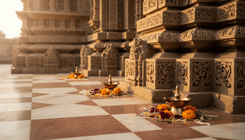
When you walk clockwise around a temple, a shrine or a sacred fire, you are performing pradakshina - a fundamental practice in Hindu ritual that shows respect and reverence to the divine. The word pradakshina comes from Sanskrit and means "circumambulation" or "moving to the right". This simple act of walking around the object of your devotion has roots that go back thousands of years in Hindu practice, and it remains one of the most common ways people express devotion in temples today.
The meaning of pradakshina goes deeper than just physical movement. By walking around the object of worship, you place it at the centre of your attention and your path. You offer your entire body and steps as a form of worship. Many traditions understand pradakshina as a way of honouring all sides of the divine - the fact that God is not confined to one place but is present all around, in all directions. Walking in a circle acknowledges this presence completely.



Why People Perform Pradakshina
Pradakshina is an act of reverence and surrender. When you circumambulate a temple, a deity's shrine, a lingam or an ashta (sacred plant), you are showing that you do not place yourself above or outside the object of your devotion. You move around it instead of standing still before it, which acknowledges that the sacred is greater than yourself and worthy of your movement and effort.
In many traditions, the practice is believed to bring the devotee's mind closer to the divine. The circular movement is thought to align your energy with the cosmic order, or to channel blessings from the object of worship out to you as you walk. Some texts describe pradakshina as a way of receiving darshan (the blessing of seeing and being seen by the divine) from all sides, and thus more completely.
The act is also practical and inclusive. Unlike many rituals that require specific training, knowledge of mantras or preparation, anyone can perform pradakshina. Children, elderly people, and those who cannot perform complex ceremonies can still circumambulate and participate fully in worship. This accessibility is one reason the practice remains widespread across regions and communities in India.
The Direction and Number of Circumambulations
Pradakshina is always performed clockwise, moving to the right. This direction is called dakshinavarti in Sanskrit. Moving to the left, or counter-clockwise (called vamavarti), is never done in pradakshina for everyday worship because it is believed to be inauspicious. The only exception is in particular contexts related to Kali or in specific tantric practices, where the direction may differ, but these are not ordinary temple pradakshina.
The number of circumambulations varies by tradition and the deity or object being worshipped. Many people perform three rounds, which corresponds to the three states of existence or the three aspects of divinity in some interpretations. Some traditions prefer seven rounds, which has significance in many Hindu rituals and ceremonies. Others circumambulate once, or as many times as their time and devotion allow. There is no single rule that applies everywhere; what matters is the intent and the spirit of reverence with which you walk.
In many temples, devotees complete their pradakshina as part of a longer sequence of worship. They may begin by touching the feet of the deity or shrine, perform pradakshina, and then sit for meditation or prayer. The circumambulation fits naturally into the flow of their worship, rather than being a separate act.
Pradakshina in Different Contexts
Pradakshina can be performed around many different objects of devotion. The most common is around a temple or shrine housing a deity's murti (idol). People also circumambulate tulsi plants (basil), which are sacred in many households. During certain rituals, especially weddings and other ceremonies, pradakshina around sacred fires or around the couple themselves is central to the ritual. Some pilgrims perform very large-scale pradakshina, walking around an entire temple complex or even a mountain, as an extended act of devotion.
The practice also appears in different sampradayas (traditions) and regions with local variations. In some southern temples, pradakshina follows specific paths laid out by the architecture. In northern traditions, the practice may be done more informally. What remains constant is the underlying meaning: circumambulation as an expression of reverence and a drawing-closer to the divine.
What to Observe While Performing Pradakshina
When you perform pradakshina, keep your mind focused on your devotion and the object of worship. Many people move slowly and mindfully, while others walk at a normal pace. Both approaches are valid. Some people count their rounds on prayer beads or mala to track the number they have completed. This helps keep the mind steady and prevents distraction.
Traditionally, pradakshina is done with the shrine or object of worship always on your right side as you walk. This ensures you are circumambulating in the correct direction. If you find yourself moving around an object with it on your left, you have begun to move counter-clockwise and should adjust your path.
It is also customary to approach pradakshina with a clear intention and a respectful mindset. This is not merely exercise or a cultural habit, but an intentional act of worship. Before beginning, you might bow or offer a short prayer, and at the end, you might touch the ground or the shrine again to complete the cycle of your devotion. The practice gains its meaning from the consciousness and care you bring to it.
Pradakshina as a Personal Practice
You do not need to be in a temple to perform pradakshina. Many people do it at home around a small shrine, a picture of a deity, or a sacred plant. Some walk around their meditation space before sitting to meditate. Others incorporate it into their daily prayers. The key is that the practice remains accessible wherever you are, and it does not require special permission, training or the presence of a priest.
When pradakshina becomes part of your regular practice, it transforms from a gesture of respect into a lived experience of placing the divine at the centre of your attention. The physical act of moving in a circle begins to align your mind and body with a deeper pattern. Over time, the simple act of walking around that which you revere becomes a way of bringing your whole self - body, mind and heart - into the act of worship.
Common questions
How many times should you do pradakshina around a temple?
There is no single rule - different traditions prefer different numbers. Three rounds is common, as it relates to the three aspects of divinity. Seven rounds is also significant in many rituals. What matters most is the devotion with which you walk. Some devotees complete one round, while others circumambulate as many times as they wish or as time allows.
Can you perform pradakshina at home, not just in temples?
Yes, absolutely. You can circumambulate around a small shrine, a deity's picture, a tulsi plant, or even your meditation space at home. The practice does not require a temple or priest. Pradakshina remains a personal act of worship wherever you perform it.
What does it mean if you accidentally go counter-clockwise during pradakshina?
If you find yourself moving around the object with it on your left side instead of your right, you are circumambulating counter-clockwise (vamavarti). For everyday worship, this is not considered the correct direction. Simply adjust your path and continue moving clockwise. The exception is in specific tantric practices or contexts related to Kali, but these are not ordinary temple worship.

Related Articles


