
Pongal Festival Traditions: A Four-Day Tamil Harvest Celebration
Sun, Gratitude, and Harvest Bounty

Sunil Chaurasia
09 Nov 2026 • 6min
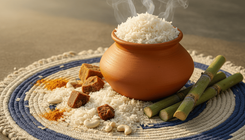
Pongal is a four-day harvest festival celebrated primarily in Tamil Nadu and among Tamil communities worldwide. It falls in the month of Thai, usually between mid-January and mid-February, and marks the moment when the sun begins its journey northward. At its heart is gratitude: pongal thanks the earth for the harvest, the sun for its nourishment, and the cattle and people who made the harvest possible. Each of the four days carries its own rituals, foods and significance, woven together to form one of the most important observances in the Tamil calendar.



Bhogi: The First Day of Purification
Bhogi, the first day, is a time of cleansing and new beginnings. Families discard old items and worn-out household goods by making a bonfire, known as Bhogi Mantai. The practice is symbolic: you shed what is no longer useful, clearing space for the fresh year ahead. This is not merely practical; it represents a spiritual turning away from the past. As the fire burns, the household also cleans thoroughly. Walls are freshly plastered, floors are washed, and decorative rangoli patterns are drawn in coloured rice flour, turmeric powder and other natural materials.
The morning after the bonfire, people gather to prepare for the main celebration. Sugarcane, which is in season during harvest time, is tied to the front door or around pillars as a marker of abundance and sweetness. Many families also prepare a simple milk preparation or sweet dish as an offering before the day ends. There is an air of anticipation: the hard work of preparation is nearly complete, and the ceremonial heart of pongal is about to begin.
Thai Pongal: The Main Harvest Day
Thai Pongal is the second and most central day, named after the month of Thai and the pongal dish itself. Pongal is a dish of freshly harvested rice, cooked with jaggery (gur), moong dal, cashews, raisins and spices, traditionally made in a new earthen pot over a fire. The cooking is performed in the open air or in the courtyard, often by the eldest woman of the household. The moment the rice begins to boil over the rim of the pot, family members raise their hands and chant "Pongalo Pongal," meaning the rice overflows abundantly. This overflow is seen as a blessing, a sign that the household and harvest will prosper.
The pongal dish is first offered to the sun as a gesture of thanksgiving. After the offering, it is eaten as prasad (blessed food) and shared with family and neighbours. Preparation of the dish involves specific ingredients, each with symbolic meaning: the rice represents the harvest, jaggery represents sweetness and well-being, and the dal and other ingredients represent nourishment and completeness. Even the new pot itself carries meaning—it has never been used before, representing a fresh start and the purity of the new harvest.
Beyond the pongal dish, Thai Pongal day includes the creation of more elaborate rangoli, the wearing of new clothes, often in yellow and green, and the sharing of sweets. Many temples organize special pujas (rituals) on this day. In some regions, kolam (another name for rangoli) designs are particularly intricate and large, sometimes covering the entire front of a house. The colour scheme—yellows, greens, reds—reflects the harvest landscape and the joy of the season.
Mattu Pongal: Honouring the Cattle
Mattu Pongal, the third day, celebrates cattle and other animals that were essential to the harvest. Cows and bulls are bathed, their horns are painted in bright colours, their bodies decorated with flower garlands, and they are fed pongal and other delicacies. In parts of Tamil Nadu, particularly in rural areas, the event includes Jallikattu, a traditional bull-taming sport, though this practice has been contentious in recent decades. Beyond the sport, the day is fundamentally about gratitude to animals and a recognition of their role in agriculture and daily life.
Mattu Pongal is not confined to farms. Even in cities, cattle are honoured, decorated and given offerings of rice, coconut and sugarcane. The tradition reflects an older way of life in which humans and livestock lived in close partnership, and it carries forward that memory and respect. For many families, it is a day to give special attention and care to domestic animals, reaffirming a bond that modern urban life often obscures.
Kannum Pongal: Community and Bonfire
Kannum Pongal, sometimes spelled Kanni Pongal, is the fourth and final day. Kannum means "to see" in Tamil, and this day is often characterized by gathering, playing, and enjoying the company of family and community. In the past, it was a day of sport, games and public celebrations. Today, it remains a time for families to enjoy each other's company, often over sweets and festive meals.
In some regions, Kannum Pongal includes a second bonfire, continuing the theme of release and renewal begun on Bhogi. The four days together form a complete arc: purification, gratitude, recognition of partnership with nature, and communal joy. By the end of the festival, the old year has been ritually closed, the harvest has been honoured, and the household and community have renewed themselves for the season ahead.
Regional and Community Variations
While Pongal is primarily a Tamil festival, similar harvest festivals are celebrated across southern India under different names: Makar Sankranti in Karnataka and Maharashtra, Uttarayan in Gujarat, and Poush Sankranti in Bengal. Each region brings its own customs and foods to the celebration, though the underlying purpose—marking the sun's northward journey and celebrating the harvest—remains constant.
Among Tamil communities abroad, pongal is often celebrated as a cultural marker and a connection to homeland. The preparation of the pongal dish, the drawing of rangoli, and the gathering of family take on added meaning when performed far from Tamil Nadu. For diaspora communities, pongal has become as much a festival of identity and continuity as it is of agricultural thanksgiving. Even where cattle or bonfires are not practical, the rituals of the pongal dish and the ritual of chanting "Pongalo Pongal" preserve the essence of the festival.
Common questions
What month does pongal fall on?
Pongal falls in the month of Thai according to the Tamil calendar, which usually corresponds to mid-January to mid-February in the Gregorian calendar. The exact date shifts each year because it is tied to a solar astronomical event rather than a fixed date.
What are the ingredients in pongal and what do they represent?
Pongal is made from freshly harvested rice, jaggery (gur), moong dal, cashews, raisins and spices. Rice represents the harvest itself, jaggery represents sweetness and prosperity, and the dal and other ingredients represent nourishment and completeness.
Can pongal be celebrated outside of Tamil Nadu?
Yes, pongal is celebrated by Tamil communities worldwide and also overlaps with similar harvest festivals across India and among the diaspora. The core rituals—the pongal dish, rangoli, new clothes and the chant 'Pongalo Pongal'—can be performed anywhere, preserving the festival's meaning even far from Tamil Nadu.

Related Articles


