
Parishechanam: Why Water Is Sprinkled Around the Food Plate
The sacred circle that holds both nourishment and protection

Abhilash Ramakrishna
20 Nov 2026 • 6min
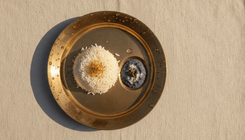
When you sit down to eat in a Hindu home or temple, you might notice water being sprinkled around the plate or leaf before the meal begins. This practice is called parishechanam, and it is far more than hygiene or habit. It is a ritual act that marks the food as sacred space, connects the eater to something larger than hunger, and creates a boundary between the everyday world and the moment of nourishment.
Parishechanam means "sprinkling around" or "surrounding with water". The water is usually sprinkled in a circle around the plate using the fingertips, and sometimes a small amount is also sprinkled on top of the food. The circle of water serves multiple purposes at once: it purifies the space, it invokes protection, it acknowledges gratitude, and it transforms a simple meal into an act of devotion. In many homes, this is done just before eating begins, often with a whispered prayer or mantra.



The Purifying Circle
Water holds a central place in Hindu practice because it is considered inherently purifying. It washes away not just physical dirt but also spiritual impurity and negative influences. When water is sprinkled around the food plate, it creates a boundary that is both practical and sacred. On the practical side, it reminds us that eating is a deliberate act, not something rushed or mindless. On the spiritual side, the circle of water is believed to sanctify the space and the food within it.
In temples, where parishechanam is performed by priests during major pujas or before offering food to the deity, the practice is more formal. The water may be consecrated with mantras or taken from a sacred vessel. In homes, the practice is simpler but carries the same intention. Parents teach children to sprinkle water around their plate as a way of saying, "This food is blessed, and I receive it with respect." The circle also serves as a gentle reminder that the space where we eat is separate from the space where we rush about the rest of the day.
Connection to Yajna and Offering
The roots of parishechanam reach back to the yajna, or sacred fire ritual, which has been central to Hindu practice for thousands of years. In a yajna, offerings are made to the divine through fire, and water often plays a role in purifying the space and the offerings themselves. Though eating a meal is not a full yajna, many Hindu families preserve the spirit of yajna in everyday meals by treating the food as an offering and the eating space as sacred ground.
When water is sprinkled around the plate, it echoes this ancient practice. The gesture says: I do not eat this food carelessly or for myself alone. I receive it as a gift, and I offer it to the divine within myself. In this way, even a simple breakfast or lunch becomes a small act of worship. Some families add a short prayer before or after the sprinkling, such as "Annam Brahma" (Food is Brahman) or a personal invocation of gratitude. Others do it in silence, but with full awareness of what the gesture means.
Regional and Sampradaya Variations
The practice of parishechanam is most common in South Indian households and temples, particularly within Tamil, Telugu, Kannada and Malayalam-speaking communities. However, the underlying principle—that food is sacred and the eating space should be purified and protected—appears across Hindu practice in different forms. In some North Indian homes, water might be sprinkled differently or prayers spoken instead, but the intention is the same.
In temple settings, the practice varies by sampradaya, or religious lineage. In Shaivite temples, where Shiva is the primary deity, parishechanam may be part of the ritual sequence before food (prasad) is distributed to devotees. In Vaishnava temples dedicated to Vishnu, similar purification practices occur but may be named or performed slightly differently. A Brahmin priest performing rituals in a home might use specific mantras during parishechanam, while a householder doing it for their own family meal might keep it simple and wordless. Both approaches are valid; the practice adapts to the context while keeping its meaning intact.
When and How Parishechanam Is Done
Parishechanam is typically performed at the start of a meal, just before eating begins. Some families do it daily; others reserve it for special occasions, festival meals, or when eating food that has been specially prepared or offered to a deity. There is no rigid rule about which meals require it and which do not. The practice is most common during important festivals like Diwali, Pongal, or Navaratri, when the entire day is treated as sacred.
The actual act is simple. After the plate or leaf is set, water is taken in the fingertips—usually the three middle fingers of the right hand—and a small amount is sprinkled in a circle around the plate. Sometimes this is done just once, and sometimes it is repeated. Some families sprinkle a few drops on the food itself as well. The whole gesture takes only a few seconds, but it marks a shift. Before the sprinkling, it was a plate of food. After, it is a meal received with intention and gratitude.
Parishechanam in Daily Life Today
In modern homes, especially in cities where life moves quickly, parishechanam is sometimes skipped or shortened. Yet many families have kept the practice alive, passing it down to children and young people who might otherwise have no connection to these rituals. The practice does not require a temple or a priest; it needs only water and a moment of awareness. For this reason, it has remained accessible and alive in homes across India and among diaspora communities around the world.
When you perform parishechanam, you are joining a chain of practice that stretches back centuries. You are saying, with your hands and your intention, that this moment matters. That eating is not separate from the sacred. That even a simple meal deserves to be received with gratitude and respect. In a world that often treats food as fuel and meals as breaks in the working day, this small ritual offers something different: a way of remembering that nourishment is a gift, and that we receive it best when we do so with open hearts and conscious intention.
Common questions
Which hand should you use to sprinkle the water?
Traditionally, the right hand is used for parishechanam, as it is considered auspicious in Hindu custom. You use the three middle fingers to hold and sprinkle the water in a circle around the plate.
Does parishechanam have to be done at every meal?
There is no strict rule. Many families do it daily as part of their practice, while others reserve it for special meals, festivals, or when eating food that has been offered to a deity. The practice adapts to each home's custom.
What type of water should be used for parishechanam?
Clean drinking water is sufficient for daily parishechanam. In temple rituals, priests may use water from sacred sources or water that has been consecrated with mantras, but this is not necessary in a home setting.

Related Articles


