
Panchopachara Puja: The Five-Step Short Worship
Devotion Distilled to Its Essential Gifts

Aditya Pandey
19 Nov 2026 • 7min
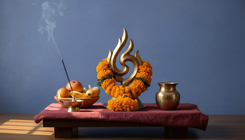
Panchopachara puja is a short form of worship that honours a deity using just five essential offerings. The word breaks into pancha (five) and upachara (offerings or attendances), making it a streamlined way to maintain daily devotion when time or resources are limited. It is not an abbreviated version of a fuller ritual, but a complete practice in its own right, grounded in the principle that sincere devotion matters more than elaborate ceremony.
Countless households perform panchopachara puja at home altars each morning. People perform it to Ganesha before beginning the day, to Durga during Navaratri, to ancestors on specific occasions, or to the ishta devata (chosen deity) as a daily anchor to practice. The form is flexible enough to fit into a five-minute routine or to anchor a longer meditation, and it works whether you have a stone murti (idol), a small brass figure, a painting or a yantra (geometric diagram).



Why Five Offerings
The five offerings correspond to the five senses and what nourishes them. Water cleanses the sense of touch. Flowers and incense please sight and smell. Food (or sometimes fruit) addresses taste. Sound—through bell, mantra or chanting—engages hearing. Together they form a complete and balanced approach to worship, meeting the deity through every avenue available.
Worship in the Agama tradition (the scriptural texts that govern temple ritual) often distinguishes between a full service, which can involve sixteen or more steps, and abbreviated forms suited to different contexts. Panchopachara is one such form, and the texts acknowledge that a sincere five-offering puja can be as spiritually fruitful as an elaborate ceremony. It reflects an understanding within Hindu practice that the size of the offering is less important than the sincerity of the devotee's heart.
The Five Offerings
Dhyana (meditation or invocation) begins the puja. You may sit quietly and visualise the deity, or chant their name three times, or offer a short prayer inviting their presence. This is sometimes counted as the first offering, though technically an internal act rather than a material one.
Pushpa (flowers) comes next. A single flower or a small garland placed before the murti is sufficient. If flowers are not available, water offered with the hand in a cupped gesture serves the same purpose. The flower represents the heart and its devotion.
Dhup (incense) carries prayers skyward and purifies the space. Light the incense stick or cone, place it in the holder before the altar, and acknowledge the act with a bow. Some households use dhoop (solid incense powder) in a small container instead.
Deepa (light) follows. A small lamp or candle lit before the deity symbolises the illumination that removes spiritual darkness. Even a simple electric light can serve if an actual flame is not practical or safe.
Naivedya (food offering) completes the five. Offer a small portion of fruit, sweet, cooked rice, or even plain water in a small bowl or leaf. After the puja, this becomes prasad (blessed food) to be eaten or distributed.
Some versions of panchopachara include these five in a slightly different order, and regional or sampradaya (tradition) variations exist. The essential principle holds: each sense is acknowledged and included.
Timing and Preparation
Perform panchopachara puja after bathing, ideally in the early morning when the mind is fresh and the household is quiet. Afternoon or evening is acceptable if morning is not possible; consistency matters more than the exact hour. If you are menstruating or in a state of ritual impurity by your community's definitions, omit personal worship of deities that require it, though you may still offer prayers from a distance.
Prepare your altar space beforehand. Arrange the items in a clean area—a small corner of a room, a shelf, even a cloth on the floor. Keep it free of clutter and dust. Flowers stay fresher if placed in water or changed daily. Have your offerings ready and gathered within reach before you begin, so the puja flows without interruption.
The Ritual Flow
Face the murti or image. Bow or place your hands together in anjali (respectful hands). Call the deity's name or chant their mantra three or more times. This is your invocation. Sit in a comfortable seated position.
Offer water for washing by spraying or pouring a small amount over your fingertips and then over the altar (or simply gesture the action if water is not practical). Offer flowers next, placing them gently and speaking the offering aloud if you wish: "I offer this flower as a sign of my devotion."
Light the incense, watching the smoke rise. Light the lamp next. Speak: "I offer light." Bring forward the food in its small bowl, and say: "I offer this food that I may nourish my body and serve you with strength."
Sit in silence for as long as feels right. You may chant a favourite mantra, recite a prayer in your own words, or simply be present. A few minutes is enough; there is no rule. When you feel ready, bow once more, and if the food offering was cooked, leave it a moment longer before consuming it as prasad.
Frequency and Commitment
Daily panchopachara puja takes about five to fifteen minutes depending on how much time you spend in meditation or chanting. Many people make it a non-negotiable part of their morning routine, as essential as bathing or tea. Others perform it on specific days—Mondays to Shiva, Fridays to the Devi, or only during festivals.
The practice is portable and adaptable. When travelling, you can perform it with a single flower and a prayer, or at night if the day away from home. Some people perform it for a deity they visit at a temple. The five-step form makes this possible.
Start where you are. Begin with whatever offerings you can gather today, and trust that sincerity will grow the practice.
Perform Panchopachara Puja
- Prepare and invoke Bathe and arrange your altar with the five offerings ready. Face the murti or image, bow, and call the deity's name or mantra three times to invite their presence.
- Offer water Sprinkle or gesture a small amount of water for purification, acknowledging this cleanses the space and your intent.
- Offer flowers Place a fresh flower or small garland before the deity, speaking your devotion aloud if it feels natural to you.
- Offer incense and light Light the incense stick or lamp and place it in position. Speak each offering as you make it: 'I offer incense' and 'I offer light.'
- Offer food and meditate Bring forward the food offering and place it in its small bowl. Sit quietly for a few minutes—chanting a mantra, praying, or simply being present.
- Close with respect Bow once more before the altar. Leave the food offering for a moment, then take it as prasad to eat or share.
Common questions
Can I do panchopachara puja without a murti or idol?
Yes. A painting, photograph, or yantra (geometric diagram) serves equally well. Some people offer worship to a yantra that represents their chosen deity without any physical form, or simply to an empty space where they visualise the presence. Devotion to the deity matters more than the medium through which you worship.
What if I do not have all five offerings available?
Improvise with what you have. Water offered with respect can replace flowers. A prayer or chanted mantra can substitute for incense or a lamp. A single rice grain offered with full attention satisfies the food offering. Many texts acknowledge that sincere devotion expressed with available means is more valuable than elaborate ceremony performed with distraction.
How long should I sit in meditation during panchopachara puja?
There is no fixed duration. Even two or three minutes of genuine presence is enough; longer meditation is beneficial but not required. The aim is not to fill a timer but to pause and connect with the deity. Consistency and sincerity matter more than length.

Related Articles


