
Panchopachara and Shodashopachara: Short and Long Puja
Every heart has its own measure of devotion.

Aditya Pandey
19 Nov 2026 • 6min
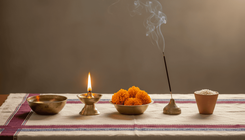
When you sit down to worship, you face a choice about how elaborate your puja should be. Do you offer five steps of devotion, or sixteen? The answers lie in two different systems, panchopachara and shodashopachara—the short form and the long form of Hindu worship.
Panchopachara means "five offerings". Shodashopachara means "sixteen offerings". Both are complete, authentic ways to approach a deity. The difference lies not in sincerity, but in how much time you have, how much space your altar holds, and what your tradition has passed down. The practice depends on your life, not on how much devotion you possess.



What Panchopachara Offers
Panchopachara is the simpler path, and it is not a shortcut but a distilled form. When you do panchopachara puja, you offer five things to the deity in sequence: flowers, incense, a lamp, food, and water. Each offering carries meaning. Flowers represent beauty and the impermanence of all things. Incense carries your prayers upward. The lamp represents consciousness itself. Food nourishes the body, and water refreshes. Together, these five satisfy the deity in the way that matters most.
Panchopachara works well for daily worship at home. It takes fifteen to thirty minutes, which fits into a morning routine. You need only what most households have: flowers from a garden or a pot, incense sticks, a small oil lamp or candle, fruit or cooked grain as offering, and water in a cup. No elaborate altar, no specialist knowledge. The puja remains complete. Many people follow panchopachara all their lives and find in it everything they seek.
The five upacharas, or offerings, also sit within larger pujas as their core. Even in shodashopachara, the middle of the ceremony rests on these five. In some sampradayas (lineages), panchopachara is the established practice. In others, it is what you do when time or circumstance will not allow the longer form.
What Shodashopachara Adds
Shodashopachara, the sixteen-offering puja, wraps additional steps around a more elaborate sequence. The sixteen upacharas include the five of panchopachara—flowers, incense, lamp, food, and water—but also add eleven more. These include water for washing the feet, water for rinsing the mouth, sandalwood paste, a second set of flowers, fragrant oil, rice grains, fruit, betel leaf, and prostration.
Each additional upachara deepens the ritual and creates space for reflection. Washing the feet honors the deity as you would honor a revered guest. Sandalwood paste, cool and fragrant, embodies kindness. The second offering of flowers allows for a second moment of praise. Prostration—falling to the ground in reverence—brings the body into the act of worship. These steps are not padding. They transform puja from an exchange into an experience of surrender.
Shodashopachara takes longer, typically forty-five minutes to over an hour. It requires more materials: sandalwood, multiple types of flowers, oil, incense, fruit, rice, betel leaf, and more. Your altar needs proper space and arrangement. Many temple pujas follow shodashopachara because temples have the resources and the time. Priests trained in this form know each step by heart. Families with a strong practice tradition often do shodashopachara at home as well, especially for important festivals or regular worship of a chosen deity.
How Tradition and Context Shape the Choice
Your sampradaya (spiritual lineage) may already have decided this for you. Some traditions have always emphasized panchopachara. Others prescribe shodashopachara for temple work and permit panchopachara for home worship. Some temples teach both and let devotees choose based on their ability and the occasion. A major festival might call for shodashopachara even from a household that normally does panchopachara. A day when you are unwell or pressed for time is a day for the shorter form without regret.
Geography and regional practice also matter. In some regions, panchopachara has been the norm for centuries. In others, shodashopachara is the foundation that most people learn first. Neither is more correct. What matters is that you practice consistently with intention, not that you choose the longer form.
The distinction also depends on what you worship. If you maintain a personal altar to a deity you have chosen, you might use panchopachara daily and add extra steps on the deity's festival. If you visit a temple, you may witness shodashopachara led by a priest, or a simpler form if the temple serves many devotees with limited space. Some pujas go beyond sixteen offerings, adding elements specific to the deity or the occasion, but these are variations on the framework that panchopachara and shodashopachara provide.
The Deeper Meaning Behind the Steps
Both forms rest on the same principle: you cannot give a deity anything the deity lacks, but through offering you transform yourself. When you offer flowers, you are not adorning a being who needs adornment. You are training your own mind to see beauty and impermanence together. When you offer water, you are not quenching divine thirst. You are reminding yourself that all beings need sustenance, and that generosity flows in all directions.
The upacharas are a ladder, not a ladder with a particular number of rungs that matters more than others. Five rungs, properly climbed, carry you as far as sixteen. What changes is not the destination but the pace and the texture of the journey. Some days you climb slowly, stopping on each step. Some days you move quickly, but you move with purpose.
Neither panchopachara nor shodashopachara is meant to become a cage. If you have learned shodashopachara and find yourself pressed for time, panchopachara serves you. If you have practiced panchopachara and wish to deepen your practice, shodashopachara opens new layers. The tradition honors both. Your worship is measured not by the number of offerings but by the presence you bring to each one.
Start where you are. If you are new to puja, panchopachara teaches you the rhythm and the meaning without overwhelming you. If you come from a tradition that knows shodashopachara, learn it fully. If you move between both, know that you are practicing something real in either form. The deity receives what is offered with a sincere heart.
Common questions
What are the exact sixteen upacharas in shodashopachara?
The sixteen vary slightly by sampradaya, but typically include: water for washing the feet, water for rinsing the mouth, offerings of flowers, incense, lamp, sandalwood paste, fragrant oil, rice or grains, fruit, betel leaf and betel nut, a final offering of food, water, and prostration. Some traditions order or substitute elements differently, so it is worth learning from your own lineage's approach.
Can I switch between panchopachara and shodashopachara?
Yes. Many people use panchopachara for daily worship and shodashopachara during festivals or special occasions. Some traditions teach both and let devotees choose based on time and circumstances. What matters is that you practice with intention, not that you stay with one form forever.
Which form is older or more authentic?
Both are authentic and rooted in scriptural tradition. Panchopachara appears in many Puranic texts and has been practiced for centuries. Shodashopachara is equally established in various sampradayas and temple practices. Neither is more correct; they serve different contexts and capacities.

Related Articles


