
Panchamrit Ingredients: The Five Sacred Elements of Prasad
Five Gifts to the Divine, Blessed Returned

Sunil Chaurasia
16 Nov 2026 • 9min
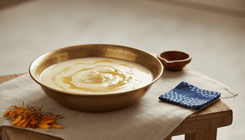
Panchamrit—the mixture of five sacred ingredients—is one of the most essential offerings in Hindu worship. The word itself means "five nectars" from panch (five) and amrit (nectar). Every time a priest performs an aarti, rings a temple bell or makes an offering to a deity, panchamrit sits at the heart of that devotion. This mixture is prepared according to ancient practice, blessed during the puja, and then distributed to worshippers as prasad—sanctified food that carries the deity's grace.
The five ingredients that make up panchamrit are milk, yogurt, ghee, honey and jaggery. Each one is chosen not by accident but by intention. Together, they represent different qualities valued in Hindu philosophy: nourishment, auspiciousness, strength, sweetness and abundance. When combined, they become more than a mixture of flavors. They become an offering that speaks to what the worshipper seeks and what they wish to give back to the divine.



Milk in Panchamrit
Milk is the first and often primary ingredient of panchamrit. In Hindu tradition, milk has long been associated with purity and the gift of life. The cow itself is sacred in many parts of India, and milk is seen as one of the five products of the cow—along with yogurt, ghee, urine and dung—each believed to carry purifying power.
Milk is used in panchamrit because of this spiritual significance, but also because of its cooling and nourishing properties recognized in Ayurveda. It is gentle on the system and is considered sattvic—promoting clarity and balance. In the preparation of panchamrit, milk forms the base to which the other ingredients are added. Some families use cow's milk specifically; others use buffalo milk, which is richer and more available in certain regions. The choice does not alter the essential nature of the offering.
Yogurt and the Quality of Transformation
Yogurt, called dahi in Hindi, represents transformation and the passage of time. Milk becomes yogurt through a natural process of fermentation—a transformation so complete that the substance changes nature entirely, yet nothing is added to it but time and warmth.
In the context of panchamrit, yogurt adds a cooling quality and a subtle tang that balances the sweetness of the other ingredients. Yogurt also carries associations with stability and grounding. In Ayurveda, yogurt is regarded as a food that strengthens digestion when used in moderation, though it is considered heavier than milk. For this reason, some preparations use yogurt sparingly, while others make it equal in proportion to the milk. The choice reflects the regional and family practice of the person preparing the panchamrit.
Ghee: Liquid Gold and Sacred Clarification
Ghee—clarified butter—has been used in Hindu ritual for thousands of years. It is poured onto sacrificial fires, used to light temple lamps and included in almost every significant offering. Ghee is considered pure because it is produced through a process of clarification: the milk solids and water are removed, leaving only the essence of butter.
In panchamrit, ghee adds richness and auspiciousness. It also carries the quality of heat and transformation in Ayurvedic terms. When you add ghee to the mixture, you are including an ingredient that has itself been refined and purified through process. The amount of ghee varies—some families use it generously, others use just enough to coat the mixture lightly. The taste should remain balanced, not overwhelmingly oily.
Honey: The Sweetness of Devotion
Honey is the sweetness that makes panchamrit pleasing to offer and to receive. It is also one of the few foods in Hindu tradition believed to improve with age, making it a symbol of preservation and enduring value. Honey is considered sattvic in Ayurveda—promoting purity and clarity—and it is often used as a vehicle for medicines and beneficial herbs.
In the ritual context, honey represents the sweetness of devotion itself. When you add honey to panchamrit, you are saying to the divine: this offering comes from a sweet heart, with no bitterness. Honey also has natural preservative qualities, which means that panchamrit made with honey keeps longer than it otherwise would. This is practical wisdom embedded in tradition.
Jaggery: Strength and Earthiness
Jaggery, called gur in Hindi, is unrefined cane sugar. Unlike white sugar, which is refined and bleached, jaggery retains the molasses and minerals from the sugarcane plant. It brings a deeper, more complex sweetness to panchamrit, and it adds earthiness that grounds the offering.
Jaggery is valued in Ayurveda for warming qualities and for supporting strength and stamina. It is considered more nourishing than refined sugar and is often preferred in traditional preparations. In panchamrit, jaggery and honey together provide sweetness, but jaggery gives a warmth and substance that honey alone would not. Some families use jaggery alone; others use both jaggery and honey together, balancing the cooling quality of honey with the warming quality of jaggery.
Preparing and Blessing Panchamrit
Panchamrit is prepared by mixing the five ingredients together in a vessel, usually a small bowl or cup made of metal or clay. There is no single fixed proportion—practice varies by family, region and temple. A common approach is to use roughly equal parts of milk, yogurt, ghee and honey, with jaggery added to taste. The mixture should be smooth and pourable, with each ingredient visible and blended.
Before the mixture is offered to the deity during puja, it is blessed by the priest or the person performing the worship. Water from the Ganges or another sacred river is sometimes sprinkled into the panchamrit, though this is not universal practice. The mixture is then presented to the deity's image or murti, often with a spoon, and left as an offering while prayers are recited.
After the puja is complete, the panchamrit is distributed to those who have come to worship. Each person receives a small spoonful or sip. This sharing is crucial to the meaning of prasad—the grace of the deity, received and distributed. It is believed that what has been offered to the divine and then returned to the worshipper carries blessing and protection.
Regional Variations and Seasonal Practice
The way panchamrit is made and used varies across India. In some regions and temples, additional ingredients are included—rose water, cardamom, coconut or nuts—though these are additions to the core five. In other places, the preparation is more strictly confined to the five traditional ingredients, with no additions.
The proportion of ingredients also shifts with season and circumstance. During hot months, the cooling ingredients—milk, yogurt and honey—might be used in greater measure. During cold months, warming ingredients like ghee and jaggery might be emphasized. If someone is ill or elderly, a lighter version might be prepared with less ghee. These adjustments show how a ritual practice adapts to human need without losing its essential form.
How to prepare panchamrit
- Gather the five ingredients Collect milk, yogurt, ghee, honey and jaggery. Use fresh, high-quality ingredients—cow's milk or buffalo milk, freshly made yogurt, pure ghee, raw honey and unrefined jaggery. If any ingredient is stale or poor quality, replace it.
- Choose your proportions There is no fixed recipe, but a balanced approach is roughly equal parts milk, yogurt, ghee and honey, with jaggery added to taste. Start with a small bowl—you need only enough for the puja and distribution to a few people. Adjust the sweetness as you go.
- Mix the ingredients together Pour the milk into a clean bowl, add yogurt and stir. Add ghee slowly, stirring to blend. Add honey and jaggery, stirring until smooth. The mixture should be pourable but not runny, with all ingredients evenly distributed.
- Prepare the space for offering Place the bowl of panchamrit on the puja altar or near the deity's image. If water from a sacred source is available and you wish to add it, sprinkle a few drops into the mixture at this point, though this is optional.
- Offer to the deity Present the panchamrit to the deity with reverence. You can use a spoon to offer a small amount directly to the murti or image, or simply present the bowl while reciting prayers or mantras. Allow the offering to remain for the duration of your worship.
- Distribute as prasad After the puja, with gratitude, distribute the panchamrit to those present. Each person typically receives a small spoonful or a few drops on the tongue. This sharing completes the cycle of offering and grace.
Common questions
Can I make panchamrit without one of the five ingredients?
Ideally, all five ingredients are included, as each carries specific spiritual and practical significance. However, if you genuinely cannot access one ingredient—for example, if someone is allergic to honey—you may prepare the mixture with four ingredients. Some traditions add a sixth or seventh ingredient (such as rose water or coconut) but still refer to it as panchamrit. The core principle is that you offer what you can with sincerity.
How long can I keep panchamrit after it is made?
Panchamrit is best offered and distributed fresh, ideally within a few hours of preparation. Because it contains milk and yogurt, it can spoil if left unrefrigerated in warm weather. If you must store it, keep it in a cool place or refrigerate it. In traditional practice, any remaining panchamrit is given to those who wish it, consumed by the family, or sometimes offered again in a later puja.
Does the order of mixing the ingredients matter?
While there is no strict rule, a common practice is to start with milk as the base, then add yogurt, then ghee, then honey, and finally jaggery. This order allows each ingredient to blend smoothly into the mixture. However, many families mix in a different order without affecting the sanctity of the offering—what matters is that all five ingredients are combined with intention.

Related Articles


