
Panchakarma Explained: The Five Cleansing Actions of Ayurveda
Release What Disturbs Your Balance

Aditya Pandey
13 Nov 2026 • 6min
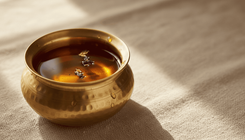
Panchakarma is a foundational detoxification system in Ayurveda, designed to eliminate deep imbalances in the body and mind. The name means "five actions": five procedures that work together to purify you from inside. These are not quick fixes, but part of Ayurveda's view that health requires removing the accumulated toxins—called ama—that underlie most illness.



Understanding Ama and the Need for Cleansing
Ama builds up when digestion is weak or incomplete. You eat food your digestive fire cannot fully process, or you take in experiences faster than you can absorb them. That undigested food, whether physical or emotional, turns into sticky, inert matter that settles in the tissues and blocks the channels through which energy flows. Over time ama causes pain, inflammation, heaviness and the slow decline most people know as aging.
Panchakarma works to root out this old ama. But before the five actions begin, Ayurveda uses two preparatory processes. Snehana means anointing: oils are massaged into the body to soften the tissues and prepare them to release what they hold. Swedana means sweating: heat is applied to open the channels further. Only when tissues are sufficiently prepared do the five main procedures start.
This understanding shapes how panchakarma differs from a single detox or cleanse. The goal is not temporary purification but restoration of the body's ability to maintain health on its own.
The Five Actions: Vamana
Vamana is therapeutic vomiting, though the word sounds harsher than the practice. After gentle preparation with warm oils and herbs, you are given a specially prepared herbal liquid designed to trigger the body's natural purging reflex. This action addresses excess in the upper body and mind: particularly congestion in the lungs and sinuses, but also mental heaviness and attachment.
Vamana is used most often in spring when kapha dosha—the heavy, cold, moist force in nature and your body—reaches its peak. A person with a strong kapha constitution, or with conditions like asthma, deep congestion, or water retention, may benefit from vamana.
The procedure is done under close supervision and never at home. A qualified Ayurvedic practitioner assesses whether your body is strong enough for it, prepares your digestion carefully, and is present during and after the procedure to support you. Most people describe it as surprisingly gentle once the preparation has been thorough.
The Five Actions: Virechana
Virechana is purgation through the bowels. Again, the preparation takes time: warm oils massage the body, herbal treatments support digestion, and only then is a herbal laxative given, typically of castor oil or other gentle purgatives combined with supporting herbs. This action clears heat and toxins from the small intestine and lower body, and addresses pitta dosha—the hot, sharp, fiery principle.
Virechana is more commonly used than vamana and often comes later in a full panchakarma course. It is valued for moving stored heat out of the system, which is why many Ayurvedic practitioners recommend it in late summer or early autumn. People with excess pitta—those prone to inflammation, digestive fire that is either too strong or goes unpredictably wild, skin conditions, or anger—may need virechana more than other procedures.
Like vamana, it requires days of careful preparation and professional guidance.
The Five Actions: Basti
Basti is the administration of medicated oil or decoction through the colon, which holds its own form of vata dosha—the dry, cold, moving force. The procedure involves introducing warm, herbalized liquid in a way that both nourishes and purifies, reaching tissues the other procedures cannot access. Basti is considered the most important of the five actions because vata governs all movement in the body, including the movement of the other doshas themselves.
The number and type of basti treatments vary widely according to what your constitution and condition require. Some people receive ten or more as part of a full panchakarma course. Others may receive basti more frequently over time as a maintenance practice.
Basti is less intense than vamana or virechana for most people, and many practitioners believe it can be learned well enough to perform at home under guidance. Still, the first basti should always happen under professional care.
The Five Actions: Nasya and Shirodhara
Nasya involves instilling medicated oils into the nasal passages to clear and nourish the sinuses, head and mind. The procedure is swift and deeply calming. Oils reach the brain directly through the olfactory nerves and the subtle channels of the head, which is why nasya is especially valued for conditions of the mind, senses and nervous system.
Shirodhara, though sometimes counted among panchakarma practices, is technically not one of the five main actions. It is a related procedure where warm medicated oil is poured in a steady stream onto the forehead in a specific pattern. It is profoundly settling for the nervous system and often included during or after panchakarma treatments for that reason.
Both nasya and shirodhara are gentler and more accessible than vamana or virechana, and some can be done regularly even outside a formal panchakarma course.
The Purpose Beyond Detox
Panchakarma is not meant as a yearly or frequent practice for most people. Rather, it is undertaken when the body has accumulated toxins beyond what daily Ayurvedic routines can clear, or when specific conditions call for deeper work. A full panchakarma course takes weeks, must be done under expert supervision, and requires you to step away from ordinary life.
The deeper purpose is to restore health that feels stable and lasting. A well-done panchakarma resets your digestion, calms the nervous system, and renews your ability to maintain balance through diet, rhythm and simple daily practices. It is not the work itself that matters, but what becomes possible afterward.
If you are considering panchakarma, begin by consulting an Ayurvedic practitioner who understands the full system and can assess your constitution and condition. Panchakarma should fit your individual nature, not a generic template.
Common questions
Can I do panchakarma at home?
The five main actions should happen under professional supervision the first time. Basti can potentially be learned for home use later, and simple practices like nasya or shirodhara can be done outside formal panchakarma, but vamana and virechana require a qualified Ayurvedic practitioner present. Attempting them alone risks harm.
How often should I do panchakarma?
Panchakarma is not a regular practice. Most people benefit from a full course every few years when deep imbalances accumulate, or when a specific condition calls for it. Some may need it only once. Your Ayurvedic practitioner will assess your individual needs.
How long does panchakarma take?
A complete panchakarma course typically lasts 2 to 4 weeks, though some traditions prescribe 7 or more days as a minimum. The length depends on your condition and constitution. A full course means you must take time away from work and ordinary routines.

Related Articles


