
Pancha Maha Yajna: The Five Daily Duties of a Householder
The sacred rituals that sustain the household and cosmos

Kushal K
16 Nov 2026 • 7min
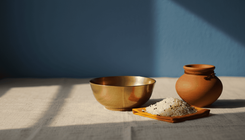
The pancha maha yajna are five daily sacrifices that form the spiritual foundation of grihastha, the stage of life when a person is a householder. These are not grand temple ceremonies, but small acts of offering woven into everyday life—to the gods, the ancestors, all creatures, guests and people in need, and to your own learning. Performing them is considered a sacred duty that sustains both your household and the wider cosmos. Each offering is small, but together they restore balance to the universe and keep you in harmony with the debt you carry simply by being alive.



The Deva Yajna: Offering to the Gods
The deva yajna, offering to the gods, is performed at the moment of your main meal each day. Before you eat, a portion of food—rice, ghee, dal or whatever forms part of the meal—is offered into the fire with a simple mantra. If you do not have a domestic fire, the offering is traditionally made into water. The food itself is not eaten by the gods in the physical sense; rather, the act of offering consecrates your meal and reminds you that you eat only by the grace of the divine. Some households keep a small lamp burning while they cook, treating that flame as the witnessing fire. The size of the offering matters less than the intention behind it. A handful of rice offered with respect fulfils the duty as fully as a larger portion. In this way, your daily meal becomes an act of worship rather than mere consumption.
The Pitri Yajna: Honouring the Ancestors
The pitri yajna is an offering made to your ancestors and forebears. This is traditionally performed by pouring water mixed with sesame seeds or rice towards the south, the direction associated with the ancestors. Some households offer water and rice together, or simply water with consciousness and respect. The offering need only be made once a day, often at dawn or during the main meal. The purpose is not to feed the ancestors in a literal sense, but to acknowledge the debt you carry—your very existence comes from their lives, their choices, their struggles. By remembering them daily with this small gesture, you maintain the link between past and present, and you fulfil an obligation that binds the generations together. The pitri yajna is especially significant for those performing rites on behalf of deceased family members.
The Bhuta Yajna: Offering to All Creatures
The bhuta yajna acknowledges your responsibility to all living beings. This is performed by leaving out food or water, or by scattering grain or vegetables, for animals and birds. You might leave out leftover rice for crows and sparrows, or set aside scraps for street dogs and insects. Some households keep a small corner of their kitchen or garden for this purpose. The offering embodies the principle that all life shares the same fundamental nature and deserves respect. It also recognises that by living, you inevitably take life—eating grains and vegetables, walking on insects, using water. The bhuta yajna is a gesture of reciprocity and acknowledgment of the harm that simply existing causes. It is performed with the understanding that we live among other beings and bear responsibility towards them.
The Nri Yajna: Hospitality and Care for Humans
The nri yajna, also called the atithi yajna, is the offering to guests and to people in need. This is performed by offering food, drink and shelter to those who come to your door, and by giving to those in want. The duty is not limited to formal guests; it extends to anyone who appears hungry, homeless or in distress. In traditional households, a portion of every meal is set aside for a guest or given to someone in need. Some householders perform this duty by keeping coins or food available to give to beggars, or by volunteering time and resources to community work. The nri yajna teaches that a home is not merely a private space but also a place of refuge, and that your abundance, whatever it may be, is meant to be shared. This offering upholds the principle that all humans deserve dignity and care.
The Brahma Yajna: Study and Teaching
The brahma yajna is the offering to learning and knowledge. This is traditionally performed by studying sacred texts, mantras or teachings each day, even if only for a short time. It is also fulfilled by teaching others—sharing knowledge with children, students or anyone who seeks to learn. Some households perform this yajna by chanting a mantra, reading from the Vedas or other scriptures, or studying under a teacher or guru. The offering here is your time and attention. Brahma yajna recognises that knowledge is a gift received from those who taught you and from the tradition itself, and that you have a duty to keep that knowledge alive by studying it and passing it on. This ensures that dharma and wisdom are preserved and transmitted through the generations. The study need not be formal or lengthy; it is the commitment to learning that matters.
How the Pancha Maha Yajna Fit into Daily Life
These five yajnas are not separate rituals that demand hours of your day. They are principles embedded in ordinary activities: in how you eat, how you treat guests, how you remember those who came before, how you regard other creatures, and how you approach learning. A person living as a grihastha performs all five as part of simply living well. Many households integrate them into existing routines—offering at mealtime, remembering ancestors at dawn, leaving food for animals as a daily habit, opening the home to guests, and reading or teaching as part of evening practice. The tradition acknowledges that householders have many duties: to work, to raise a family, to maintain a home. The pancha maha yajna are not a burden added to these duties, but a way of understanding them as spiritual practice. When you offer food mindfully, care for guests willingly, and study regularly, you are already performing these yajnas.
The five daily sacrifices remind you that you do not live in isolation. You depend on the gods, on your ancestors, on other creatures, on human community, and on the knowledge preserved by your tradition. Each small act of offering is an acknowledgment of that interdependence and a commitment to maintaining balance—within yourself, within your household, and in the world around you.
Common questions
Can I perform the pancha maha yajna if I live in a flat with no kitchen fire?
Yes. The deva yajna can be performed by pouring the food offering into water instead of fire. The other four yajnas—to ancestors, creatures, guests and learning—do not require fire at all. The spirit of the practice is the intention to offer, not the specific physical setup.
Do I have to perform all five yajnas every single day?
The tradition sets them as daily duties, but life often makes that impossible. Many householders perform them regularly but not rigidly. Some focus on particular yajnas depending on their circumstances. The commitment is to honour the principle even when the full practice is not feasible.
What makes the pancha maha yajna different from regular meals and kindness?
The difference is in awareness and intention. Eating is just eating; offering food to the gods makes the meal a ritual act. Helping someone in need is good; understanding it as nri yajna—repaying a debt to humanity—places it within a spiritual framework that connects your action to cosmic balance.

Related Articles


