
Onam: The Legend of King Mahabali and the Festival Customs
When a Demon King Returns to Bless His People

Abhilash Ramakrishna
07 Nov 2026 • 7min
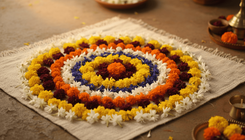
The Onam legend of King Mahabali is at the heart of Kerala's harvest festival, celebrated each year across the state and by Malayali communities worldwide. The story explains why Onam is not a festival of gods alone, but a celebration of an asura—a powerful demon king—whose devotion and just rule earned him a place in the hearts of his people and, crucially, permission to return from the underworld once a year to see how they fare.



The Story of King Mahabali
In Hindu mythology, Mahabali was the great-grandson of Hiranyaksha, a powerful asura king. Unlike many demons depicted as purely destructive, Mahabali was a just and capable ruler. During his reign, the three worlds—heaven, earth and the underworld—flourished under his benevolent governance. His subjects were happy and prosperous, and justice prevailed everywhere.
Mahabali's growing power alarmed the gods. Worried that his increasing might might upset the cosmic order, they approached Vishnu and asked him to intervene. Vishnu came to earth in the form of Vamana, a dwarf Brahmin boy, and appeared at the site where Mahabali was performing a sacred ritual.
Mahabali was known for his generosity and granted gifts to anyone who asked. When young Vamana approached him, Mahabali offered to give whatever the boy desired. Vamana asked for just three steps of land. Mahabali agreed, not recognizing that his visitor was Vishnu himself.
In his true form, Vishnu grew immense. With one step, he covered the earth. With the second, he covered the heavens. He then asked Mahabali where to place his third step. Rather than run or hide, Mahabali offered his own head. Vishnu placed his foot on Mahabali's head and pushed him into the netherworld.
Yet Mahabali's devotion and goodness did not go unrecognized. Vishnu granted him a boon: once every year, on the day of the full moon in the Malayalam month of Chingam (roughly August or September), Mahabali would be allowed to visit his beloved subjects on earth to check on their welfare. This annual visit became Onam.
The Significance of the Mahabali Legend
The Mahabali story teaches that goodness and righteousness matter more than cosmic rank. Though an asura, Mahabali embodied dharma—righteous conduct and just rule. His punishment was not because he was evil, but because his power had become too great and threatened the equilibrium the gods must maintain. Yet he was not condemned to oblivion; instead, he earned immortality and the eternal love of the people.
For Keralites, Onam is unique among Indian festivals because it celebrates a demon king rather than a deity. This reflects the historical Kerala principle that leadership is measured by how well one serves the people, and that genuine devotion transcends the divide between gods and demons. Mahabali's rule is remembered as a golden age, and his return each year is seen as a blessing upon the land and its harvests.
How Onam Honors the Mahabali Legend
Onam is celebrated over several days, with customs that express both the joy of welcoming Mahabali back and the gratitude for his remembered reign. The festival is observed during the harvest season, and the name Onam itself is believed to derive from Mahabali's name.
The most distinctive Onam custom is the pookalam, a circular floral arrangement made on the ground or on a raised platform. Pookalam means "flower garden" in Malayalam, and families create these designs using flowers from their gardens—yellow and orange marigolds, jasmine, and fragrant blooms. The pookalam is made fresh each morning during the festival period and expanded day by day, with flowers added in patterns that grow more elaborate as Onam approaches its peak.
Another central custom is the Onam sadya, a grand vegetarian feast served on a banana leaf. The sadya includes between 20 and 30 dishes, depending on the household and region, featuring rice, sambar, avial, cucumber raita, and various curries. The number and variety symbolize abundance and the prosperity Mahabali brought to Kerala. Sharing the sadya with family, friends and neighbors keeps alive the spirit of Mahabali's just and generous rule.
Onam also includes the Thumbi Thullum, a swaying dance performed by women and girls as they circle the pookalam, and boat races called Vallam Kali on Kerala's backwaters, traditions that reflect the festive joy of the season. In many Kerala homes, an idol or image of Mahabali is placed in a central spot as a focus of prayer and remembrance.
Regional Variations in Onam Observance
While Onam is primarily a Kerala festival, it is celebrated by Malayali communities throughout India and in diaspora communities abroad. In Kerala itself, the way Onam is observed can vary between Hindu, Christian and Muslim families, though the core customs remain similar. Some households place particular emphasis on prayers to Mahabali and Vishnu, while others focus more on the cultural and social dimensions of the festival.
The Onam sadya menu and the flowers used in pookalam can also differ between regions and family traditions within Kerala. Coastal areas may include more seafood-based dishes, though the core sadya remains largely vegetarian. The specific flowers blooming at the time of Onam may differ from place to place, so families work with what grows locally.
In recent years, Onam has also become an occasion to celebrate Kerala's cultural identity and heritage, particularly among diaspora communities. The boat races, classical arts, and the pookalam tradition have become symbols of Kerala's unique place within Indian culture.
Preparing for Onam Today
If you are new to Onam or wish to participate in the festival, you can honor the Mahabali legend in simple ways. Creating a pookalam at home requires only flowers available locally—marigolds work well in many climates, and any bright, fragrant blooms can work. Preparing even a modest Onam sadya with rice, sambar, and a few vegetable dishes follows the tradition of abundance and sharing.
Many Kerala temples and cultural organizations hold Onam celebrations, with boat races, dance performances, and communal feasts, so joining a public celebration is another way to participate. Reading or learning the Mahabali story is perhaps the most important step, as understanding why Mahabali matters to his people helps make the festival more than just a customs—it becomes a way of honoring both the asura king and the values his just rule represented.
Common questions
When is Onam celebrated each year?
Onam is celebrated around the full moon in the Malayalam month of Chingam, which falls roughly in August or September. The exact date shifts with the lunar calendar each year, and the peak celebration is called Thiruvonam. Check local Kerala sources each year for the specific date, as it follows the lunar calendar rather than the Gregorian calendar.
What is the difference between pookalam and the Onam sadya?
The pookalam is a decorative floral arrangement made fresh each morning during Onam, symbolizing welcome and abundance, while the Onam sadya is a ceremonial vegetarian feast shared with family and community, typically comprising 20 to 30 dishes served on a banana leaf. Both customs honor the prosperity of Mahabali's reign, but the pookalam is visual and meditative, whereas the sadya is about sharing and nourishment.
Is Onam celebrated outside of Kerala?
Onam is primarily a Kerala festival, but it is celebrated by Malayali communities in other Indian states and in diaspora communities around the world. Many Indian cities with large Kerala populations hold public Onam celebrations, and Kerala temples and cultural organizations organize events, boat races, and communal feasts.

Related Articles


