
Om Tat Sat: The Three-Word Formula of the Bhagavad Gita
Trinity of Consciousness in the Gita's Closing Teaching

Kushal K
22 Nov 2026 • 6min
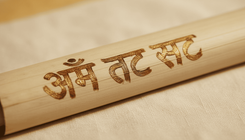
The three words om tat sat meaning appear near the end of the Bhagavad Gita as Krishna's distilled teaching on what is real, eternal and sacred. Together they form a mantra that has shaped Hindu philosophy for millennia. To understand om tat sat meaning is to understand how the Gita teaches us to see the world: what is divine, what is temporary, and how to act with spiritual integrity.



Om: The Sound of Brahman
Om is the primordial sound from which all creation emerges. In the Gita and across Vedantic tradition, om represents Brahman, the ultimate reality that underlies all existence. It is not merely a sound to be recited, though reciting it has its place in practice. Om is the symbol of consciousness itself, the vibration through which the invisible becomes perceptible.
When Krishna teaches om tat sat, he begins with om to ground the teaching in what is eternal and unchanging. Om transcends any single name, form or object. In your daily practice, whether you are chanting, meditating or simply turning your attention inward, om orients you toward that which is beyond the fluctuations of mind and sense. It is the sound that carries you toward the divine.
Tat: The Truth Beyond All Names
Tat is a Sanskrit word meaning "that"—not a specific that, but the ultimate principle behind all existence. While om represents the divine through sound and vibration, tat points to the same reality through the naked statement of truth. Tat is the infinite consciousness that exists independent of your perception of it.
In the Gita's teaching, tat helps us distinguish between the real and the unreal. Everything you perceive through your senses—your body, your possessions, your circumstances—is subject to change. Tat refers to what does not change, what persists beneath all transformation. This is the bedrock of Vedantic wisdom: there is one unchanging reality, and all else is temporary appearance.
Recognizing tat requires a shift in how you understand yourself. You are not merely your mind or body. There is an awareness within you that observes all changes without itself changing. This is tat. The Gita returns again and again to this teaching: when you align yourself with tat, with that unchanging reality, the turbulence of fear and attachment loses its grip on you.
Sat: Being and Existence
Sat means "being" or "existence" in its truest sense. Where om resonates in you as divine sound and tat points to the transcendent principle, sat grounds the teaching in lived reality. Sat is existence itself—pure being, without quality or attribute, yet the source of all qualities and attributes.
Sat is also often translated as "truth." In the Gita, Krishna uses sat to describe actions undertaken with right intention, performed without attachment to the outcome, and rooted in dharma, the universal law of righteousness. When you act with sat, you act from a place of integrity and alignment with truth. Your actions carry a quality of existence that is stable, genuine and not undermined by hidden motives.
The connection between sat and dharma is crucial. To live with sat is to live in accordance with your nature and role in the world. A teacher who teaches truthfully, a parent who serves with love, a worker who brings their full attention to their work—all of this is sat. The principle unites the transcendent and the practical: true being is also true action.
The Three Together: A Complete Vision
Om tat sat as a unit is far more than three words placed in sequence. In the Gita's Chapter 17, Krishna teaches that this formula encompasses the entire spiritual path. Om tat sat meaning understood whole tells you that the divine (om), the ultimate reality (tat), and truthful existence (sat) are not three separate things but one truth approached from three angles.
When Vedantic texts or your guru teaches om tat sat, they are pointing to the complete picture of what the Gita offers. You are not meant to chase some far-off heaven or escape the world. You are meant to see that the divine is present now, in this very consciousness, and to live from that truth with integrity and without fear.
This teaching appears late in the Gita because it is meant to seal Krishna's instruction. By the time you reach it, you have learned about duty, knowledge, devotion and renunciation. Om tat sat is the mantra that binds these teachings into one vision: act from your true nature (sat), in alignment with eternal consciousness (om), knowing that this very consciousness is the unchanging principle (tat) on which all reality rests.
Using Om Tat Sat in Practice
Many spiritual seekers use om tat sat as a personal mantra, repeating it in meditation or throughout the day. Some chant it at the close of rituals or prayers. The practice is simple: speak or think the three words slowly, allowing each one to settle into your awareness. Om opens you to divine vibration. Tat reminds you of what is real. Sat grounds you in truthful being.
Others encounter om tat sat in the Gita itself and study it with a teacher or commentator. The formula has inspired countless interpretations across different schools of Hindu philosophy. What matters is not memorizing a definition but letting the teaching work on your understanding over time. A mantra is not only for the mouth; it is also for the heart and the intellect to contemplate.
You need not be a scholar to benefit from om tat sat meaning. If you are standing at a crossroads in life, unsure how to act, the mantra asks: What is true here? What would truth require of me? If your mind is scattered, the mantra offers a gathering point: om. If you are grieving or afraid, sat reminds you that beneath all changes, being itself is stable and secure.
Common questions
Where exactly does om tat sat appear in the Bhagavad Gita?
Om tat sat appears in Bhagavad Gita Chapter 17, Verse 23. This verse concludes Krishna's teaching on sattvic, rajasic and tamasic action, offering the mantra as a summary of the entire spiritual path.
Can I use om tat sat as a daily mantra even if I am not religious?
Yes. Many people use om tat sat in meditation for its philosophical meaning rather than its religious aspect. It works as an anchor for the mind and a reminder to live with truth and integrity, regardless of your faith background.
What is the difference between chanting om tat sat and just thinking about its meaning?
Chanting engages the body and voice, which helps quiet the mind and creates vibration in the nervous system. Thinking about the meaning engages the intellect. Both are valid practices; many people combine them for fuller benefit.

Related Articles


