
Om Purnamadah Purnamidam: Meaning of the Invocation of Fullness
The mantra that honours wholeness and peace

Sunil Chaurasia
16 Nov 2026 • 6min
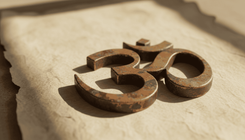
Om Purnamadah Purnamidam is a Vedic invocation that declares the ultimate reality to be whole, complete and infinite. In English, it translates as "That is whole, this is whole; from the whole, the whole emerges; taking away the whole from the whole, the whole alone remains." The mantra appears at the beginning and end of several Upanishads, and is commonly recited during the closing moments of puja, meditation and spiritual gatherings to seal the practice with an acknowledgment of fullness and to invoke peace.



The Text and Its Source
Purnamadah Purnamidam comes from the Isha Upanishad, part of the Yajurveda. The full invocation in Sanskrit is: Om Purnamadah Purnamidam Purnat Purnamudachyate, Purnasya Purnamadaya Purnameva Avashishyate. Atha Om Shanti Shanti Shanti. (In transliterated form, without diacritical marks.) The words are few and without ornament, and their purpose is philosophical rather than devotional. The Upanishads are texts of inquiry into the nature of Brahman, the absolute reality, and this mantra sits at the heart of that inquiry.
The mantra also appears at the beginning of the Mandukya Upanishad and other Vedic texts, making it one of the oldest and most respected invocations in the Hindu tradition. Its placement in the Upanishads—both at the start and the close—shows how deeply its meaning runs through the entire teaching.
What the Words Mean
Each phrase in the mantra carries a distinct layer of meaning. "Purnamadah" refers to That—the ultimate, transcendent reality, often understood as Brahman. "Purnamidam" refers to This—the manifest world that we perceive and experience here and now. The mantra teaches that both That and This are complete and whole, not lacking in any way.
The next line, "Purnat Purnamudachyate," means "from the whole, the whole emerges." This expresses the non-dualistic understanding that the infinite cannot be diminished by creation. When the absolute manifests as the universe, it remains whole. The final line, "Purnasya Purnamadaya Purnameva Avashishyate," deepens this: "taking away the whole from the whole, the whole alone remains." In other words, even when infinity appears to become finite and limited, the infinite itself is untouched and complete.
The closing "Om Shanti Shanti Shanti" (peace, peace, peace) is a prayer for peace at three levels: physical peace in the body and environment, mental peace in thoughts and emotions, and spiritual peace in one's innermost being.
The Philosophy Behind It
The mantra teaches advaita vedanta—non-dualism. It resolves a paradox that troubled Hindu philosophers for centuries: if Brahman is one, infinite and unchanging, how can a finite, changing universe emerge from it? How can multiplicity come from unity? The Isha Upanishad answers that both apparent questions rest on a misconception. Infinity does not become finite when it manifests. The universe is not separate from Brahman, nor does Brahman lose anything by appearing as the world.
This teaching has practical import. If you understand that the ultimate reality is whole and complete, then the peace you seek is not something to be acquired or achieved. It is the nature of what already is. Turmoil, lack and incompleteness are appearances arising within that wholeness, not its opposite.
Why It Closes Puja and Meditation
Purnamadah Purnamidam is used to close ritual and meditation because it redirects the mind from the particular act of worship toward the infinite reality that worship points to. When puja ends, rather than simply stopping, a recitation of this mantra affirms that the fullness invoked during the ritual is not confined to the ritual itself, but is the ever-present nature of existence.
For the same reason, many spiritual groups and satsangs recite it together before parting. The shared recitation creates a moment in which the gathered community acknowledges a unity deeper than their individuality, and they carry that recognition with them as they leave.
Some communities chant it before meditation begins, using it to anchor the mind in the understanding that the witness consciousness observing the practice is itself whole and untouched by whatever states the mind passes through.
How to Chant It
The mantra is best chanted slowly and with care to each syllable. Om is pronounced as one long sound, without separation. Purna- is pronounced "poor-nah" (the "a" at the end is a short vowel). The whole invocation takes about 30 to 45 seconds when recited at a comfortable pace. There is no standard melody, though some traditions do set it to a gentle, flowing tune.
The mantra requires no special preparation or qualification. It may be chanted by anyone, alone or in a group. Some practitioners recite it three times in succession, creating a resonance that is thought to deepen the effect. Others recite it once. The emphasis should be on understanding the meaning as you speak it, rather than on speed or perfection of pronunciation.
Use in Different Traditions
While the Isha Upanishad and Mandukya Upanishad are shared across most schools of Vedanta, some traditions emphasize the mantra more than others. In Advaita Vedanta circles, formal students often recite it as part of daily sadhana, spiritual practice. In devotional traditions, it appears more in community gatherings and at the close of major festivals. Some yoga schools place it at the end of an asana and pranayama session to transition the mind toward meditation.
The Shanti path—the peace invocation that closes many rituals and gatherings—often incorporates this mantra as its opening or central element. Whether in a temple, an ashram or a home altar, reciting Purnamadah Purnamidam marks a return to the recognition that all activity arises within and returns to the unchanging wholeness of Brahman.
When you recite this mantra, you are not asking for something new. You are reminding yourself of what already is.
Common questions
Where exactly does purnamadah purnamidam appear in the Vedas?
The mantra opens and closes the Isha Upanishad, which is part of the Yajurveda. It also appears at the beginning of the Mandukya Upanishad. Its presence at both the start and end of these texts shows how central its message is to Vedic philosophy.
Can I chant this mantra on any day, or only at certain times?
There are no restrictions on when you can chant purnamadah purnamidam. It can be recited daily as part of your practice, at the close of puja and meditation, or in group settings. Many traditions recite it after daily rituals or before meditation begins.
What is the difference between purnamadah purnamidam and other closing mantras like Om Shanti?
Purnamadah purnamidam is a complete philosophical statement about the nature of reality, while Om Shanti is primarily a prayer for peace. Purnamadah purnamidam is often used to transition from ritual activity to the understanding of infinite wholeness, and Om Shanti Shanti Shanti is its concluding peace invocation.

Related Articles


