
Navratri Significance: Why There Are Two Nine-Night Festivals
Two seasons, one divine victory

Abhilash Ramakrishna
12 Nov 2026 • 6min
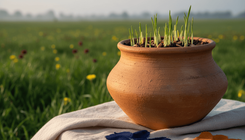
Navratri—meaning "nine nights"—is celebrated twice a year in the Hindu calendar, and each one marks a different victory of the divine feminine over forces of chaos. The two Navratris are Chaitra Navratri, which falls in spring, and Sharad Navratri, which falls in autumn. Both follow the same essential narrative and ritual structure, but they occur at different times in the agricultural and lunar year, and they carry distinct meanings rooted in the seasons and the cycles of nature.
Understanding why Navratri happens twice requires looking at what each festival celebrates, how the lunar calendar shapes when they fall, and what each season represents in Hindu cosmology.



The Two Navratris in the Lunar Calendar
Chaitra Navratri begins on the new moon day in the lunar month of Chaitra, usually in March or April. It lasts nine days and ends with Rama Navami, the birthday of Rama, celebrated on the tenth day. Sharad Navratri begins on the new moon day in the lunar month of Ashwin, usually in September or October. It lasts nine days and ends with Dussehra, or Vijayadashami, the tenth day that celebrates the victory of Durga over the buffalo demon Mahishasur.
The lunar calendar moves through the year in a cycle that does not align with the solar year, so Navratri falls at these two distinct points—one at the start of spring, one at the start of autumn. The two dates are not symmetrical; they are determined by the position of the new moon, and they shift each year.
The Spring Festival: Chaitra Navratri and New Beginnings
Chaitra Navratri celebrates the awakening of nature after winter. Spring is the season of growth, renewal and the return of fertility to the earth. This festival is observed more prominently in North India, particularly in Gujarat and Rajasthan. In many parts of South India, Chaitra Navratri is observed quietly, while Sharad Navratri receives greater public celebration.
The nine days of Chaitra Navratri are devoted to the Navadurga, the nine forms of the goddess Durga. Each day is dedicated to a different form, representing different aspects of the divine feminine—her power, her compassion, her victory. The goddesses honoured are Shailaputri, Brahmacharini, Chandraghanta, Koosmanda, Skandamata, Katyayani, Kaalratri, Mahagauri and Siddhidatri.
In Gujarat, Chaitra Navratri culminates in Garbha and Dandiya Raas, the circular dances performed during the festival. These are expressions of joy and community celebration. The festival is also marked by the fasting practices some devotees undertake, and the decoration of homes and temples with marigolds and coconut leaves.
The Autumn Festival: Sharad Navratri and the Victory Over Darkness
Sharad Navratri is the more widely celebrated of the two. It begins as the monsoon recedes and the harvest season approaches. In cosmological terms, autumn represents the period when the forces of nature are at their strongest, and it is at this time that the goddess is said to have defeated Mahishasur, the buffalo demon who had oppressed the gods and the earth.
This festival is marked across India with great ceremony. In Bengal, Durga Puja involves the creation of elaborate temporary structures called pandals, housing enormous clay sculptures of the goddess. In South India, Navratri is celebrated with the creation of golu, elaborate household displays of dolls arranged on steps, and the recitation of stories about the goddess. In North India, Ramlila performances enact episodes from the Ramayana. In Maharashtra, women exchange bitter neem leaves as a custom of health and prosperity.
On the tenth day of Sharad Navratri, Dussehra or Vijayadashami is observed. The name Vijayadashami means "the tenth day of victory." Across India, effigies of Ravana are burned to symbolise the victory of good over evil. This day is considered auspicious for beginning new ventures and learning arts and crafts.
The Same Divine Story, Different Seasons
Though they are separated by six months, both Navratris tell the same spiritual story: the victory of the goddess over the forces of chaos and ignorance. The practice of honouring the Navadurga, the nine forms of Durga, is central to both festivals. The structure of fasting, prayer, ritual observance and community celebration occurs during both.
What differs is the seasonal significance. Chaitra Navratri marks the beginning of the Hindu new year in many traditions, and it celebrates spring's promise of growth and abundance. Sharad Navratri marks the culmination of the monsoon season and the approach of harvest, celebrating the goddess's destruction of obstacles to human flourishing and divine order.
Regional and Sampradaya Variations
How much each Navratri is celebrated depends on where you are. Sharad Navratri is observed more visibly across most of India, with large public celebrations, temple fairs and cultural events. Chaitra Navratri is central to the celebrations of North India and Gujarat, but it receives less public prominence elsewhere. Some traditions emphasise both equally; others focus primarily on Sharad Navratri.
In South India, Tamil Nadu in particular, Golu is a major feature of Sharad Navratri, and Chaitra Navratri is often observed more privately in homes. In West Bengal, Durga Puja during Sharad Navratri is one of the most significant festivals of the year, drawing hundreds of thousands of people to temporary temples throughout the state.
The Ramayana and the Devi Mahatmya, the Sanskrit text that describes Durga's victory, are the two major narratives used to understand Navratri. In some traditions and regions, the focus is more on Rama's story; in others, on the goddess's triumph. Both are part of the festival's significance.
Why Two Navratris Matter
The existence of two Navratris reflects the Hindu understanding of time as cyclical rather than linear. The same divine principles—the triumph of order over chaos, light over darkness, knowledge over ignorance—recur in nature's cycles. By celebrating Navratri twice a year, at the two moments when nature itself undergoes transformation, the tradition keeps these principles alive in human consciousness and practice.
Both festivals invite devotees to examine their own inner conflicts and to align themselves with the victory of the divine feminine. Whether you observe Chaitra Navratri, Sharad Navratri or both depends on your tradition, your region and your personal practice. Each offers its own seasonal wisdom and spiritual opportunity.
Common questions
Which Navratri is more important, Chaitra or Sharad?
Sharad Navratri is observed more visibly across most of India with large public celebrations, but both have equal spiritual significance. In some regions like Gujarat and North India, Chaitra Navratri is equally important; in others like Bengal, Sharad Navratri receives greater prominence. Your tradition and region determine which you emphasise.
Can I fast during both Navratris?
Yes, many devotees observe fasts during both Chaitra and Sharad Navratri. Some fast for all nine days, some for specific days, and some fast partially. The practice varies by personal choice, family tradition and sampradaya, so follow what your guru or family tradition prescribes.
Why do Navratris fall on different dates each year?
Because they are determined by the lunar calendar. Chaitra Navratri begins on the new moon in the month of Chaitra, and Sharad Navratri begins on the new moon in Ashwin. Since the lunar calendar shifts relative to the solar calendar, these dates move forward by about eleven days each year.

Related Articles


