Navratri Saptami 2026: Date, Puja Muhurat and Significance
The warrior goddess reaches her peak of power

Abhilash Ramakrishna
14 Oct 2026 • 7min
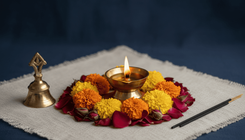
Navratri Saptami 2026, known as Maha Saptami or Durga Saptami, falls on the seventh day of the bright fortnight (Shukla Paksha) of Ashwin, during the nine-day Navratri festival. The exact date shifts each year with the Hindu lunar calendar. In 2026, Saptami is observed on Saturday, 17 October in the Navratri calendar, while Bengal celebrates Maha Saptami of Durga Puja on Sunday, 18 October. This day is dedicated to Maa Kalaratri, the fiercest of the nine forms of the goddess, who destroys darkness, fear and evil. Tradition holds that Durga's battle against the buffalo demon Mahishasura raged through the nine nights of Navratri, and Saptami falls in its final, most intense stretch. For devotees, Navratri Saptami 2026 is a day of heightened spiritual practice, marked by special pujas, fasting and rituals that honour the warrior energy of the divine feminine.



How Saptami Tithi is Determined
The Saptami tithi is the seventh lunar day in the bright fortnight (Shukla Paksha) of the month of Ashwin, which typically falls between September and October in the Gregorian calendar. Unlike fixed dates, a tithi is determined by the position of the moon relative to the sun: each tithi covers 12 degrees of the moon's movement ahead of the sun, and Saptami ends when the moon is 84 degrees ahead. A tithi begins and ends at the same moment everywhere in the world; only the local clock time differs. What varies by region is which tithi is active at local sunrise, which is why different places can observe Saptami on different dates. In 2026, the Saptami tithi runs from approximately 5:54 AM on 17 October to 8:27 AM on 18 October (IST). The puja muhurat—the most auspicious window for worship—depends on your location, so it is worth checking the Panchanga (Hindu calendar) for your city or consulting your local temple before the festival begins.
The Rituals of Maha Saptami
On Navratri Saptami 2026, the puja vidhi (worship method) honours Maa Kalaratri, the fierce form of the goddess, or Durga in her collective form. The day traditionally begins with an early morning bath and ritual purification. Many households wake before dawn to perform abhisheka (ritual bathing) of the goddess image or idol with water, milk, honey and yogurt, then dress her in new clothes or garlands. The puja itself involves offering flowers, incense, lamps and prasad (blessed food offering) while reciting the Devi Mahatmya or singing Durga mantras. A common practice is to light a diya (lamp) that burns throughout the day, symbolizing the light of divine consciousness dispelling ignorance and evil.
Fasting plays an important role on Saptami. Some devotees fast from food entirely; others eat a simple meal of fruit or dairy products once a day, usually at midday or evening. The type of fast depends on one's strength, health and family tradition. Children, the elderly and those with health conditions are generally encouraged to eat normally while still participating in the puja. After the evening aarti (light offering), many families share prasad together as a communal act of devotion. In some regions, particularly Bengal, Saptami is a day of cultural significance beyond the puja itself: it begins with the Navapatrika (Kolabou) snan, the ritual bathing of nine sacred plants that represent the goddess, and the pandals, already busy since Shashthi, overflow with visitors as the streets fill with music, theatre and celebration.
The Story Behind Saptami's Power
Navratri commemorates Durga's battle against Mahishasura, the buffalo demon who had terrorized the heavens and earth. The Devi Mahatmya, the sacred text describing the goddess's deeds, tells the story of this war, though it does not divide the battle into days; the link between the festival days and the stages of the battle comes from popular tradition. The demon had received a boon that made him nearly invincible—he could not be killed by any man or god. Durga, born as a goddess from the combined energy of all the gods, was the one power his boon did not protect him from. Popular belief holds that the battle lasted nine nights, with Mahishasura finally slain on the tenth day, Vijayadashami. Saptami, dedicated to the fierce Kalaratri, falls in the final stretch of this struggle, when the goddess's power is at its most formidable. This narrative of the goddess moving toward victory, overcoming obstacles and refusing to surrender, forms the spiritual heart of why Saptami is celebrated with such devotion. For worshippers, Saptami represents a moment when divine power stands firm against all odds.
Regional Variations in Saptami Observance
The way Navratri Saptami 2026 is celebrated varies across India and among different communities. In Bengal, Saptami opens the main days of Durga Puja with the Navapatrika snan and Prana Pratishtha, and temples and public pandals host music concerts, theatrical performances and community meals. The rituals are formal and elaborate, with specific protocols for each stage of worship. In South India, Saptami is observed more quietly in many homes, with pujas focused on personal devotion and family ritual. In Gujarat, where Navratri is celebrated with Garba and Dandiya (folk dances), Saptami continues the festive atmosphere while maintaining the underlying spiritual significance. Kanya Puja, the worship of young girls as forms of the goddess, follows on Ashtami in some communities and on Navami in others. What unites these variations is the focus on honouring the goddess in her warrior form and recognizing a turning point in her divine journey.
Preparing for Saptami Puja at Home
If you plan to observe Navratri Saptami 2026 at home, a few simple preparations will help. Set up a small puja space with an image or idol of Durga, or simply use a picture of the goddess. Arrange flowers—marigolds or roses are traditional—along with incense, a lamp and a small bell. Prepare an offering of fruit, sweets or dairy-based prasad. On the morning of Saptami, bathe and wear clean clothes, then sit in front of the puja space. Ring the bell softly to begin, light the lamp, offer flowers and incense, then recite the Durga Chalisa or any Durga mantra you know. If you do not know a mantra, simply speaking to the goddess with devotion and gratitude is enough. The puja need not be long; what matters is the intention and attention you bring to it. After the worship, share the prasad with family members or neighbours as a final act of blessing.
Why Saptami Matters in the Navratri Journey
Saptami is not just another day of Navratri; it opens the festival's final and most powerful stretch. The first days establish the intention and invoke the goddess as Shailaputri, Brahmacharini and Chandraghanta, building up through Kushmanda, Skandamata and the warrior Katyayani. Saptami arrives at a moment of maximum intensity, when the goddess appears as Kalaratri, her fiercest form, and her power is most visibly active. This is why many spiritual seekers consider Saptami an especially potent day for mantra chanting, meditation and prayer. The energy of the day supports those doing sadhana (spiritual practice): it amplifies focus and determination. After Saptami, the pace begins to shift toward resolution; by Navami (the ninth day), victory is near, and on Vijayadashami the celebration becomes one of triumph and thanksgiving. Understanding this arc helps frame why Navratri Saptami 2026 deserves your focused attention, whether you observe it with formal ritual or with quiet personal practice.
Common questions
What is the difference between Saptami and Ashtami in Navratri?
Saptami is the seventh day of Navratri, dedicated to Maa Kalaratri, the fierce form who destroys darkness and fear. Ashtami, the eighth day, is known as Durga Ashtami and is dedicated to Maa Mahagauri, the serene form associated with purity and peace. In Bengal, Ashtami also includes the Sandhi Puja, and many communities perform Kanya Puja (worship of young girls as forms of the goddess) on Ashtami, making it one of the most widely observed days of the festival.
Can I do Navratri Saptami puja without fasting?
Yes. Fasting is a common practice but not mandatory. What matters is sincere worship and devotion. If you have health conditions, are very young or very old, or have other responsibilities, eating normally while participating fully in the puja is completely acceptable and honoured in most traditions.

Related Articles